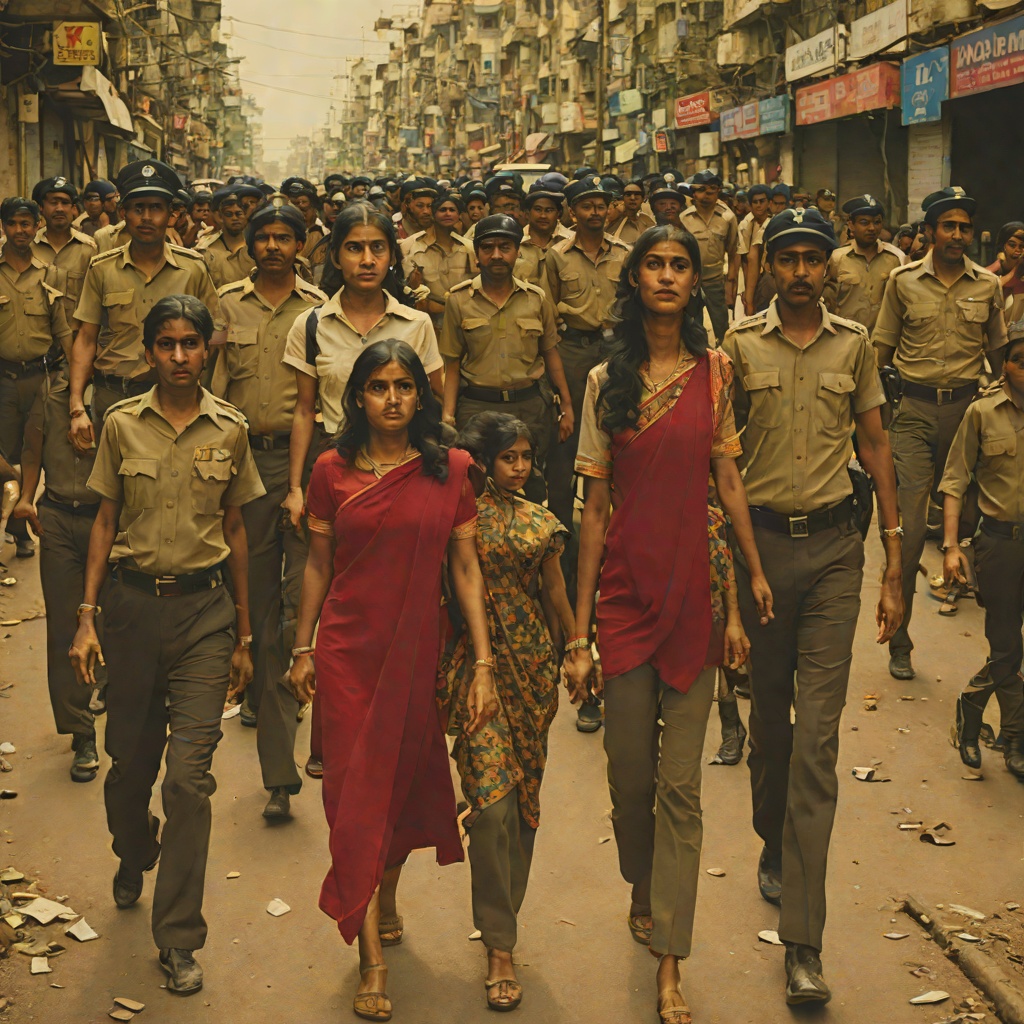
Padma Poojary
Mafia Queens of MumbaiPadma Poojary, née Khanna, occupies a singular place in the annals of the Mumbai underworld: she is the woman alleged to have masterminded the criminal career of her husband, the gangster Ravi Poojary, transforming a small-time thug into a figure who breathed fear into the city's moneyed class. A middle-class Sikh by birth, Padma was the architect of an extortion empire that reached into Bollywood and the business elite, yet she so shrewdly kept herself out of the gang's activities that the police could never gather enough evidence to book her for assisting her husband. Her eventual downfall came not through her criminal machinations but through a forged passport, and even then she slipped away, leaving behind an Interpol Red Corner Notice and a mystery that endured for years.
Identity and Background
Padma Poojary, née Khanna, first met Ravi when she was studying at a co-educational convent school in the Mumbai suburb of Andheri, where both attended the same school in the Sahar Airport Colony. Ravi, originally from Mangalore in Karnataka, soon dropped out of school, drawn from the very beginning to the world of crime and the underworld. After initially working as a small-time criminal, he rose through the ranks when he killed his opponent Bala Zake, and in the mid-'90s he went on to join the gang of Chhota Rajan, the self-proclaimed patriotic don who was at the time trying to establish a strong base in Mumbai's crime scene. It was around this time that Ravi married his long-time girlfriend and childhood sweetheart Padma. She only learned about Ravi's criminal activity after marrying him, and faced with two options—to leave him or to live with the fact that her husband was a goon—she chose the latter, lured by the possibility of immense wealth, not really understanding, perhaps, the pitfalls of being married to a criminal.
Rise as the Gang's Mastermind
According to police sources, it was during this time that Padma advised Ravi to deviate from the Rajan gang and start his own enterprise. She allegedly suggested that he look at Bollywood and the business classes—the real mine of wealth. Following his wife's advice, Ravi left the Rajan gang and recruited men from Mumbai to work for him, even as he continued to operate from Southeast Asia. Extortion calls began to be made to bigwigs in the city. In 2006, Poojary's men opened fire at Bollywood director Mahesh Bhatt's office, after he refused to give in to Ravi's extortion demands. Poojary also tried to extort Rs 50 crore from Bollywood actress Karisma Kapoor's Delhi-based businessman husband Sanjay Kapur. Throughout this period, Padma shrewdly kept away from the gang's activities and escaped police scrutiny with consummate ease, allowing her husband to take the public face of their criminal enterprise while she worked from the shadows.
The Passport Forgery Case and Downfall
Padma finally had her first brush with the law for obtaining a passport on the basis of a forged ration-card and school-leaving certificate in 1995. The matter concerning the submission of fake documents by Padma only came to light as late as 2005, a good ten years later, when she sent her passport for renewal and applied for her children's passports. The passport authorities grew suspicious while scrutinising her passport forms and immediately tipped off the Mumbai police's Crime Branch. The Crime Branch, on conducting inquiries, learned that not only were the documents submitted for Padma's children's passport applications fake, but those submitted by her to procure a passport in 1995 had also been forged. Padma had used the passport to travel to several countries in Africa and the Middle East, and the police suspected that, during her course of travel, she had met her absconding husband, who had taken refuge in a foreign country. Her passport was seized and she was arrested on 4 October 2005, but she was only released on bail some thirty days later. Her lawyer Shyam Keswani repeatedly denied her role in handling her husband's financial affairs, insisting, "There is no truth in the police's claims," and the police, too, did not have any evidence to book her for assisting Ravi in his activities.
Escape and the Interpol Red Corner Notice
Following her arrest and bail, Padma came under police scrutiny. With her phone lines tapped and her whereabouts monitored by the police, she was left with no option but to flee the country. According to the police, Padma escaped from India via the Nepal border after acquiring a new fake passport, and the police only managed to arrest the person who planned her escape. The Maharashtra police issued an Interpol Red Corner Notice against Padma, a red flag that would pop up on an attendant's monitor if she tried to check in at an airport, informing the attendant that this person is wanted. However, despite Interpol's backing, the police could not track Padma down, and even five years after her escape, her location remained a mystery. The police believed that she was living with her husband and had narrowed down the location of her hideout to somewhere in South Africa. A five-year-old Interpol Red Corner notice was still pending against her, and she remained one of the few figures in the Mumbai underworld to have evaded capture entirely, a testament to the very shrewdness that had kept her out of the gang's activities for so long.
Narrative Role and Significance
Padma Poojary's story stands as a counterpoint to the more visible women of the Mumbai underworld. Unlike figures such as Jenabai Daaruwali, who built her influence through public brokerage in grain and later liquor, or Mahalaxmi Papamani, who ran a visible drug empire in the Sion-Koliwada slum, Padma operated entirely from the shadows, shaping her husband's criminal career while remaining invisible to the law. Her trajectory mirrors that of Sujata Nikhalje, the wife of Chhota Rajan, who used her husband's reputation to arm-twist people into selling their homes and built her own construction company, Khushi Developers Private Ltd. But where Sujata was eventually caught through phone taps and a builder's complaint, Padma's escape suggested a deeper understanding of how to navigate the criminal world without leaving a trace. Her story reveals the gendered dynamics of the underworld, where women could wield immense power and influence while remaining untouchable, and where the law's inability to see women as criminal masterminds allowed them to operate with impunity—until a forged passport, the very document meant to grant her mobility, became the instrument of her undoing.