Queen of Kamathipura
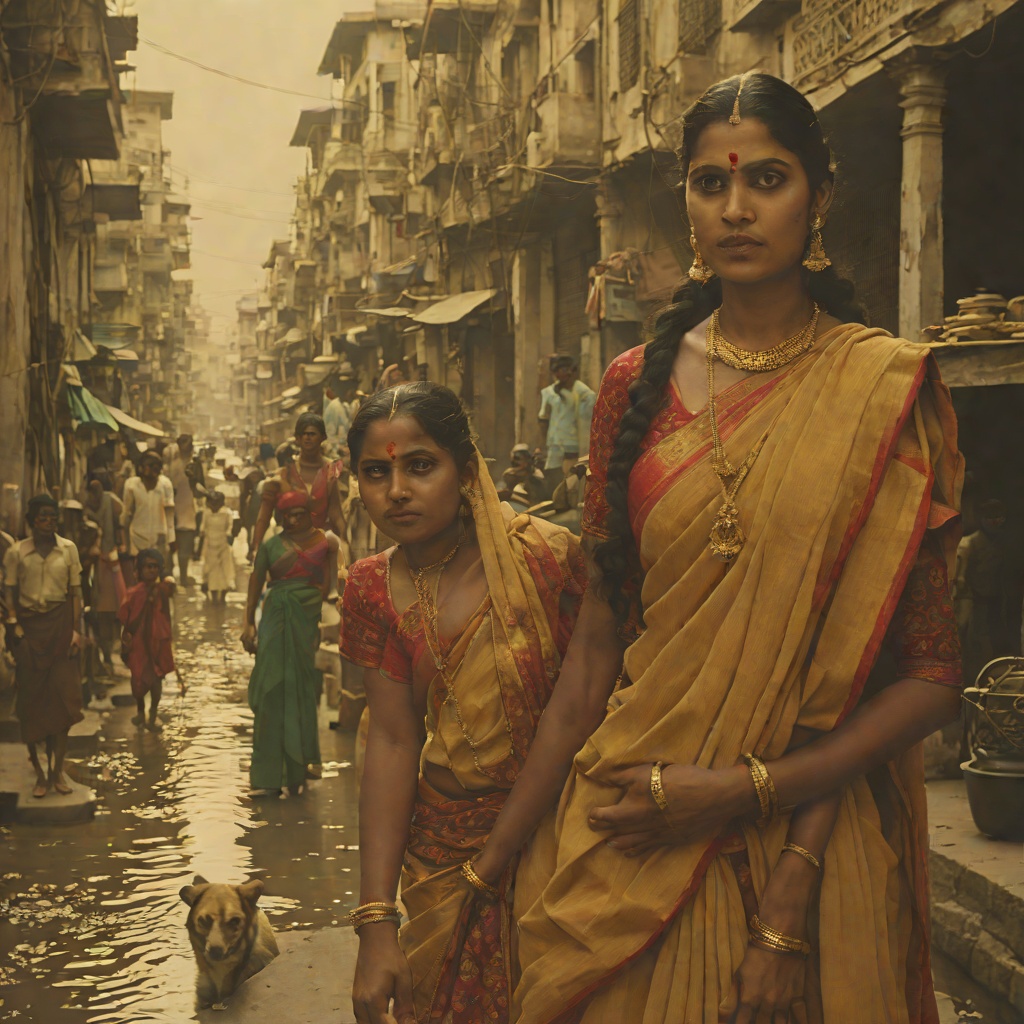
Mafia Queens of MumbaiQueen of Kamathipura is the title by which Gangubai Kathiawadi, the most formidable brothel madam in Mumbai's red-light district, is remembered. The phrase is not merely a description of her professional standing but a lasting honorific, one that a social worker from the area — herself initially sheltered by Gangubai — still uses to describe her. The title captures the singular authority Gangubai wielded over Kamathipura, an authority so complete that even today, framed pictures and statuettes of her are kept in the brothels of the district. Ask anyone about Gangubai, the social worker noted, and they will direct a visitor to a framed picture of her in their room; they may not have known her, but they have surely heard of her. The queen's reign outlasted her death, surviving in the very rooms where she once ruled.
The Realm Over Which She Reigned
The title's geography is essential to its meaning. Kamathipura, the district Gangubai ruled, was itself a reclaimed and contested space. In the mid-1700s, the Dongri hills were levelled as part of the plan to merge the different islands of Mumbai, and the low-lying patch of uneven land between Crawford Market in the north and the reclaimed lands of Kamathipura in the south came to be called Dongri. Kamathipura thus grew on land that was literally built from the levelled hills, a foundation of displaced earth that suited its later character as a zone set apart from respectable Bombay. The district's proximity to the city's oldest landmarks — Bada Qabrastan, the sprawling 7.5-acre cemetery abutting Marine Lines station, stands as a reminder and testimony to man's mortality, a hundred-and-fifty-year-old burial ground so close to the station that commuters cut across it before taking the stairs to the over-bridge. The queen of Kamathipura ruled in the shadow of this vast graveyard, her dominion of living bodies set against the city's most visible monument to death. The contrast was not lost on those who mapped the city's moral geography: the red-light district and the cemetery were twin territories, one housing the city's outcast women, the other its dead.
The Queen's Person and Presence
Gangubai's physical presence was as distinctive as her title. A five-foot-tall woman dressed in a white saree, she moved through Kamathipura with an authority that commanded immediate deference. When she climbed the steps leading to a sex worker's room, other women who were peering out of their balconies or standing on the road looking for customers bowed in respect at the sight of her. Her appearance was carefully cultivated: she was remembered for her gold-bordered white sarees and gold-buttoned blouses, her collection of gold jewellery, her gold-rimmed glasses, and an artificial gold tooth. She was the only brothel keeper of her time to own a black Bentley car, a symbol of wealth whose origins remained mysterious — it was never known how she managed to accumulate so much fortune. Yet the queen's daily habits were surprisingly modest. According to Babbi, the only one of her adopted children still living in Kamathipura, Gangubai began her day reading the Gujarati newspaper Janmbhoomi and sipping tea at six in the morning, followed by breakfast and a card game next door. She was a hard-core gambler who gambled almost daily, and she had many vices — she smoked bidis, drank Ranichaap, and chewed paan. She also hobnobbed with several journalists and ministers, cultivating the connections that sustained her rule.
Authority and Its Dark Side
The queen's power was exercised through a combination of maternal care and iron control. Gangubai owned several brothels and had immense influence over the women who worked in them. When a recalcitrant girl named Madhu refused to accept her lot after a week of shelter, it was to Gangubai that the exasperated Rashmi turned, knowing she was the only person who could resolve the dilemma. Gangubai treated the matter as routine, entering Madhu's hundred-square-foot room, ignoring the chair specially placed for her, and sitting beside the girl on the small cot to speak with her directly. This intimacy was part of her method — she ruled not from a distance but through personal engagement with her subjects. Yet the queen's goodness was only one side of the coin. A former restaurateur in Kamathipura put it aptly: it was not as if she was all milk and honey. She was running a brothel at the end of the day, and it was not easy to have thousands of women working for her; there was surely a dark side to her that people had chosen to forget, for one could not prosper in this business otherwise. The title of queen thus carried the full weight of absolutism — the same hand that comforted a frightened girl could also command an empire of thousands.
The Queen's Public Voice
The title found its most explicit public expression in Gangubai's famous speech at a women's conference at Azad Maidan, where she was introduced as the 'president of Kamathipura' and greeted with suspicion. Dressed in a white cotton saree, she had been nervous when she ascended the stairs to the podium, having never really spoken in public before; she had rehearsed her speech several times during the day, yet standing before such a large crowd she felt absolutely unprepared. But the crowd's murmuring only made her more determined, and she stunned her organisers and audience with her opening line: 'I am a gharwali (a brothel madam) not a ghar todnewali (home wrecker).' She argued that the stigma attached to her title had saved the chastity, integrity, and morality of several thousands of women, that the notorious women of Kamathipura deserved partial credit for the safety of Mumbai's streets, and that prostitutes were fighting their own battles every day just as soldiers fought on the battlefield — so why was a jawan rewarded with national honours while they were looked down upon? The speech was the queen's manifesto, a defence of her realm delivered in the public square, and it transformed the title from a mark of shame into a claim of honour.
The Queen's Legacy
Gangubai died of old age sometime between 1975 and 1978, and soon after, effigies of her were placed in the brothels of the area. The queen's death did not end her reign; it consecrated it. The framed pictures and statuettes that still adorn the brothels of Kamathipura are the iconography of a remembered sovereign, and the title Queen of Kamathipura has passed into the district's collective memory as a term of reverence. The title's endurance speaks to the particular kind of power Gangubai represented — a woman who ruled a criminal enterprise with maternal care and ruthless pragmatism, who defended her subjects in public while profiting from their labour in private, and who transformed a stigmatised identity into a claim of protection. In a city where the rich remember their dead in various ways — where, it is said, when Ibrahim Kaskar passed away, his son Dawood arranged for truckloads of rose petals to be showered on his father's grave, the fragrance wafting across the graveyard for three days — the queen of Kamathipura is remembered through a different kind of memorial: the persistent presence of her image in the rooms where her successors still work, and the title that still names her as their sovereign.