Sonapur Lane
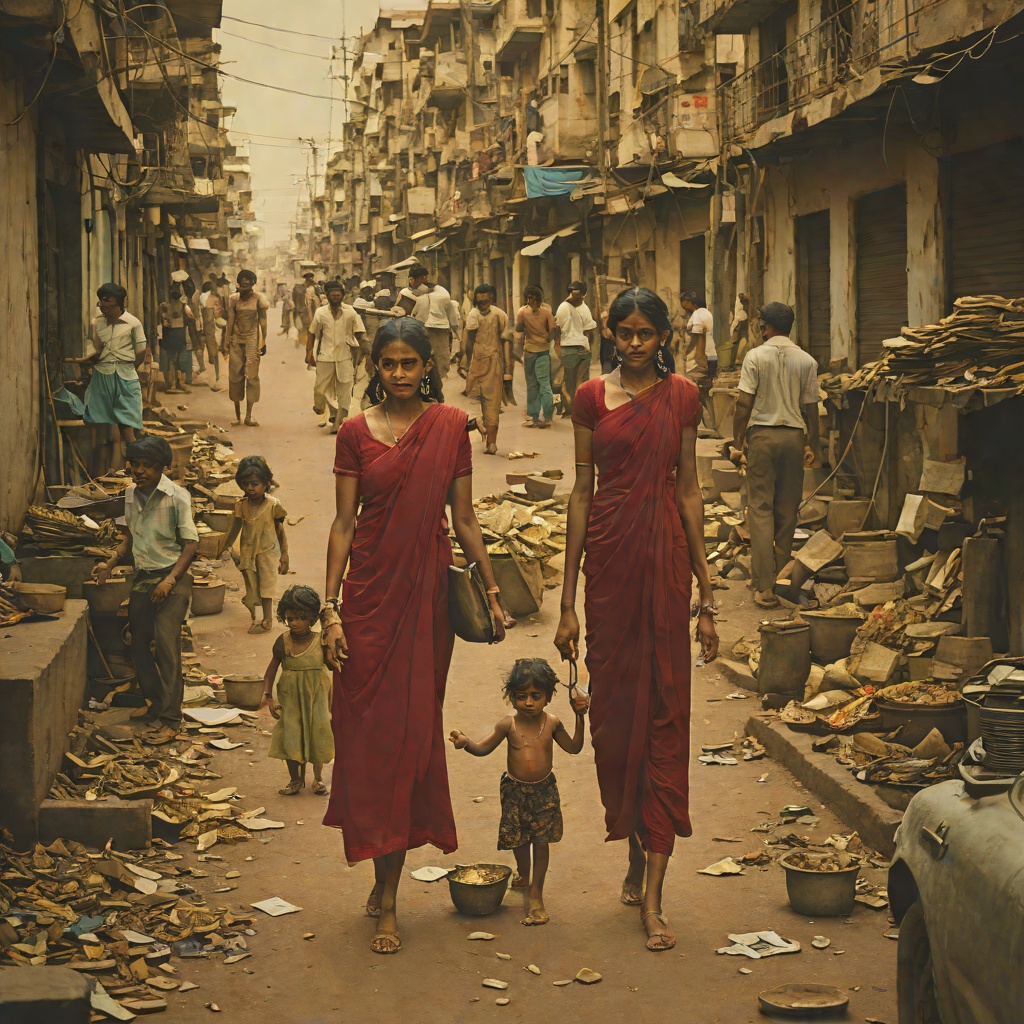
Mafia Queens of MumbaiSonapur Lane, also called Sonapur Galli, lies just a stone's throw from the Reay Road railway station, a dense warren of roughly a thousand shanties that serves as a nesting ground for crime and disease. The name 'Sonapur' is deceptive: the 'sona' has nothing to do with gold, but instead refers to death or sleep, a reference to the several Muslim graveyards in the vicinity. Yet for one woman in this otherwise nondescript residential hub of Mumbai's underbelly, the area did bring gold and untold wealth. That woman is Jyoti Adiramalingam, aka Jyoti amma, the reigning godmother of the area, the one who lays down the rules and the only one with the authority to bend them.
A Lane Defined by Death and Deception
The lane's identity is shaped by its proximity to death, both in name and in the graveyards that surround it. This grim association stands in stark contrast to the wealth that Jyoti amma extracted from the place. The shanties themselves are a study in deliberate confusion: most huts in the lane seem to have the number 70 painted on their doors, a ploy to confuse the police so that the godmother would have time to escape. This simple deception, repeated across dozens of identical plywood and asbestos huts roofed with tarpaulin and plastic sheets, reveals the lane's fundamental character as a place built on concealment and evasion, where the very architecture is designed to protect its ruler from the law.
The Reign of Jyoti Amma
According to the dossiers of the Narcotics Control Bureau and the Anti-Narcotics Cell, Jyoti is one of the many small yet dominant cogs in the humongous machine of the Rs 1,000-crore drug trafficking industry in Mumbai. At forty-six, she is considered one of the most feared drug baronesses in the city. Her authority is absolute and unchallenged within the lane; she alone determines what is permitted and what is not. Her power was such that when a journalist came to the lane for a Sunday cover story on the role of women in the narco-industry, Jyoti was fresh out of prison, having just served a four-and-a-half-year sentence in Mumbai's Byculla Women's Jail. Even her imprisonment did not diminish her standing; upon her return, she resumed her position as the undisputed ruler of Sonapur Lane.
A Hub in a Wider Criminal Network
Sonapur Lane's significance extends beyond its own boundaries, connecting it to the broader geography of Mumbai's underworld. The lane is part of a network of similar slums that the book's journalist-narrator traverses in investigating women in crime. The hutments of Sonapur Lane reminded the narrator of those seen in the Sion-Koliwada slum, the domain of another drug queen, Mahalaxmi Papamani. This visual echo underscores a shared ecology of poverty and crime across Mumbai's marginalized spaces. The connection is not merely visual: Jyoti herself was lured from Reay Road to work for Savitri, a prominent drug peddler in the Sion-Koliwada slum, where she and Papamani were given the responsibility of dividing large quantities of heroin into smaller pudis for distribution. This movement of personnel between the two slums reveals a fluid, interconnected criminal economy in which women like Jyoti and Papamani rose through the ranks, eventually controlling the pudi-selling business in Sion-Koliwada before Papamani split from Savitri to run her own independent operation in 1991.
Narrative Significance and the Question of Agency
The lane serves as a powerful example of the book's central argument about women criminals. The narrator's visit to Sonapur Lane is framed by the book's stated purpose: to understand the complex minds and psyche of women criminals, without glorifying them, and to show that these women were not blank slates written upon by dangerous male mafia members. Jyoti amma embodies this thesis. She is not a passive victim of her circumstances but an active agent who has carved out a domain of absolute power within a space defined by death and poverty. Her rule over Sonapur Lane, her ability to bend the rules she herself lays down, and her successful evasion of the police through the deceptive numbering of her shanties all demonstrate a shrewd, calculating intelligence that transformed a graveyard-adjacent slum into a source of gold and untold wealth. The lane, in turn, becomes a testament to how these women pushed the boundaries of dominant moral codes, building empires in the most unlikely and marginalized corners of the city.