St Anthony's Girls' High School
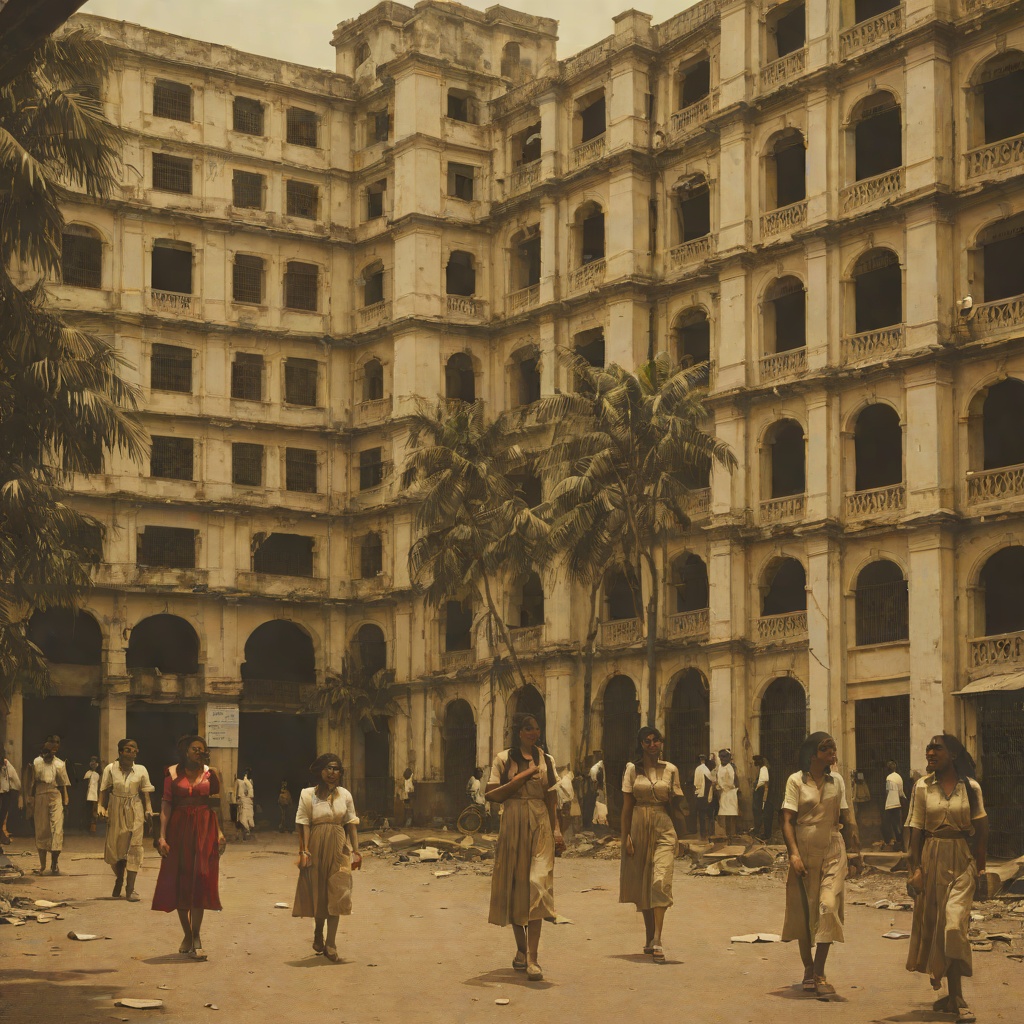
Mafia Queens of MumbaiSt Anthony's Girls' High School, built in the early 1920s, stands as a landmark of Mumbai's colonial-era educational architecture, its entrance opening onto Bellasis Road. The school's most defining feature, however, is not its facade but its rear, which overlooked Kamathipura 14th Street, a lane then inhabited by over 250 sex workers who could be seen from the upper floor of the building. This proximity between a girls' school and a red-light district would prove to be a source of sustained tension, ultimately drawing the school into a confrontation with one of the most formidable women of the Mumbai underworld.
Location and Setting
The school's position placed it at the heart of a complex urban geography. In the 1950s and '60s, commercial sex workers occupied the western strip of Kamathipura between Suklaji Street, Manaji Rauji Street, and part of Foras Road from Alexandria Cinema up to the point where it met Jairaj Bhai Lane. At the time, sex workers did not cross Manaji Rauji Street or pass through the central and eastern areas of Kamathipura, as people in the area did not like it. However, children attending the municipal school at the junction of Kamathipura 7th Street and people visiting the several temples located in the west of Kamathipura had to pass through the brothel areas. The school building at the rear overlooked Kamathipura 14th Street, which was then inhabited by over 250 sex workers, who could also be seen from the upper floor of the building. This arrangement meant that the school's students, in their daily routines, were confronted with the reality of the sex trade, a situation that the school authorities found increasingly untenable.
The 1960 Controversy
Early in the year 1960, authorities of the St Anthony's Girls' High School as well as locals living in the vicinity of Kamathipura wanted part of the red-light belt evacuated because they felt that sex workers could have a negative influence on the minds of young students. The school authorities cited that prostitution could not be carried out within two hundred yards from an educational institution. A strong movement picked up against the presence of the red-light zone. There were constant agitations and meetings with the civic authorities, but both parties refused to budge from their position. The school's argument was grounded in a legal and moral framework that sought to protect the innocence of its students, but it also threatened the livelihoods of hundreds of women who had no other means of support.
Gangubai's Intervention
When the anti-prostitution sentiment swelled, sex workers sought Gangubai's help, and she successfully spearheaded the movement against the evacuation of sex workers from the belt. Gangubai, a brothel madam who had risen to prominence in Kamathipura, took up the cause with characteristic determination. Her political connections apparently also won her an appointment with the then prime minister of India, Jawaharlal Nehru, at his residence in New Delhi. Once again, Gangubai made history by becoming the only local brothel madam to secure an appointment with the head of the country. At the end of the meeting, Nehru, who had bluntly rejected her second proposal, conceded to Gangubai's first demand and also promised to look into the matter. Following the intervention of the government, the movement to displace the sex workers died a quick death. Gangubai's argument that the school had been built a century after the prostitution belt had come up made her a clear winner in the batde. 'Were the concerned authorities blind when they built the school?' she queried.
Significance
The school's role in this episode highlights a recurring theme in the book: the collision between institutional morality and the lived realities of marginalized communities. The school, as an institution of learning and moral instruction, stood in opposition to the sex workers, yet it was the sex workers' champion who prevailed. Gangubai's victory was not merely a personal triumph but a collective one, saving thousands of sex workers from financial desperation, not for the first time in her life. The school, in this narrative, serves as a symbol of the dominant moral codes that the women of the underworld pushed against, and its defeat at the hands of Gangubai underscores the book's central argument that these women were not blank slates written upon by dangerous male mafia members but active agents who transcended their poverty and limitations through crime. The school's story, like that of the women it sought to displace, is a testament to the complex interplay of space, power, and gender in the urban landscape of Mumbai.