Jules Maigret
Maigret and the Dead GirlJules Maigret’s investigation into the murder of Louise Laboine turns on a steady correction of appearances: a shabby dress initially suggests one kind of victim, while forensic findings and close attention to her actions reveal how little that general picture explains. His method joins material clues to an effort to understand the individual whose life those clues record.
Investigative Method
At the start of the case, Maigret is exhausted from a night of questioning three formidable suspects at the Police Judiciaire. When he and Janvier go to Place Vintimille, he has forgotten that the second arrondissement belongs to Lognon’s sector. The oversight does not stop the inquiry; Maigret attends to the body and the scene rather than treating jurisdiction as a reason to withdraw.
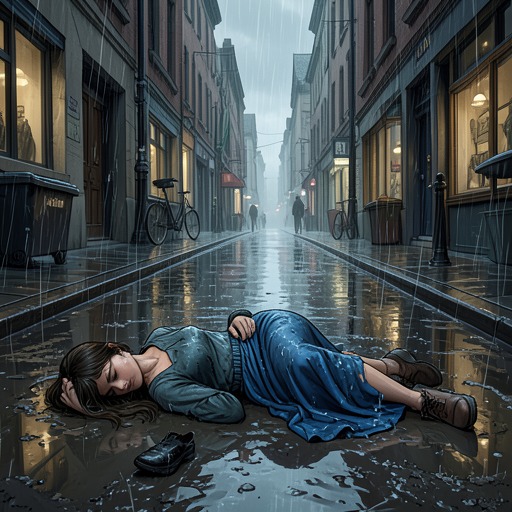
The victim’s worn blue dress and high-heeled silver shoe first suggest to Maigret that she might be one of the women working in the Montmartre nightclubs. Yet the apparent fit is unsettled by what is missing: a shoe has disappeared, and the woman has also been stripped of her coat. Maigret infers that she was killed elsewhere, making the placement of the body part of the mystery rather than an explanation of it.
At the scene, the medical findings establish that Louise died from a fractured skull. Later, Dr. Paul reports that she was struck several times and had clutched dark wool in her hands during a struggle. Maigret receives these findings as evidence with limits: the wool suggests contact with a man’s clothing, but the precise weapon cannot be identified. In a separate line of inquiry, laboratory examination of the black dress finds green paint in spots that cleaning fluid had not removed, along with dust and grains of sand. The sand is identified as the kind found on the Normandy coast, narrowing the possible history of the garment without, by itself, resolving the case.
Reconstructing Louise's Experience
Maigret’s reconstruction does not rest on physical evidence alone. When a woman who had spoken with Louise described their conversation about Nice, she recalled that Louise seemed familiar with the South. Questions about her parents, however, brought on a distant look that the woman found striking. The contrast offers Maigret a glimpse of what the clues cannot supply: Louise’s guardedness around her family and the limits of what others had managed to learn about her.
He also follows the practical instructions in the letter Jimmy O’Malley left for Louise. It directed her to ask for Jimmy at Pickwick’s Bar on Rue de l’Etoile; if he was absent, the barman would say where to find him. If Jimmy could not remain in France, he would leave a paper with the barman, who would require proof of Louise’s identity. As he listens to this account, Maigret makes notes, treating the letter’s arrangements as a chain of clues rather than a complete explanation.
That distinction becomes decisive when Maigret tests Albert Falconi’s account against what is known of Louise. Albert assumes she sat at the bar and ordered a martini, but Maigret reasons that she would have felt conspicuous in her second-hand dress and would not have ordered that drink. He also doubts that she went down to the basement to read the letter: reaching it would have meant passing through a crowded room, an action he believes she would not have dared. Albert ultimately admits that she drank nothing there. The medical report records alcohol in her stomach, while the head waiter says she had no opportunity to drink during her short stay at the Roméo; Maigret points out that the alcohol was rum, not the gin and vermouth in a martini. The correction exposes the gap between Albert’s ready-made picture of a bar patron and Louise’s actual behavior. Maigret shows no triumph, still absorbed in the person obscured by the false account.
A Retrospective View of Louise
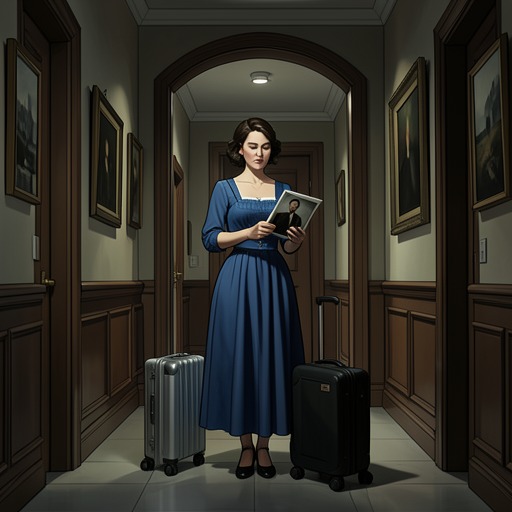
Maigret’s reconstruction also takes shape as a sequence of remembered appearances: he sees Louise Laboine entering Maxim’s, then, a month later, making her way through the wedding guests at Roméo. The two scenes place her in contrasting public settings, but neither makes her life fully legible. In recalling them while considering what others had said about her, Maigret treats these appearances not as a ready-made identity but as fragments that must be tested against the details of her conduct.
Inference and the Limits of a Clue
The alcohol evidence lets Maigret frame a question without pretending it supplies an answer. Since Louise had no opportunity to drink during her brief visit to the Roméo, the alcohol in her stomach must belong to another part of the evening. He considers two possibilities: she may have drunk beforehand to give herself courage, or later, after leaving the wedding reception and before her body was found. The alternatives keep the timeline open; the clue narrows what could have happened at the reception but cannot establish where or when she drank.