Louise Laboine and Jeanine Armenieu
Maigret and the Dead GirlLouise Laboine and Jeanine Armenieu begin as strangers who find one another on a train to Paris and become, for a time, each other’s nearest companions. Their connection gives Louise shelter when she runs out of money, but it is marked by unequal dependence, growing irritation, and Jeanine’s eventual departure without notice. Louise’s later attempts to find her friend reveal both the depth of her need and how completely their once-practical bond has broken down.
A Chance Meeting and Temporary Refuge
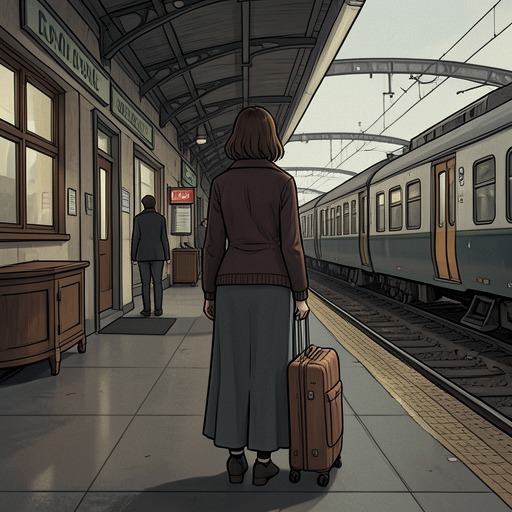
Louise and Jeanine arrived in Paris at about the same time, traveling third-class. Unable to sleep during the journey, they spent the night telling each other about their lives and struck up an acquaintance. The meeting was accidental, but it quickly became consequential: Louise had only enough money for two or three weeks, while Jeanine was staying with her aunt, Mademoiselle Poré.
Louise found work putting stamps on envelopes in an office. According to the account she gave Jeanine, her employer began making advances, and she slapped him; the story was not independently confirmed. After her money ran out and she was evicted from a cheap hotel, Jeanine offered to let her stay for a few nights while she looked for another job. The offer gave Louise immediate shelter, but it also placed her under Mademoiselle Poré’s roof without the older woman’s knowledge.
Jeanine let Louise into the flat while her aunt was out. Louise then hid under Jeanine’s bed until Mademoiselle Poré had fallen asleep. When the aunt worked the second shift, Louise had to remain there until half past two in the morning, because Poré did not begin work until three. Their friendship therefore involved more than companionship: Jeanine took the risk of concealing Louise, while Louise’s presence depended on secrecy and on Jeanine’s ability to manage the arrangement.
Companionship and Growing Strain
From Mademoiselle Poré’s perspective, the two women initially seemed like sisters, cousins, or friends from childhood. Jeanine later clarified that they had met only a few months earlier on the train. The contrast between them also became apparent in the household. Jeanine readily talked about herself, while Louise kept to herself. Poré first took Louise’s reserve for pride, then came to think that shyness was a likelier explanation.
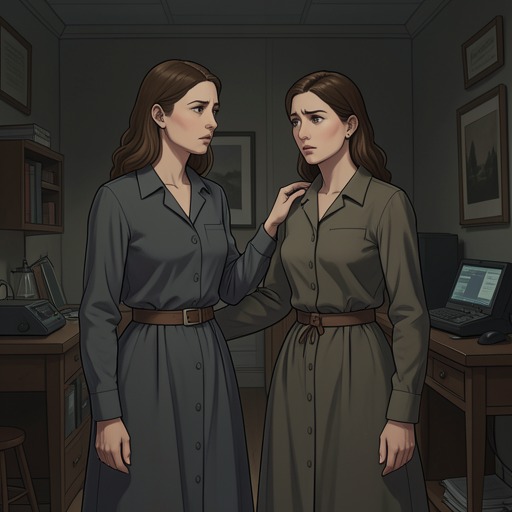
Their closeness was real but unstable. Poré understood Jeanine to have welcomed having someone to talk to, especially at first, and regarded their pairing as a common pattern among young women who came to Paris seeking work. In her account, such alliances could sour as the women’s circumstances diverged. Jeanine sometimes regretted having attached herself to Louise, yet a day or two later was glad to find her at home. The relationship moved between irritation and comfort rather than settling into uncomplicated affection.
Work sharpened that tension. Jeanine found employment more easily, whereas Louise struggled to adapt and rarely kept a job for more than a few weeks. Poré reported that Louise had little education and poor spelling, which made office work difficult. In shops, conflicts also arose: Louise might believe a manager or department head was pursuing her, and she reacted by confronting the person or leaving abruptly. On one occasion, she was suspected during a series of shop thefts, although Poré considered her innocent. These repeated failures made Louise increasingly dependent on the companionship she could not easily sustain, while also giving Jeanine reasons to feel burdened by it.
Jeanine’s Departure and Louise’s Search
By the time Jeanine had been gone from her aunt’s lodging for six months, she had changed her circumstances. She dressed more expensively, went to more fashionable places, sometimes stayed away for several days, and received flowers and boxes of chocolates. She eventually told Mademoiselle Poré that she was leaving without telling Louise and would make sure Louise did not discover where she had gone. Jeanine feared that Louise would attach herself to her again. She left with two suitcases while Louise was out and did not give Poré a forwarding address, intending to check later for letters.
Louise’s departure from the lodging came after Jeanine had already vanished from her life. On the morning her rent period ended, Louise told Poré that she had to leave. Her only luggage was a little blue suitcase, and she did not know where she was going. Though her lips trembled as she spoke, she did not cry. Poré offered to let her stay a few more days while she looked for another tenant, but Louise declined. Poré watched her walk away and, as she disappeared around the corner, felt she should have called her back and given her some money.
Louise later returned to ask Poré for Jeanine’s address. Poré said she did not have it, and Louise apparently did not believe her. Around this period, Louise went to Rue de Douai to rent an evening dress, then sought Jeanine at Maxim’s after learning that Jeanine and Marco Santoni had been seen there. She did not find her. The attempt shows Louise trying to recover the connection through the limited clues available to her, but Jeanine had deliberately made herself difficult to trace.
A Brief Reunion at Le Roméo
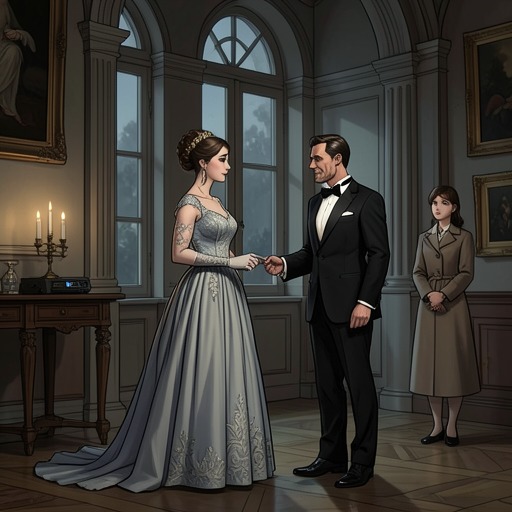
Louise eventually found Jeanine at Le Roméo on Jeanine’s wedding night. She had not come because she knew about the letter Jeanine had kept; she had not even heard of it. Instead, Louise asked to borrow money. She told Jeanine she had no money left and that her landlady had turned her out, and she conveyed that she was in such desperate circumstances that she might harm herself. Jeanine gave her three or four thousand-franc notes, without counting them.
The exchange offers a sharp contrast with the earlier shelter arrangement. Once, Jeanine had secretly made room for Louise in the home she shared with her aunt; now she offered money during a short encounter at her wedding celebration. The help was tangible, but the evidence does not show that it restored their former intimacy or led Jeanine to take Louise back into her life. Louise had found her friend again, yet only briefly and when her own need was acute.
The Relationship in Louise’s Story
The investigation reconstructs Louise’s passage from leaving her mother in Nice to finding Jeanine at Le Roméo, with the earlier companionship serving as a central turn in that trajectory. Maigret later pictures Louise hidden under the bed at Mademoiselle Poré’s, quarreling with Jeanine in their rooms on Rue de Ponthieu, and moving through other places where she tried to get by. These remembered scenes connect the secrecy of her first refuge to the later rupture and failed search for renewed help.
The relationship also clarifies the pattern Maigret comes to recognize in Louise’s life. She had held desperately to the first person she met, and that person eventually left her. Afterward, she tried to face a bewildering and often hostile world without learning how to secure a lasting place in it. Jeanine’s departure is not the only cause of Louise’s isolation, but it makes that isolation visible: the chance companionship that once protected her becomes another lost connection she cannot replace. Their story is therefore both a friendship’s disintegration and a measure of Louise’s persistent, unsuccessful effort to belong.