Louise Laboine’s photograph
Maigret and the Dead GirlLouise Laboine’s photograph is both a practical instrument in the search for her identity and a measure of the distance between being pictured and being remembered. Reproduced in newspapers and circulated by police, the image makes her publicly recognizable; in the photographs Maigret studies, however, she remains more than a case or a type, a young woman whose face seems to hold a question no investigation can answer by itself.
The image in circulation
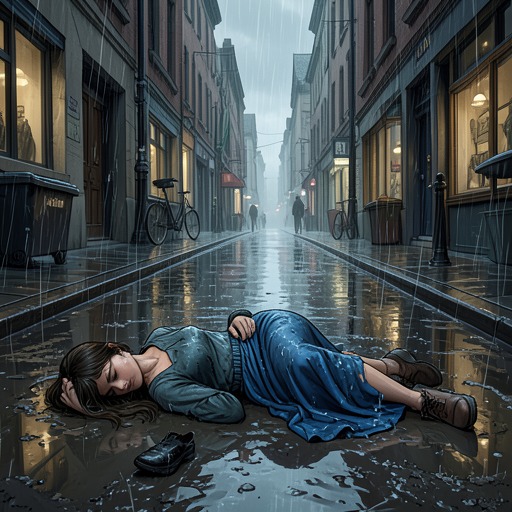
The photograph entered the public record after Louise was found dead on Place Vintimille. By about one o’clock, the first edition of the evening papers had appeared, and all of them carried the same picture that had been printed in the morning papers. Repetition gave the image reach, but it did not immediately produce a name: the fact that readers could see her did not mean that they knew who she was.
Recognition nevertheless began to travel through ordinary encounters and recollections. Mademoiselle Irène, who had seen Louise only twice, recognized her at first glance despite the bruising visible in the newspaper image. Her recognition connected the dead woman to a recent visit to a shop on Rue de Douai, and helped Maigret establish that the photograph showed Louise as she had looked the previous evening, before the discovery of her body.
The police used the photograph not only to invite recognition but to extend the search beyond the immediate scene. Maigret ordered copies sent to rural divisions; Lapointe had already sent them without waiting for instructions. Maigret then asked whether they had also been circulated to the Paris stations. The image thus became a portable request for information, moving across jurisdictions in the hope that someone who had known Louise, however briefly, would supply the connection the newspapers alone could not provide.
Portraits and the person they frame
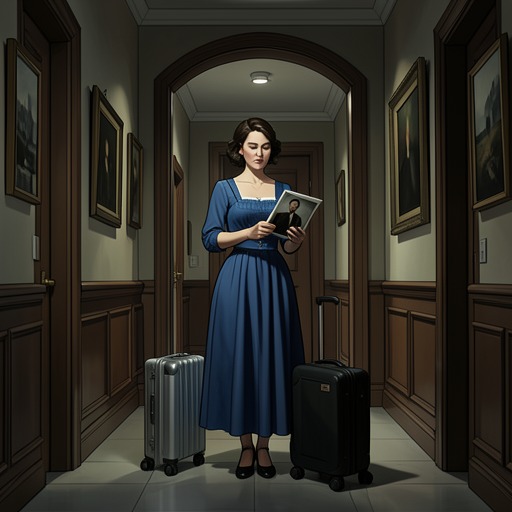
The investigative photographs Maigret receives are more than a single documentary likeness. He sees four proofs: two show Louise in a black dress, one in her brown checked coat, and one in evening dress. Their differences preserve details of how she appeared on separate occasions, while the sequence lets the investigators imagine her moving through Paris rather than fix her in the circumstances in which she was found.
These pictures also change the terms of Maigret’s attention. He has seen Louise in the rain on Place Vintimille, under the glare of flashlights, and later on the marble slab at the Medico-Legal Institute. The photographs made at Mademoiselle Irène’s shop offer a different view: Louise as she must have looked when she entered there the evening before. Maigret is startled by their quality, and Lapointe is struck by them too. The camera has caught a lifelike expression in her eyes, giving the portrait a presence that the earlier views of the dead woman did not have.
Maigret’s response resists reducing her to prettiness. He senses that the word does not describe everything the portrait conveys; the face appears to ask an unanswerable question. That impression is not a fact about Louise’s intentions, but it marks a change in the investigators’ relation to the image. The photograph no longer serves only to classify or identify: it makes the absent woman difficult to regard as merely interchangeable with the many people who pass through the city.
Recognition and its limits
The newspaper image exposed the unevenness of recognition. Mademoiselle Irène could identify Louise after only two meetings, even in a picture that showed her bruised. Another woman, asked whether she had recognized Louise in the paper, hesitated and said she had not been sure. The photographs therefore do not operate as transparent proof. What they disclose depends on a viewer’s prior contact with Louise, willingness to acknowledge that contact, and ability to connect a printed face with a remembered person.
Clothing helps explain how observers formed impressions from the image and from Louise’s repeated appearances. One woman recalled seeing her in the same dress and coat and inferred that she was poor; she also expressed resentment toward people who were no richer than herself but seemed to consider themselves better. Such judgments reveal the social meaning attached to what Louise wore, but they do not establish the whole of her circumstances. The photographs preserve garments as visible details, while the testimony shows how quickly those details could become a verdict about their wearer.
The portraits also stand against the apparent disappearance of Louise’s past. Maigret reflects that she had once had parents, school friends, and people who knew her as she grew up; they had spoken with her and called her by name. Now, despite her face being reproduced in the papers, no one seemed concerned or seemed to remember that she had lived. The photograph can prompt an individual to recognize her, but mass circulation cannot by itself restore a network of personal ties or ensure that anyone steps forward.
Evidence, interpretation, and significance
The image supplies a starting point for inquiry, not a complete account of Louise. Maigret must place it beside witness memories and other evidence, and distinguish what a portrait shows from what observers assume it means. Later, when he challenges Albert Falconi’s account, he reconstructs how Louise would likely have felt out of place at a bar and argues that she would not have ordered the drink Falconi attributed to her. His reasoning depends on her circumstances and behavior, not on treating her photograph as proof of an unseen event.
That distinction gives the photograph its double function in the investigation. It is an administrative tool—reproduced, dispatched, and shown to people who might know the woman—yet its usefulness is limited by the gaps between a likeness and a life. A face can be copied widely while the person behind it remains socially obscure; a viewer can recognize it, misread it, or avoid admitting recognition. The portrait helps turn the unidentified dead woman into Louise Laboine, but the recognition it solicits cannot undo the neglect that made her seem forgotten.