Rue de Clichy
Maigret and the Dead GirlRue de Clichy enters the investigation through No. 113 B, a middle-class residential building where Louise Laboine had rented a room. The address leads Maigret from an uncertain telephone contact to Madame Crêmieux, the landlady who had let Louise stay there. It anchors the inquiry in an ordinary lodging rather than establishing the scene of Louise’s death.
The address and the inquiry
Maigret receives the address as Rue de Clichy, No. 113 B, along with instructions to ask Madame Crêmieux on the second floor for information. He takes Janvier to the building; its concierge looks at the two men suspiciously until Maigret identifies them as the Police Judiciaire. The setting is described as a middle-class house, typical of its neighborhood.
The telephone caller’s speech makes an impression on Maigret: he thinks she sounds like a young maid recently arrived from the country, with an accent he cannot place. The address is therefore a practical lead, but the caller’s identity and connection to Louise are not established by that impression alone.
Louise’s lodging and Madame Crêmieux
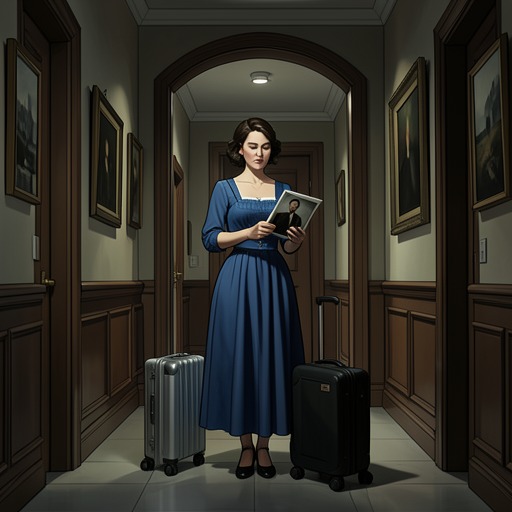
Madame Crêmieux says the woman who called herself Louise Laboine had given her that name, but she had never seen Louise’s identity card. The distinction matters: Rue de Clichy supplies a place where Louise lived and a name by which she was known, not independent proof of her identity. Madame Crêmieux had tried to learn where Louise came from and where she had lived before. Louise accepted an invitation to sit with her only once, spoke very little during the visit, and otherwise remained difficult for the landlady to know.
Madame Crêmieux also recalls seeing Louise several times on a bench in the Trinité garden, where she herself went with the children nearly every afternoon. She describes Louise as doing nothing there. The garden is a separate point in Louise’s sparse known routine: the evidence places her there, but gives no further explanation for the visits.
Rent, notice, and the disappearance
Louise paid Madame Crêmieux one hundred francs toward her rent and promised to settle the balance at the end of the week. When she later tried to avoid the landlady, she said she would have the money in a day or two. Madame Crêmieux says that she needed the money but would have been more patient if Louise had behaved more openly with her. The unpaid rent thus forms part of the practical strain between tenant and landlady, alongside their lack of intimacy.
Three days before Louise disappeared, Madame Crêmieux gave her notice, saying that a relative was coming from the country and she would need the room. Louise answered that she understood. The timing makes the lodging significant to the inquiry: her landlady had recently required her to leave, while Louise had not offered an account of her next plans. The evidence does not establish that this notice caused her disappearance.
Place in the investigation
Rue de Clichy helps Maigret reconstruct Louise’s circumstances through testimony rather than through a settled personal history. At No. 113 B he finds a landlady who can provide the name Louise used, describe her reserve and unpaid rent, and recall a few appearances in the garden, but who never saw identification or learned where Louise came from. The address therefore brings the investigation closer to the conditions of Louise’s life without resolving her identity or explaining her movements.
The address should not be mistaken for the place where Louise was killed. Her body was found at Place Vintimille, and Maigret’s initial assessment was that she had been killed somewhere else. Rue de Clichy’s importance is residential and evidentiary: it is one of the few places where people who encountered Louise can supply details about her, even as those details leave much of her life unknown.