Rue de Ponthieu
Maigret and the Dead GirlRue de Ponthieu is presented as a narrow, lively street running parallel to the Champs Elysées, where Jeanine Armenieu lived for about two years and Louise Laboine was later remembered as a former resident. Its modest shops and apartments place the street within the everyday Paris through which Maigret and Janvier follow the women’s traces.
Setting and Urban Character
While Janvier went into a building to ask for information, Maigret waited on the curb and considered Rue de Ponthieu in relation to the grander avenue nearby. He saw it as part of a familiar Parisian pattern: each major thoroughfare had a narrower, livelier partner, with small bars and food shops, restaurants serving drivers, inexpensive hotels, barbers, and other small businesses. A wine shop tempted Maigret as he waited; Janvier returned before he went inside.
The street’s character is defined by proximity and contrast. It belongs to the orbit of the Champs Elysées, but its everyday businesses and residential buildings give it a more intimate, workaday scale. One apartment was near the corner of Rue de Berri, with a bar on the ground floor.
Jeanine Armenieu’s Apartment
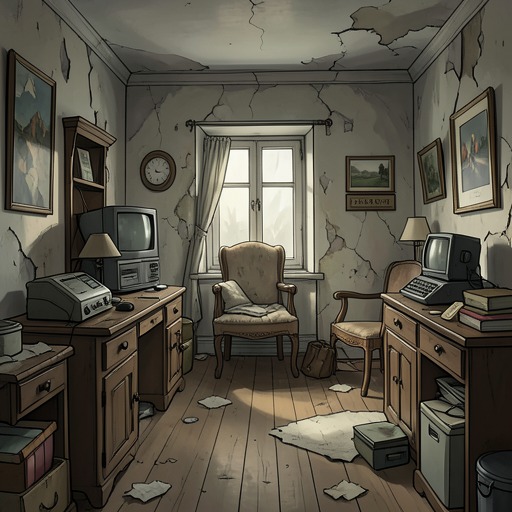
A woman at the building recalled that Jeanine had lived there for about two years. When Jeanine first arrived, she was very young and inexperienced, and often came to ask the woman’s advice. She worked as a typist in an office somewhere nearby and rented a small flat on the third floor. The flat looked onto the courtyard, though the woman described it as pleasant.
This account gives Rue de Ponthieu a personal history beyond its role as a Paris street: it was a place where Jeanine had lived while beginning adult life and where she had sought advice. The remembered details are ordinary—her office work, the courtyard-facing room, her visits—but together they make the apartment a tangible marker in the reconstruction of her past.
Louise Laboine and the Inquiry
The building also enters the investigation through Louise. About ten days before the woman was questioned, a man had come to ask whether Louise Laboine lived there. The woman told him that Louise had left several months earlier, was still in Paris, and that she did not know Louise’s address, although Louise sometimes visited. Her answer establishes the apartment as a place Louise had once occupied and later returned to intermittently, while underscoring how little dependable contact the people around her retained.
For Maigret, Rue de Ponthieu is therefore both a physical clue and a fragile social link. Jeanine’s former home and Louise’s vanished address overlap in the same building, but neither memory supplies a current location for Louise. The street helps map where the women had lived and crossed paths with others, while the gaps in what its residents know preserve the uncertainty that drives the inquiry.