
Organized Crime and Public Backlash
Man on FireThis thread traces how a secretive criminal order cultivates power, then loses some of its legitimacy when scandal and violence enter public view.
increasing Bearing strength in each event
 decreasing
Bearing strength in each eventdecreasingAn Order Rebuilt
Criminal Authority Takes Root
Reconstruction creates opportunities
In the postwar period, criminal groups profit from rebuilding, protection, prostitution and control of local commerce. Their services often grow where public institutions are weak or compromised.
An arbiter emerges
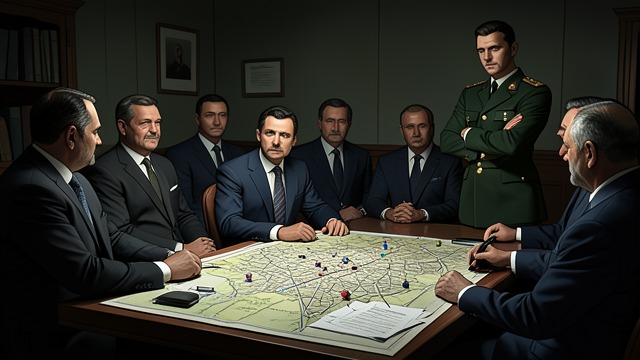
The power-sharing meetings of 1953–1954 establish a hierarchy intended to restrain internal violence. Cantarella becomes its central arbitrator, turning cooperation into a profitable system.
Power Enters Ordinary Life

The Organization’s Reach
Influence across sectors
The criminal order touches business, politics, police and courts. Its strength depends not only on violence but on information, patronage and the ability to make itself appear unavoidable.
Limited resistance
Satta’s investigative work shows how hard it is to turn knowledge into convictions. Informants, weak sentences and fear protect the people at the top.
The Kidnapping Scandal
A Private Crime Becomes Public
A fraud exposed
Ettore’s participation in the kidnapping-for-insurance arrangement connects respectable business and legal circles to criminal organization. The abuse and death of a child make the scheme especially difficult to dismiss as routine crime.
Legitimacy deteriorates
As newspapers report the scandal and killings, public attention hardens against the bosses. The organization’s secrecy no longer protects it from moral condemnation.
A Popular Avenger

Anger Finds a Symbol
The face on the front page
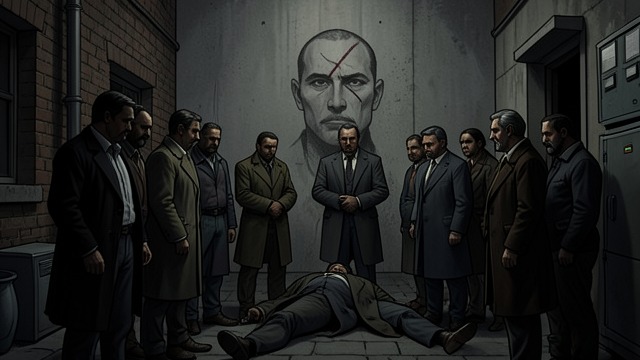
Cantarella circulates Creasy’s photograph, intending to help the organization find him. Instead, newspapers and the public make him an emblem of resistance.
Approval without innocence
“GO CREASY!” expresses frustration with the Mafia and a weak state, but public approval does not make Creasy’s killings lawful. The story distinguishes sympathy for the motive from the moral cost of the method.
A Fractured Hierarchy

The Order Loses Its Center
Leadership removed
The deaths of Conti and Cantarella break the alliance that had coordinated power across regions. Rivalries and confusion create an opening for Satta’s investigations.
A limited victory
The criminal system is weakened but not erased. The aftermath suggests that public backlash and enforcement can exploit a crisis, while also acknowledging that organized power may survive its current leaders.
From the postwar years into the 1950s
Before the kidnapping scandal
After the truth about Pinta’s abduction emerges
After Creasy’s identity becomes public
After the Battle of Palermo
