“GO CREASY!”
Man on Fire“GO CREASY!” is the slogan attached to Creasy’s sudden celebrity and the public’s support for his campaign against the Mafia. Repeated across newspapers, T-shirts, car stickers, and a final shouted appeal, the phrase makes one man’s hidden struggle a visible popular cause. Its force lies in a contradiction: the public wants to acclaim Creasy, but the attention makes the fugitive harder to conceal.
From a Face to a Slogan
The expression first takes shape through images. Wally and Paddy are opposite a newsstand when Paddy stops, mesmerized by the newspapers. Their front pages carry Creasy’s face across a dozen different papers. The sight is not merely a report that he is wanted or famous: it confronts them with the scale of his recognition and prompts their argument over what to do next.
Paddy rejects Wally’s plan to leave Italy. She acknowledges that Creasy has been using them and that he is alone, facing both the Mafia and the police, but insists that he needs help. Her reason is the child whose rape and murder Creasy is avenging: she stresses that the girl was eleven years old and says that the people responsible are now paying for it. When Wally asks why they should become involved, Paddy answers with the blunt challenge, “When did an Aussie ever need a reason to get into a fight?” The slogan’s public support is thus grounded in a moral judgment: Creasy’s violence is being read not simply as criminal action, but as a response to a crime for which the powerful have not provided justice.
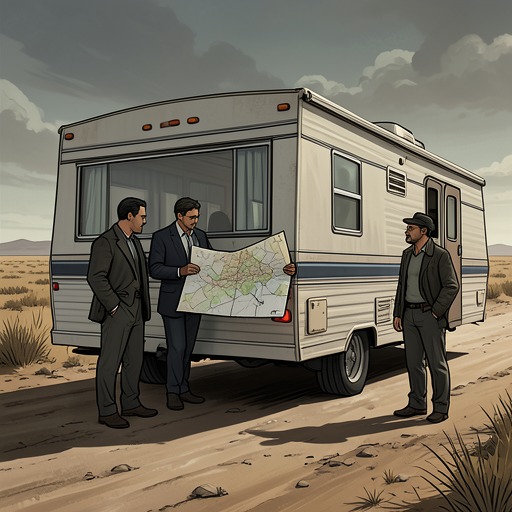
Wally initially argues that they should use the money and passports in Paddy’s bag, take a train, buy supplies in Brindisi, and catch a boat to Greece. Paddy refuses to leave Creasy on his own. Wally eventually grins and relents, and Paddy hugs him. The newspapers have not just made Creasy recognizable; his image has helped turn two people who might have escaped into helpers willing to remain involved.
The Public Makes a Celebrity
The slogan spreads beyond the front page. Three days after Wally and Paddy arrive at the Mobex outside Bari and put a newspaper in front of Creasy, they are travelling with others when Paddy spots an Alfa Romeo that has just overtaken them. Its rear window bears the sticker “GO-CREASY!” It is the fifth such sticker they have seen since leaving the outskirts of Brindisi. Wally responds that they are transporting a celebrity. The repeated sightings make the expression feel less like an isolated message than a phrase circulating through ordinary public space.
The sticker’s hyphenated form differs from the spaced “GO CREASY!” printed on T-shirts in Rome and northern Italy, but both versions turn Creasy’s name into a call of support. Satta tells Guido that Creasy may have the best-known face in Italy and describes the public as being behind him. Bellu connects that enthusiasm to frustration with the bosses’ power and arrogance and with a government that fails to act. In that account, the slogan fills a political and moral vacuum: people make a hero of the one man who appears to be making the powerful pay.
The applause is not presented as uncomplicated. Satta is astonished by the reaction but doubts that it is healthy. The slogan lends Creasy a public identity that can be celebrated, while the acclaim itself threatens his ability to move safely. Guido concludes that, with his face so well known, Creasy cannot afford to show it anywhere. Satta’s question of where he can stay—isolated and totally unseen—exposes the practical cost of the fame announced by the slogan. The public can support Creasy as an image without knowing where the man behind it is hiding.
A Rallying Cry at the Close
Near the end, “GO CREASY!” is no longer printed on a sticker or a shirt; it is shouted. In the scene with the pilot, a hand stabs out and the words ring out. The pilot turns his head, but the doorway is empty. The source of the cry is not identified, and the text does not explain whether it has been spoken by someone present or heard in the moment as an echo of Creasy’s public following. That unanswered beat gives the expression a different quality from its earlier appearances: the slogan is present, but its speaker is absent.
The narration then shifts to Don Cantarella inside Villa Colacci. The windows are closed, and he watches the garden through curtains he has opened slightly. In recent days, fear has given way to frustration and anger. Set against this guarded interior, the shouted slogan carries the outside world into the scene without depicting a crowd or identifying a speaker. Its recurrence links Creasy’s popular image to the pressure surrounding the Mafia’s leader, while preserving the gap between the celebrated name and the elusive man.
Meaning and Narrative Function
The slogan condenses a public response to organized power into three short words. Its imperative form does not describe Creasy so much as urge him onward and declare allegiance to him. The newspapers supply his face; the shirts and stickers make the words portable; the final shout gives them a voice. Across these forms, a private campaign of revenge becomes a public emblem of opposition.
That transformation carries a tension the novel does not resolve. Paddy’s decision to help rests on the specific injustice done to an eleven-year-old girl, while the broader public response is explained as anger at the power and arrogance of the bosses and the government’s failure to stop them. The slogan makes those grievances converge on Creasy. Yet the same recognition that gives him popular backing exposes him to danger by making his face impossible to hide. “GO CREASY!” is therefore both an endorsement and a burden: a call for a man to act, and a measure of how completely the public has turned him into a symbol.