Creasy's hiring as Pinta's bodyguard
Man on FireCreasy's hiring as Pinta's bodyguard is both a contrivance and a turning point: Ettore seeks a low-cost way to satisfy Rika and reduce insurance expenses, but the nominal post brings Creasy into Pinta's life and becomes the setting for a real bond. What is presented as a practical arrangement gradually acquires a meaning its organizers did not intend, even as later revelations expose how closely the hiring was entangled with a kidnapping-for-ransom fraud.
The proposal: security as a financial calculation
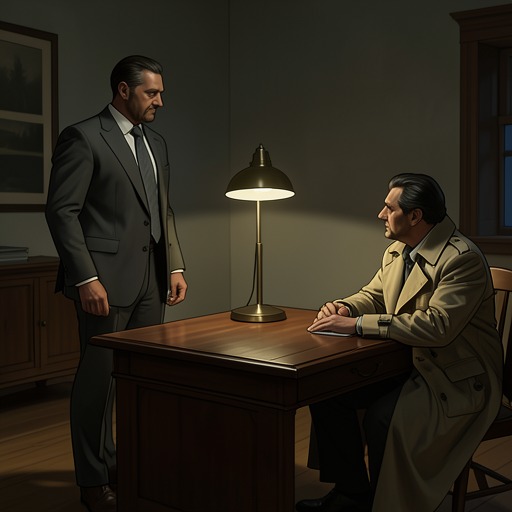
Ettore turns to his friend and lawyer, Vico Mansutti, hoping that Vico will explain the family's financial position to Rika. Instead, Vico's proposed solution is to hire a bodyguard. He describes a market strained by terrorism and a shortage of trained guards, with strong demand and rising prices. A genuinely capable full-time bodyguard, he says, would cost about thirty million lire a year, making the suggestion seem to Ettore like an added burden rather than an answer to his financial problems.
Vico then connects the post to kidnapping insurance. Italian insurance companies cannot issue policies covering ransoms, because the government believes such coverage might encourage kidnapping; foreign insurers can, and Lloyd's of London is a leading provider. Vico explains that premiums must be paid outside Italy and that the insured must keep the policy secret. Security measures can lower the premium: in his example, a one-billion-lire policy might cost fifty million lire at a five-percent rate, but hiring a full-time guard could bring the rate down to three percent, or thirty million lire. That twenty-million-lire reduction would not justify a thirty-million-lire salary on its own.
The workaround is the cheap, nominal guard Vico calls a premium bodyguard. Such a man, Vico says, would do little to stop an actual kidnapping, but could still qualify the client for a lower insurance rate. At around seven million lire a year, this apparent security could make the policy cheaper overall. Ettore initially objects that he does not want insurance against a kidnapping he believes will not happen. Then he grasps the other purpose: a temporary hire will make it appear that the family has acted on Rika's concerns, allowing Pinta to return to school and Rika to save face. The proposed job is thus designed less around protection than around the appearance of protection and the management of household tensions.
Guido recruits Creasy
The recommendation reaches Creasy through Guido, who relays an idea from his brother Elio. Elio, educated with Guido's help and now an accountant at an auditing firm in Milan, has a client connected to a security agency that supplies bodyguards to industrialists. The agency's demand for trained men is high, but this job is not for a trained protector: Elio has explained the premium-bodyguard arrangement to Guido.
Guido knows that Creasy has money saved from years of work and that the poor pay therefore need not be decisive. The more serious objection is Creasy's condition. He is unfit and virtually an alcoholic; Guido recognizes that taking the post could mean accepting work under false pretenses. Creasy himself sees the absurdity and says that, in his state, he could not guard even a corpse. Guido does not pretend that the job suits him as a conventional security assignment. He gently presses Creasy to come to Milan, stay with Elio for a few days, and see what work is available. Creasy considers further objections, but finally agrees to look into it, still incredulous at the prospect.
Terms and entry into the household
The search proves less simple than Vico's proposal made it sound, because Rika has her own requirements for the person who will guard Pinta. Once the arrangement takes shape, Rika and Pinta prepare a large room at the top of the house, furnishing it with a small table, a large easy chair, and rugs. The room already has a brass bedstead, a chest of drawers, and a wardrobe. Creasy is to eat in the kitchen with Maria, the housekeeper, and Bruno, the gardener, rather than be absorbed into the family's social life.
Rika's list of duties makes the everyday nature of the assignment plain. Creasy is principally to drive Pinta to school and collect her in the afternoon; between those trips, he is available to chauffeur Rika to shopping and lunch engagements. He tells Ettore that he is no good at social chitchat but will do the job as well as he can. Asked whether he has a gun, he says the agency provides one and that Ettore must supply a letter so the agency can arrange a police permit, with the cost added to the bill. Ettore asks him to start immediately and requests that his drinking problem be kept from Rika. Their agreement is a three-month trial contract, after which both sides can review whether to continue.
From nominal protection to care
The gap between the hiring rationale and Creasy's actual conduct becomes visible in an accident on the steep slope behind the house. When Pinta falls while trying to see a nightingale's nest, Creasy hears her cry, examines her ankle and ribs, and judges that she should be taken into Como for an X-ray. He calms the anxious Maria, tells Bruno to stay at the house in case Pinta's parents call, and carries the injured girl carefully down to the car. His response is automatic, shaped by a life spent dealing with wounded people, but to those around Pinta it is also reassuring evidence of care. A position created to satisfy a policy and preserve appearances begins to involve the very attentiveness that its cheap, symbolic version was never meant to guarantee.
Creasy later describes the change as gradual but inexorable: at first he deliberately shut Pinta out, and then the two of them grew close. When he recounts Pinta's life and death to Nadia, he recalls the day in the mountains when Pinta gave him a crucifix as the happiest and most natural day of his life. Nadia understands Pinta through his account and grieves for her as if she had been her own child. The hiring therefore marks the beginning of a relationship that outgrows the terms of employment: Pinta's curiosity and trust draw Creasy back toward feeling and responsibility, and her death gives his later actions their personal force.
The arrangement exposed
The initial explanation of the post as a cheap insurance device proves incomplete. When the facts about the low-paid hire come out, Rika learns that Creasy was brought in for a pittance merely to appease her. She reacts with fury, calling him a drunk and accusing Ettore of placing a boy-scout-level protector between her daughter and danger. Her anger identifies the arrangement's central failure: it had answered her demand in form while withholding the protection she believed she was asking for.
Later, Creasy tells Rika what he learned from Fossella: Pinta's kidnapping was itself an insurance setup. Ettore had taken out a two-billion-lire policy with Lloyd's of London, with Fossella to return half the ransom to him; Vico Mansutti acted as intermediary and received a commission through his organized-crime connections. This revelation gives the earlier hiring a more sinister context. The cheap guard had been discussed as a way to lower premiums and placate Rika; the later disclosure shows a policy, a kickback, and a kidnapping arranged for profit. Rika's hatred turns toward Ettore as Creasy finishes explaining. The appointment that began as a calculated compromise thus stands at the intersection of genuine protection, insurance incentives, family deception, and the bond that made Pinta's fate devastating to Creasy.