Creasy–Giorgio Rabbia vendetta
Man on FireCreasy–Giorgio Rabbia vendetta is the first direct reckoning between Creasy and one of the men involved in Pinta’s kidnapping. Rabbia’s capture serves two purposes: it makes him answer for his part in the crime and gives Creasy a route toward the men who organized it.
The First Target
Creasy places Rabbia within a hierarchy rather than treating him as the sole author of the kidnapping. He explains that Fossella and Abrata are the two principal bosses in Milan, identifies Fossella as the organizer, and says that Conti in Rome and Cantarella in Palermo would also receive shares. In Creasy’s account, Rabbia and Sandri stand immediately below Fossella in responsibility. The structure makes the vendetta a pursuit of a chain of command: the people who carried out the kidnapping, those who arranged it, and the powerful figures who profited from it.
Creasy tells Guido that Rabbia and Sandri are his first targets, but that he needs to question only one of them, probably Rabbia. He judges Rabbia to be muscle, slower-witted than Sandri, and therefore more likely to break under questioning. The plan is deliberate: Creasy intends to drive to Milan, reach the cottage early the next morning, watch Rabbia for a few days, and then take him. Capturing Rabbia is thus presented not as an isolated reprisal but as the opening move in an investigation conducted through coercion.
Capture and Interrogation
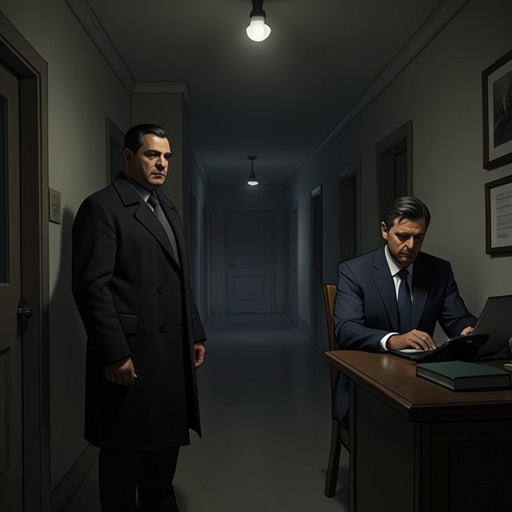
Rabbia leaves a meeting and returns to his Lancia, unaware that he is being watched. As he reaches for the ignition, Creasy presses a gun to the back of his neck and orders him not to move. Rabbia’s startled attempt to establish who he is changes nothing: Creasy already knows his identity and has taken him under control.
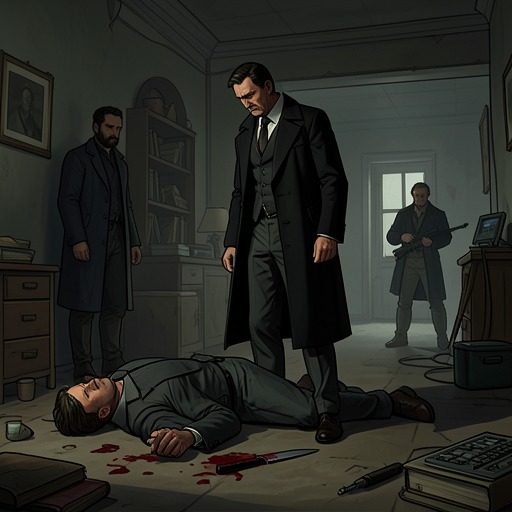
At the place where he questions Rabbia, Creasy lays out his terms with deliberate coldness. He points to the implements on the table and threatens severe physical punishment unless Rabbia answers fully and truthfully. When Rabbia finally asks what Creasy wants, Creasy opens a notebook and begins with the Balletto kidnapping. The notebook makes the encounter more than an act of revenge: Creasy is gathering testimony that can identify each participant’s role.
The questioning lasts over an hour. Rabbia says he drove the kidnapping car and identifies Sandri as the man who shot Pinta’s bodyguard. The other two men involved, Dorigo and Cremasco, are dead. Rabbia claims not to know about the ransom money; he says the group was told to collect Pinta at a designated time and place and hold her at a house in Niguada. His account traces the operation back to Fossella, who had described the bodyguard as an easy obstacle and instructed Dorigo to fire shots to frighten him away. Instead, Rabbia says, the plan was careless from the beginning.
Rabbia also explains Sandri’s anger: Dorigo had been a close friend, and Pinta had fought back and scratched Sandri’s face. Asked directly whether he, too, had sexually assaulted her, Rabbia eventually admits that he did, after Sandri. His claim that he thought it made no difference exposes the moral evasion beneath his account: even as he supplies details Creasy needs, Rabbia describes his own participation without acknowledging the distinction between the perpetrators’ choices and Pinta’s suffering.
The Limits of the Reckoning
Rabbia’s admission does not produce an immediate exchange or visible response from Creasy. As Rabbia tries to qualify what he has confessed, Creasy remains perfectly still, his attention seeming to have moved elsewhere, and then resumes the questioning. The pause leaves the encounter suspended between testimony and judgment: Rabbia has supplied another fact about the kidnapping, but the account itself offers no sign that his admission can repair or answer the harm done to Pinta.
Vendetta as Inquiry
The encounter turns Rabbia from a name in Creasy’s account of the Mafia hierarchy into a source of particulars: who drove, who fired, where Pinta was to be held, and how Fossella had misjudged the bodyguard. Creasy’s notebook and sustained questioning give the vendetta an investigative shape, while the threat of violence makes that inquiry inseparable from coercion. Rabbia’s answers widen the reckoning beyond the man in front of Creasy, yet his admission of his own role offers no resolution between them. The relationship remains defined by an imbalance of control: Creasy determines what is asked and when the questioning continues; Rabbia can only disclose what he did and what he knows.