Dino Fossella
Man on FireDino Fossella is a criminal operator caught between Italy’s competing Mafia interests and the scheme he helped carry out against the Balletto family. His importance lies not only in his role in Pinta Balletto’s kidnapping, but in what he reveals under interrogation: the abduction was engineered to exploit an insurance policy, turning a child’s safety into part of a criminal financial arrangement. His account connects the kidnapping to Ettore Balletto and Vico Mansutti, while his death ensures that the revelation comes at the end of a brutal confrontation.
Position in the Criminal Network
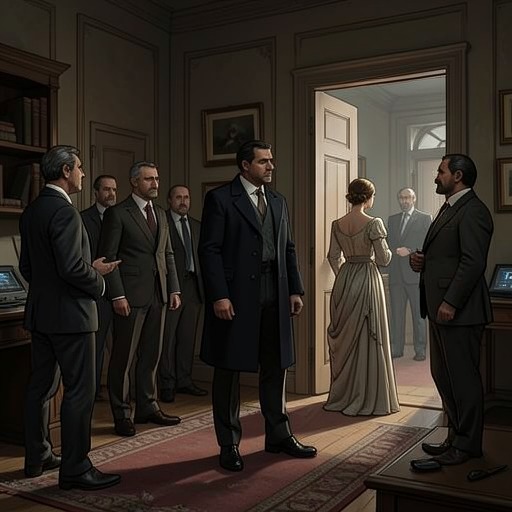
At a meeting attended by Floriano Conti, Cesare Gravelli, and Maurizio Dicandia, Conti blamed Fossella for recent bad decisions. He said Fossella had been warned not to shortchange the French on a deal, but had tried to make extra money from what was described as the final shipment before the supply operation shifted to Bangkok. The episode presents Fossella as a participant in criminal business whose pursuit of additional profit had begun to damage his standing.
The kidnapping brought a more serious rebuke. Dicandia described the abduction of Pinta Balletto as badly handled: she had been abused and then died in a car, and the public response had persisted for weeks. Conti was irritated that the affair reflected on Milan, which fell under his immediate control. The discussion shows the kidnapping’s consequences reaching beyond its victims: its brutality had become a liability within the criminal hierarchy.
Fossella, for his part, resented Don Cantarella’s authority. He was angry that Cantarella had reprimanded him and regarded the older power broker as a sheltered arbitrator who collected a share of criminal activity without exposing himself to its dangers. Yet Fossella also recognized the strength of Cantarella’s alliances, including his connection with Conti, and did not openly challenge him. His resentment therefore coexists with an awareness of the network’s constraints.
The Kidnapping and Its Financial Motive
The circumstances that made the kidnapping possible are set against a system of ransom insurance. Vico explained that Italian insurers could not write such policies, while Lloyd’s of London offered coverage subject to offshore payment and strict secrecy. Because security provisions could reduce premiums, a full-time bodyguard might be hired partly for the insurance discount; a so-called premium bodyguard could serve that financial purpose cheaply despite offering little real protection. The arrangement made the appearance of security economically useful even when effective protection was not the aim.
After interrogating Fossella, Creasy told Rika Balletto that Pinta’s kidnapping had been an insurance setup. Ettore had taken out a Lloyd’s policy for two billion lire, and the agreement was for Fossella to return half the ransom to him. Vico Mansutti had acted as intermediary, using his connections with organized crime and receiving a commission. The arrangement made the ransom more than a payment extracted from a family: it was also the mechanism through which the conspirators expected to profit from the policy.
The fraud gives particular force to Creasy’s question about why a man of Fossella’s intelligence would kidnap a girl whose father had no money. The answer, disclosed through Fossella’s interrogation, is that the scheme did not depend on the father’s wealth in the ordinary way. The policy and the promised division of the ransom supplied the financial logic. The kidnapping’s failure was catastrophic not only because Pinta died, but because the attempt to turn her abduction into an insured transaction produced public outrage and exposed the participants.
Interrogation and Death
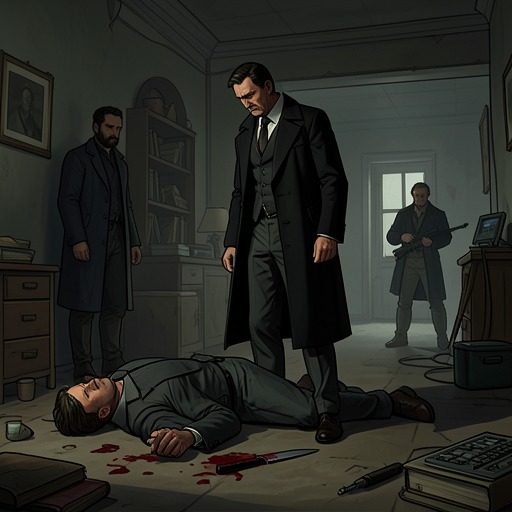
Creasy’s questioning of Fossella ended at 9:53. After Creasy capped his pen, took his notebook, and left, Fossella did not shout or struggle; he sat rigidly, watching the clock as the sound of the van faded. At 9:58 an alarm rang. Two minutes later, a bomb killed him. The carefully marked interval makes the scene’s quiet aftermath part of the execution: the interrogation is over, the engine has gone, and Fossella remains alone with the ticking clock until the delayed blast.
Fossella’s death follows the disclosure of the conspiracy and closes his part in the pursuit, but it does not erase what his interrogation has established. His account identifies the planned kickback to Ettore, Vico’s intermediary role, and the criminal connections behind the transaction. In the larger story, Fossella is therefore both an agent of the kidnapping and a source through whom its concealed financial motive becomes legible.