Don Cantarella
Man on FireDon Cantarella is the Palermo boss whose quiet diplomacy helps organize the Italian Mafia into a system of cooperation, shared power, and profit. Small and controlled in manner, he appears to govern through calculation rather than display; his authority is demonstrated in the agreements he brokers and the orders others carry out. The position he builds as an arbitrator eventually makes him a target, and his death at Creasy’s hands exposes the limits of the order he had spent years strengthening.
Identity and Early Authority
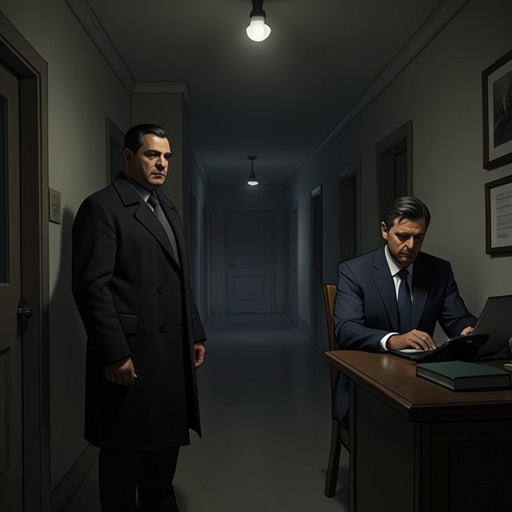
An early business meeting in a walled villa in Palermo presents Cantarella in his element: seated behind a polished desk while two men report on enterprises spanning the country. He listens, asks for clarification when he needs it, and then gives concise instructions. No notes are taken. Routine business gives way to a discussion of a proposed steel complex in poverty-stricken Calabria, where extensive land purchases had been made as governments changed and the project’s future grew uncertain. Cantarella decides to withdraw. The episode establishes a style of authority rooted in information, deliberation, and decisive control over business with consequences beyond the room.
The physical impression is deliberately at odds with the reach of that power. Cantarella is described as sleekly small, and later as small, dapper, and diplomatic. In the early meeting, after issuing his decision, he pours three glasses of Chivas Regal and raises a toast. The composed ritual belongs to the same mode of rule as his brief instructions: command does not require a performance of anger when the people around him already know to listen.
The Arbitrator and the Mafia’s National Order
Cantarella’s rise to national influence comes amid efforts by Mafia bosses to rebuild their organization after the disruption of the war. By 1953–54, bosses from different regions were negotiating spheres of influence and a hierarchy of power. The talks were secret and marked by rivalries: traditionalists from Calabria resisted the influence of northern bosses, while leaders in central Italy sought a greater voice. The participants accepted the need for order, but could not agree on who should supply it. Rome’s Moretti was considered weak, while Conti was judged too young; the northern bosses and Calabrians would not accept one another.
The compromise favored the man who had organized the meetings in Palermo. Cantarella became interim arbitrator. His small stature and diplomatic manner concealed a political intelligence that the other bosses did not fully recognize at the time. The settlement ushered in a long period of relative peace and considerable profit, while Cantarella’s position endured: for the next twenty years, his political gifts sustained and strengthened his influence. His power rested not simply on commanding one territory but on serving as a broker among rival centers of authority.
That reach is visible in Creasy’s account of the kidnapping network. Creasy identifies a chain running from the Milan bosses Fossella and Abrata through Conti in Rome to Cantarella in Palermo, who takes a share of everything. The account adds that Cantarella now profits from the killing as well as the kidnapping. This is the darker side of the arbitrator’s national role: the same connections that make coordination possible also link him to the violence carried out across the organization.
Fair Dealing and the Limits of His Code
Cantarella’s authority is not presented as entirely arbitrary. In a meeting about a badly handled transaction involving Fossella’s operation, the other men criticize the failure to discipline those responsible. Cantarella considers their opinions before directing Cesare Gravelli to go to Marseilles and make the matter right with Delorie. The explanation is to be explicit: the conduct was not the organization’s policy, and Fossella must honor the transaction. Cantarella insists that the gesture should communicate strength and fair dealing, not weakness or apology.
This code distinguishes his preferred style of business from indiscriminate disorder, but it does not place him outside the criminal system. Creasy’s assessment that Cantarella receives a cut from the kidnapping and killing makes the contradiction plain: orderly conduct among powerful men coexists with organized violence against their victims. Cantarella’s standard is a rule for how the organization should transact, not a renunciation of its power or its crimes.
Creasy Becomes a Threat
As Creasy’s campaign brings danger closer, Cantarella’s confidence gives way to fear. Conti had sounded confident on the telephone, but Cantarella, alone behind his desk in the paneled study, feels the danger more keenly. The possibility that a highly capable killer has marked him is new and sickening. He crosses himself, takes out a pad, and turns to the security of Villa Colacci, resolving that the estate can and will be made impregnable. His alarm deepens when he learns that Guido Arrellio cannot be questioned because he is closely connected to Colonel Satta of the Carabinieri. Cantarella’s business network can distribute influence, but it cannot guarantee that information or access will remain under his control.
He responds to the threat with both a private security measure and a public spectacle. Studying a blown-up passport photograph of Creasy, Cantarella declares, "We'll have nothing but problems until he's dead." He offers unlimited reward to whoever kills him, then orders the photograph onto the front page of every newspaper in the country the next morning. The decision converts Creasy from a danger known within the criminal hierarchy into a nationally advertised target. Cantarella seeks to mobilize the reach of the organization around a single objective, but the scale of his response also reveals how completely the threat has unsettled him.
Death and Narrative Significance
The final reversal comes inside Villa Colacci, the stronghold Cantarella had meant to make impregnable. Creasy reaches the study after the guards and other men have been killed. Cantarella lies wounded on his back, clutching his belly as blood seeps through his fingers. Creasy recognizes that the wounds are fatal, lifts Cantarella’s chin with the toe of his boot, and presses it against his throat. He tells him, "Like her, Cantarella. Like her, you will choke to death." Cantarella dies as Creasy bears down, while the approaching guards hear only the fading gasp.
The manner of his death overturns the image on which Cantarella’s authority depended. The diplomatic broker who had managed rival bosses and prescribed honorable conduct in business is reduced to a wounded man pleading through his eyes, inside the fortified property he had tried to secure. His reach had extended across the country, but it could not keep the violence of the organization from returning to his own door. Cantarella’s arc therefore joins two forms of power: the patient political skill that builds a durable criminal order, and the personal vulnerability exposed when that order becomes the object of Creasy’s revenge.