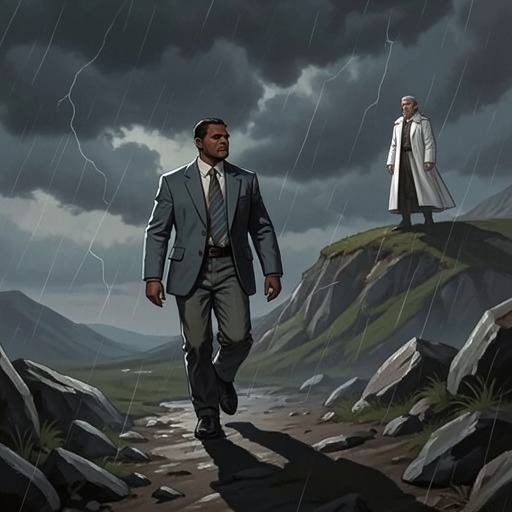
Fate and personal responsibility
Man on FireFate and personal responsibility names a tension Creasy works through as he reflects on Pinta’s death and the possible direction of his own life. He refuses to treat human suffering or encounters as the work of an impersonal destiny: events arise from people’s actions and from the consequences those actions set in motion. Yet the timing of relationships can still feel like fate, leaving him to distinguish chance from the human experiences that give a meeting its force.
Rejecting Destiny
Pinta’s short life and its unjust end prompt Creasy to reconsider the language of fate. He first calls her death an unjust twist of fate, then corrects himself: nothing, he concludes, is fated. Incidents involving people result from actions by themselves or others, rather than from a random force. His compressed formulation that destiny is predetermined by the destined sharpens the emphasis on human agency: what appears to be destiny is connected to what people do.
Encounters and Timing
Creasy’s thoughts turn to Nadia, toward whom he feels a powerful attraction, even as he intends to resist it because of complications, limited time, and the plans ahead. He wonders whether meeting at a different time and place might have produced a different ending. The question briefly makes their convergence seem fated, but he revises that interpretation too: people come together through the melding of separate experiences, and through the recognition of similar hopes and expectations. Timing matters, but the meaning of an encounter is formed by the lives and desires people bring to it.
Pinta’s Lasting Influence
This reflection belongs to a larger change in Creasy. Pinta has taught him to see other people as particular lives rather than incidental presences. Remembering how she might have responded to Salvu and the people Creasy met in Gozo, he recognizes that her way of attending to others has altered his own. The idea of responsibility therefore extends beyond the explanation of events: it also describes how one person’s influence can change the way another understands and engages with the people around him.