Floriano Conti
Man on FireFloriano Conti is a Rome-based power broker with a soldier’s and general’s past, whose experience of violence shapes his judgment within the criminal order. His support for preserving the balance in Milan gives way to urgent personal precautions, but those defenses do not save him from a missile attack on his armored Cadillac.
Position and Political Judgment
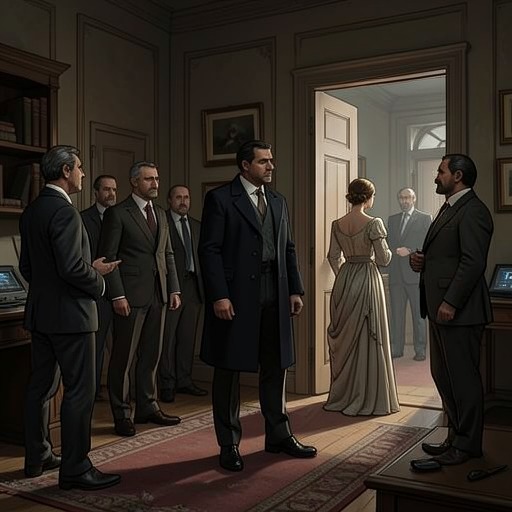
Conti appears at a meeting in Don Cantarella’s study as a visitor from Rome and one of three men advising Cantarella. The other two are Cesare Gravelli and Maurizio Dicandia. Conti is irritated and somewhat embarrassed by trouble in Milan, which lies under his immediate control. He attributes the trouble to Dino Fossella’s decision to shortchange the French on a shipment before changing suppliers to Bangkok, judging the attempt to make extra money as a reckless mistake.
When Don Cantarella directs Maurizio Dicandia to deal with Fossella privately, without alerting the Abrata Family, Conti agrees with the decision. He argues that the existing forces in Milan counterbalance each other and that disturbing this arrangement would be unwise. His counsel is therefore not simply a response to Fossella’s conduct: it reflects a preference for containing a local problem rather than unsettling a workable balance of power.
Violence and Security
Conti’s perspective differs from Don Cantarella’s. Conti believes he reached his position through the ruthless use of violence and has seen death often; he has been a soldier and a general. Don Cantarella, by contrast, advanced through diplomacy and ordered violence without personally taking part. Conti reflects that the statesman had never been physically threatened, and finds it interesting that this apparent lack of experience may account for his unease.
That reflection prompts Conti to issue instructions for his own protection before going to bed. He owns the ten-story apartment building containing his penthouse and orders security tightened from the basement garage upward until, as the narration puts it, a mouse could not get in or out. He imposes the same lockdown at the building housing his office. He does not consider travel between the buildings a comparable danger: years earlier, he had done a favor for a compatriot in New York and received a specially built Cadillac in return. Its three-inch armor plating and bulletproof windows make it a formidable safeguard—until the attack exposes its limits.
Assassination and Ending
At precisely 2:30, Conti leaves the basement garage with his personal bodyguard and enters the Cadillac, while a black Lancia carrying four more bodyguards follows. As the vehicles reach street level, the men see a figure rise behind a low wall across the avenue, wearing goggles and carrying a shoulder-launched tube. A missile strikes the Cadillac’s radiator, wrecking its engine and setting the interior ablaze; a second hits below the front axle and hurls the five-ton car backward onto the Lancia.
The attack overwhelms the protection Conti had arranged around both his residence and office. The Cadillac is burned out, and the impact crushes the vehicle behind it. Only one man escapes instant death: a bodyguard thrown from the wrecked Lancia. He scrambles away, draws his gun, and starts toward the ramp before stopping to look back at the destruction. Conti’s preparations had answered the danger he could imagine; the missiles make that confidence useless.