Giorgio Rabbia
Man on FireGiorgio Rabbia is a Mafia collector and kidnapper whose capture exposes both his part in Pinta Balletto’s abduction and the limits of his knowledge about the organization behind it. A large, brutal man accustomed to beating people, he moves through a repeated payday routine until an interrogator turns that routine into an opening for questioning. Rabbia’s answers help connect the kidnapping’s immediate perpetrators to Fossella and, beyond him, to the more distant bosses who share in the enterprise.
Identity and Position
Rabbia works in eastern Milan, collecting money for his boss from a circuit of bars and clubs. On Thursday night, payday, he has spent two hours moving from one bar to another and is about to begin visiting the clubs. The collection is unhurried but regular: he follows the same routine each week, performing it efficiently even if slowly. The work places him at street level in a larger criminal system, gathering money rather than directing its highest-level decisions.
His physical presence is emphasized as part of that role. He is huge and ponderous, his loose jacket exaggerating his bulk, and he carries a Beretta pistol beneath it in a shoulder holster. A soft chamois-leather bag hangs under his other arm, half full as he finishes the rounds. His violence is habitual rather than merely a threat: he likes beating people, and anger makes him move faster. The combination of slow routine and sudden aggression defines the danger he presents—and helps explain why his captor’s controlled, close-range approach can catch him unprepared.
Role in the Kidnapping
Rabbia is not the organizer of Pinta Balletto’s kidnapping, but he is directly involved. Under questioning, he says that he drove the car used to take the girl and identifies Sandri as the man who shot her bodyguard. Dorigo and Cremasco were the other dead men. Rabbia says that the group had been instructed to collect Pinta at a particular time and place and hold her at a house in Niguada. He claims not to know anything about the ransom money.
His account describes a job that went wrong from its outset. Fossella had told the kidnappers that the bodyguard would not be a serious obstacle and instructed Dorigo to fire a couple of shots to scare him away. Instead, the men were careless, and the plan’s assumptions failed. Rabbia’s distinction between the instructions he received and the ransom he says he knew nothing about narrows his apparent place in the operation: he can describe the abduction and its participants, but presents himself as outside its financial arrangements.
He also discloses his own violence against Pinta. Asked directly whether he raped her, Rabbia eventually nods and admits that he did so after Sandri. His attempt to minimize the act by saying he thought it made no difference is presented alongside his quivering voice and the interrogator’s stillness. The exchange makes his admission more than another item in the kidnapping account: it identifies him as a perpetrator of the harm inflicted on the girl, not simply the driver who can explain how the gang operated.
Capture and Interrogation
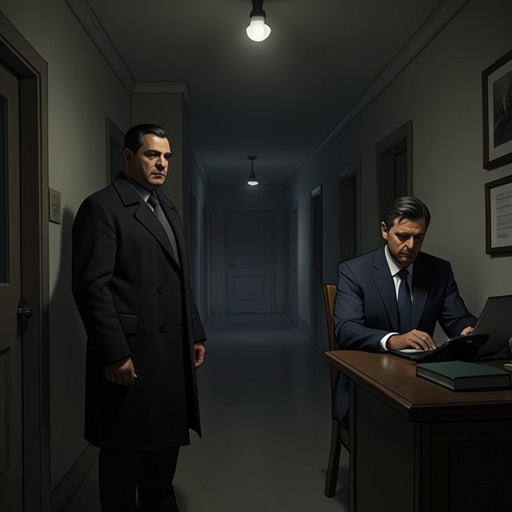
At midnight, having finished the bars and preparing to move on to the clubs, Rabbia returns to his Lancia. The scene turns on the gap between what he notices and what he misses: a dachshund’s head bobs gently, but he does not detect it; once inside the car, he is about to reach for the ignition when cold metal touches the back of his neck. A voice orders him not to move. Rabbia responds with astonishment and asks whether his captor knows who he is. The captor identifies him by name and warns him against speaking again.
The questioning lasts more than an hour. Rabbia remembers the interrogator’s face, and answers continue to come as the questions move from the kidnapping to Sandri’s friends, habits, and movements, then through the same details about Fossella. Rabbia hesitates when Fossella first comes up; as the interrogator sets down his pen and starts to rise, the answers resume. That hesitation gives way under pressure, revealing how precarious Rabbia’s cooperation is and how effectively the questioner uses the prospect of pain to keep him talking.
Rabbia’s hand becomes a specific instrument of that pressure. At one point he complains that it hurts. The interrogator tells him it will not be long and asks what he knows about Conti and Cantarella. Rabbia can offer little about these more powerful figures: Cantarella hardly ever leaves Villa Colacci, and Rabbia has never seen him. Fossella, by contrast, goes there often and visits Conti in Rome at least monthly. Once the notebook is closed, Rabbia panics and begins babbling again about Sandri and Fossella, but the interrogator has finished asking questions. The change—from answers sought to information no longer wanted—marks the end of Rabbia’s usefulness to his captor.
Death and Narrative Significance
The interrogator stands, takes out a gun, fits a silencer, and walks around the table. Rabbia watches the weapon approach and feels its metal against his face below his right eye. The captor tells him he is going to hell and will not be lonely, then shoots him. The death follows immediately after the interrogation has extracted the information Rabbia possesses; the scene makes plain that answering questions has not secured his survival.
The later examination of Rabbia’s body supplies material evidence of what happened during those final hours. A large-caliber, soft-nosed bullet caused the fatal head wound. His left hand also bears an incision that passed through the hand, with skin fragments and fine wooden splinters embedded in the palm. The splinters suggest that it had been pinned against a wooden surface, while the degree of blood clotting places the injury within two hours of his death. The forensic account thus confirms that Rabbia suffered severe, deliberate pain before he was killed, rather than merely being shot after a routine encounter.
Rabbia’s death also advances the police investigation. Satta recognizes that Rabbia and Sandri had worked together on the Balletto kidnapping and that Fossella organized it. That connection redirects attention toward the bodyguard, whom the police had initially regarded as an unlikely suspect in a revenge operation because he had been only a premium bodyguard and was an alcoholic. Information from the hospital and the agency changes that assessment: the bodyguard had recovered well, was determined to regain fitness, and had once been a mercenary. Rabbia therefore functions at a hinge in the plot. His testimony exposes the kidnapping’s chain of participation, while his wounds and death give investigators a physical trail toward the person retaliating against the men responsible.