Guido and Julia's Marriage and Shared Life
Man on FireGuido and Julia’s marriage and shared life mark a decisive change in Guido: a man who had lived by war and transient encounters finds an unexpected love, a home, and a future. Their bond also makes room for Creasy, Guido’s longtime friend, whom Julia recognizes not as a rival to their marriage but as an integral part of Guido’s life. Julia’s sudden death ends that shared future and leaves Guido with a grief through which he comes to understand Creasy more deeply.
Meeting on Gozo and the Decision to Marry
After spending a week with his mother, Guido and Creasy went to Malta to visit a contact from their Congo days. The contact was recruiting for a sheikdom in the Persian Gulf, but the two men disliked the terms and prospects. They stayed on to look around and ended up at a small hotel in a fishing village on Gozo, where the warmth of the place and friendliness of its people offered a sharp contrast to their mercenary lives.
Julia worked at the hotel reception. She was slight, beautiful, direct, shy, religious, and closely protected. Guido was accustomed to pursuing women, but Julia rebuffed his early advances, telling him that she was a virgin and a good girl. Her refusal intrigued him. Creasy, amused by the courtship, readily agreed to remain on Gozo while Guido talked with and tried to charm her.
The courtship took three weeks and turned away from Guido’s original expectations. One night he and Julia swam at Ramla Bay, then sat on the red sand and talked until sunrise. Julia described a simple life and a family that had farmed for generations. She kept asking Guido why, questions he found difficult to answer as he tried to explain his own life. By the time they stopped talking, the pursuit had become a meeting between two people rather than the conquest Guido had imagined.
They made love that night. Julia was truly a virgin; Guido hesitated, but she drew him close. In the growing light, he saw the blood on her thighs and watched her wipe it away with a shy, proud smile. The experience altered his sense of his past encounters: the women he had known seemed suddenly unlike Julia. When she warned that her parents would be upset because a girl staying out all night was considered a serious transgression on Gozo, Guido realized that the meaning of the night had changed for both of them.
Marriage and a Shared Circle
As they walked over the hill through Nadur toward her parents’ farm, Julia’s father watched them approach from the fields. Julia introduced Guido and announced that they were going to marry. Her father nodded and returned to his work; he understood his daughter, and the night away from home meant a son-in-law. They married in the Church of St. Peter and St. Paul in Nadur.
Guido worried about how Creasy would receive the marriage. The two men had been friends for more than fifteen years and had hardly ever been separated. Creasy was pleased rather than surprised: he had recognized that Julia loved Guido, and he admired her strength. He stood as best man, quiet and gruff, then drank heavily at the wedding feast and shared in Guido’s joy. For Creasy, that happiness was experienced by proxy, but it was still a genuine good feeling.
Julia, in turn, understood the depth of the men’s friendship and did not resent it. She treated Creasy as part of Guido rather than as someone competing with her for him. When Creasy took the couple to the airport before their departure for Naples, he bent to kiss Julia’s cheek. She held him for a long moment, and when she let go, he saw tears in her eyes. Her welcome was not ceremonial: she meant that their home was his home. Creasy answered with a practical joke about Guido’s snoring, and Julia smiled, moved enough that she could not say more. In the plane, she asked Guido what Creasy would do next; Guido expected him to find another war.
Building a Home in Naples
Guido returned to Naples with his wife, bought back the lease on his property, and turned it into the Pensione Splendide. His mother was overwhelmed with happiness, and candles brightened the church in Positano. The new inn gave concrete form to a change that had begun on Gozo: Guido was no longer simply passing through a succession of places and encounters but was building a life with Julia.
Creasy continued to belong to that life, though his visits followed the irregular rhythms of a man moving between wars. He would arrive in Naples without writing or phoning, stay for a few days, and then announce one evening that he was leaving the next morning. He always brought Julia a distinctively chosen present: once, a rich, detailed batik painting from Indonesia; another time, natural aquamarine pearls from Japan. Julia valued the thought behind the gifts as much as, or more than, their beauty and obvious worth. Her attention to what Creasy had chosen made their affection visible without displacing her marriage to Guido.
On one later visit, Creasy stayed for more than a month. Rather than remaining idle, he occupied himself with small repairs around the building; he liked working with his hands. When he eventually said he would leave in the morning, Julia told him plainly that he could stay and make his home with them. Guido said nothing because he did not need to. Creasy smiled and imagined fixing the wiring and painting the place every month; they all understood that he might one day simply stay without announcing a departure. The prospect shows how their household had expanded in feeling beyond the married couple, while remaining grounded in its ordinary work and hospitality.
Julia’s Death and Guido’s Grief
Julia’s shared life with Guido ended through sudden, senseless violence. One day she went shopping while the local football team’s victory brought supporters into the streets in a noisy convoy, with horns blowing and flags flying. A car carrying eight drunken men lost control and struck her against a wall. The fatal accident was not a consequence of the couple’s choices or of their criminal world; it was an abrupt collision between their private life and an ordinary public celebration.
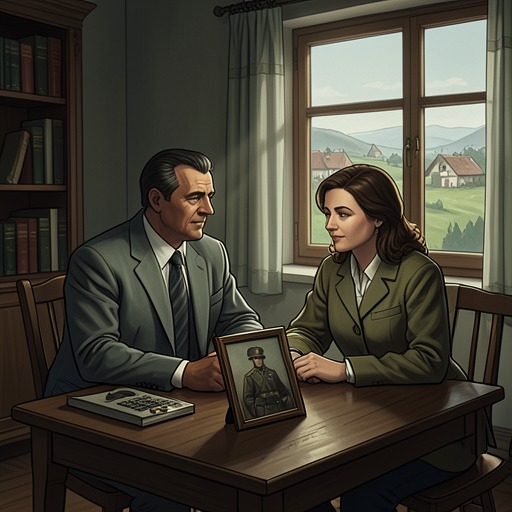
Creasy arrived a week later, tired from a long journey. Guido had forgotten even to ask how Creasy knew what had happened. Creasy stayed for a couple of weeks, and his presence helped Guido get through the immediate aftermath. The scene recalls the support Guido had once given Creasy by touching his shoulder when Creasy confessed that he was sick of a life spent as a soldier. Guido had understood that exhaustion because, after Julia’s death, it had taken him two years to adjust to living without her.
Later, sitting in his car and watching twilight over the bay, Guido tried to imagine the life he would have had if he had never known Julia. He could picture it—and in doing so could understand Creasy’s condition more clearly. This recognition does not erase the difference between them: Guido had known a love and happiness that gave his outlook a new clarity, while Creasy had long believed that such feelings were not within him. But Guido’s loss gave him a way to grasp the emptiness Creasy described, and their friendship became a channel through which grief could be recognized even when it could not be undone.
Significance of the Marriage
The marriage is both a personal turning point for Guido and the foundation of a chosen domestic circle that includes Creasy. Its beginning overturns Guido’s assumptions about intimacy: conversation, Julia’s searching questions, and the unexpected tenderness of their first night matter more than the pursuit with which he began. Their wedding and the Pensione Splendide establish a life built around attachment and shared place, in contrast to Creasy’s continuing departures for war.
Julia’s openness toward Creasy gives that contrast its emotional complexity. She does not ask Guido to abandon his oldest friendship; instead, she makes room for it in their home. After her death, Creasy’s arrival offers Guido the same kind of quiet companionship that Guido had once offered him. The relationship therefore shapes both men: Julia’s love changes Guido’s understanding of life, and the loss of that love makes him better able to understand the friend whose own capacity for happiness had once seemed so different from his.