Nadia Schembri
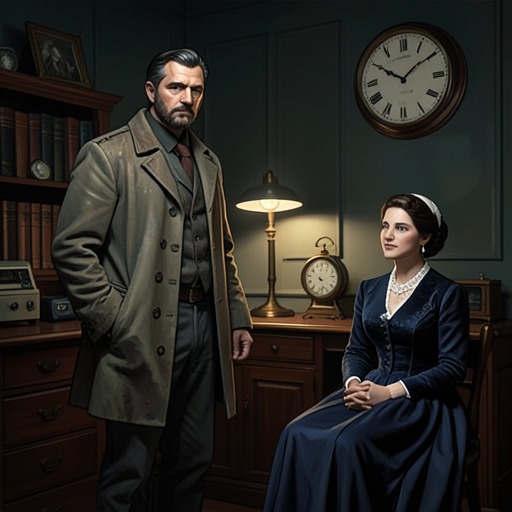
Man on FireNadia Schembri’s relationship with Creasy gives their brief life together on Gozo lasting consequences: she loves him, understands why he must leave, and deliberately conceives a child without telling him. Her story is shaped by a tension between clear-eyed practicality and profound feeling. Even when she accepts that Creasy is preparing to go, she does not treat their time together as inconsequential; the child she carries makes that temporary attachment a force in the events that follow.
Background and Return
Nadia is the daughter of Laura Schembri and part of the family whose farm provides Creasy a place to recover and train. At the time Creasy first wonders about her, she is working as a receptionist at a hotel on Malta and is expected home for the weekend to help her family. Guido Arrellio has told Creasy that Nadia married an English naval officer, moved to England, and was divorced after the marriage failed a year earlier. Creasy remembers her only vaguely from Guido’s wedding, where she had been a teenager. His recollection of her quiet good looks, and his hope that she will not bring complications, set up an encounter he initially approaches with caution.
Nadia returns on Saturday and is at the kitchen table when Creasy and the other men come in for lunch. Laura introduces them, and Creasy admits that he only just remembers Nadia, recalling her pigtails. Nadia smiles and kisses him on the cheek. Their reunion is brief and domestic, but it brings a grown woman back into the farm household where Creasy had known her as a girl. The difference between those two encounters gives their developing relationship an unmistakable age gap, one Nadia herself later names rather than leaving unspoken.
Love and the Limits of Their Time
At a cove near Comino, Nadia tells Creasy that she is in love with him. She asks him not to interrupt and carefully lays out what she understands: he feels something too, but does not want to become involved; he is at least twenty years older than she is; and he expects to leave in about a month, probably never to return. Her declaration is therefore not a request made in ignorance of the obstacles. She describes the limits plainly before Creasy can answer, showing that her attachment includes a sober grasp of the likely ending.
The relationship becomes intimate. After their first night together, Nadia moves her clothes into Creasy’s rooms, and he accepts this arrangement despite its stated limit of a month. He recalls that she had been warned about his departure. Yet the time they share quickly changes what that limit means to him: he wakes early to see her sleeping in the sunlight and recognizes that he loves her. The admission strikes him physically, releasing adrenaline as he thinks about leaving. Nadia’s presence, as he understands it, is complete without being suffocating; she is neither clinging nor sentimental, and she balances passion with practicality. That balance lets their intimacy become real without erasing the impending separation.
Grief, Understanding, and Separation
As Creasy prepares to leave, the prospect carries two competing pressures. His physical reconditioning is nearly complete, and his thoughts are already moving ahead to the work he intends to undertake. Nadia is the other emotion: leaving her and his life on Gozo feels final. He has come to love her, but his commitment to going remains.
When Creasy tells Nadia about Pinta Balletto—how he had brought her to life in conversation, and how Guido Arrellio had told him of her death and abuse—Nadia cries. She explains that she is not crying because Creasy is leaving; she had promised herself she would not do that while he was still there. She is crying for Pinta, whom she had come to know through his stories, and whose death she could imagine as if Pinta were her own child. The distinction matters to their relationship: Nadia does not ask Creasy to put his grief aside for her. Her response comforts him because she understands why he must go even though he loves her. He tells her that he loves her, making explicit the feeling that had first emerged in his thoughts as a shock.
Pregnancy and Concealment
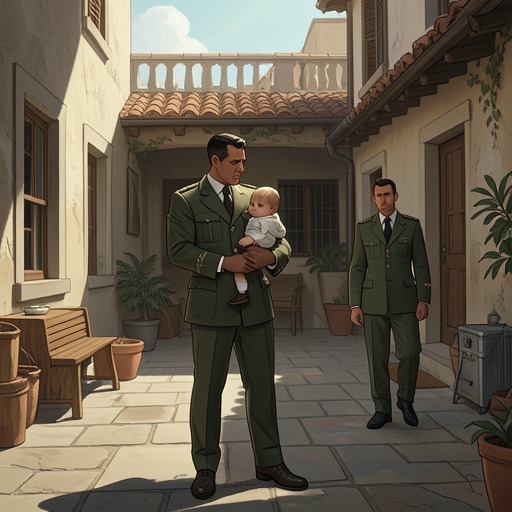
Later, Nadia’s pregnancy becomes a secret within the Schembri family. The Cowboy notices that she comes to early Mass every morning, although this is new behavior, and that she prays without entering the confessional. Her altered routine puzzles him, but the account does not explain Nadia’s own reasons for it. When Laura seeks advice, she tells him that Nadia is pregnant. Laura says Nadia has not informed Creasy and has forbidden either parent to do so. She also says Nadia conceived deliberately and used Creasy as a provider of the seed; when The Cowboy asks whether Nadia loves him, Laura cannot give a definite answer.
This disclosure complicates the earlier picture of Nadia’s practical acceptance of a short relationship. The pregnancy is intentional, but Nadia’s feelings and intentions are not reduced to a simple explanation: Laura’s account characterizes the conception as deliberate and stresses the secrecy, while Laura herself remains uncertain about whether Nadia loves Creasy. The difference between Nadia’s private decision and the love she had openly declared to Creasy remains unresolved in the evidence. What is clear is that she will not let her parents inform him, so the child first enters the story as withheld knowledge rather than shared news.
Consequences for Creasy’s Mission
Nadia’s pregnancy reaches Creasy indirectly. As Guido Arrellio and Mario Satta drive through the city toward the Autostrada, Guido tells Satta that Creasy is going to be a father and explains the circumstances on Gozo in detail. Satta is surprised and has no quick response. When he asks whether the news will make a difference, Guido insists that it is the only thing that might stop Creasy, although he cannot fully explain why.
The scene shifts Nadia’s private choice into the larger conflict surrounding Creasy’s departure. The child does not automatically resolve his competing commitments, and the evidence does not establish what he will ultimately do in response. Instead, the pregnancy becomes a possible counterweight to the mission: a future tied to Nadia and Gozo set against the work Creasy has spent his recovery preparing to undertake. Nadia’s importance lies partly in that unresolved pressure. Their time together is brief, but the consequences of her decision travel beyond the farm and into the decisions being made about whether Creasy can be stopped.