Nadia's pregnancy
Man on FireNadia’s pregnancy is more than a family secret: it becomes a possible interruption to Creasy’s course of violence and flight. Conceived deliberately but concealed from him, the child changes the meaning of a proposed surrender. Laura Schembri seeks advice about whether Creasy should know; later, Guido Arrellio tells Mario Satta that the prospect of becoming a father might stop him.
Disclosure and Concealment
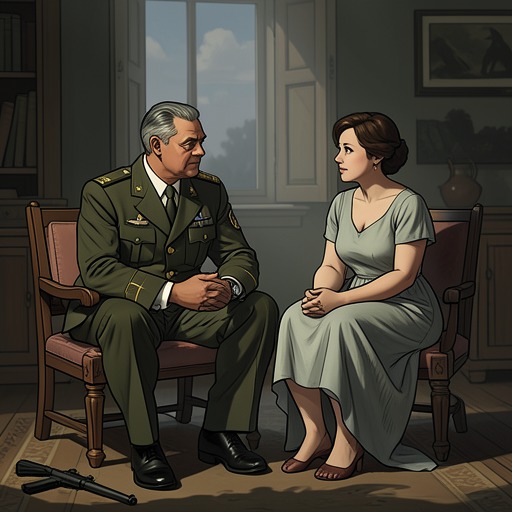
The news first reaches The Cowboy through Laura, whose visit breaks the routine of his parish work. In all his years as priest, she had never asked his advice, though she had often offered her own, particularly when he was younger. She was not easily overawed by his clerical position, and he is apprehensive because he expects any advice about Nadia to be difficult. Laura states the fact plainly: “She is with child.” The Cowboy’s sigh registers how little ease the news offers: he regards Nadia’s life as already burdened by difficulty.
Laura explains that Nadia has not told Creasy and has forbidden either parent to tell him. Her account presents the concealment as part of Nadia’s wrongdoing: she says Nadia conceived deliberately and used Creasy only to provide the seed. When The Cowboy asks whether Nadia loves him, Laura cannot give a firm answer. Her uncertainty matters: the pregnancy is intentional according to her account, but the feelings behind it remain unresolved even to Nadia’s mother. The distinction between what Laura believes about Nadia’s purpose and what she knows about Nadia’s love keeps the disclosure from becoming a simple explanation of their relationship.
The Advice: A Man Should Know
The Cowboy recognizes that he is becoming involved in a difficult family decision. He considers the question seriously, wary of offering a platitude to a congregation of practical people, with Laura among the most hard-nosed. His conclusion is brief and decisive: “A man should know.” Laura thanks him. The advice does not resolve what Nadia wants or establish that she will tell Creasy herself; it identifies the information as something Creasy has a right to receive.
The scene gives the priest’s counsel weight through its restraint. He does not claim to know whether Nadia loves Creasy, nor does he treat the pregnancy as proof of reconciliation. He makes a narrower judgment about disclosure: whatever the uncertain motives and prohibitions surrounding the news, Creasy should be told that he is going to have a child.
Guido’s Appeal to Satta
The news enters a second conversation through Guido, who has been with Satta after a significant phone call. Satta waits without pressing him, allowing him time to drink coffee and decide what to say. Guido eventually asks what would happen if Creasy surrendered personally to Satta. Satta answers in practical terms: Creasy would go to prison, but given the people he has killed and his motive, the sentence would probably be about five years; with remission, he might be released in three. The proposed surrender is therefore not an escape from punishment, but Guido is exploring whether Creasy could be brought to accept it.
As they drive toward the Autostrada, Guido gives Satta the reason he thinks the proposal might work: “He’s going to be a father.” Satta’s surprise briefly leaves him without a ready response. Guido explains what happened on Gozo and tells him about Nadia in detail, because Satta needs to understand the circumstances rather than hear only the bare fact. When Satta asks whether it will make a difference, Guido answers that he believes it will, and that it is the only thing that might stop Creasy. He admits he cannot explain exactly why. Satta considers what he knows of Creasy and agrees that the news could matter.
Consequences and Significance
Satta’s response turns the private pregnancy into a factor in the effort to reach Creasy. He immediately contacts Massimo Bellu and orders him to collect the tape of the last phone intercept and destroy it, along with any transcript. Satta insists that nobody else handle the material, and tells Bellu to wait at headquarters until he and Guido arrive. The action follows Guido’s account and Satta’s reassessment of Creasy: the news is important enough that Satta takes steps concerning the intercepted record while pursuing the possibility of surrender.
The pregnancy’s effect remains prospective in this passage. Nadia has not informed Creasy, and the narrative does not establish here that he learns of the child or changes course. Instead, the same fact carries different force for the people who know it: Laura sees a difficult moral and personal problem, The Cowboy concludes Creasy ought to know, and Guido sees fatherhood as a possible restraint on his friend. The child thus becomes a point of leverage and hope without erasing the uncertainty over Nadia’s feelings or guaranteeing Creasy’s response.