Organized crime's power and public backlash
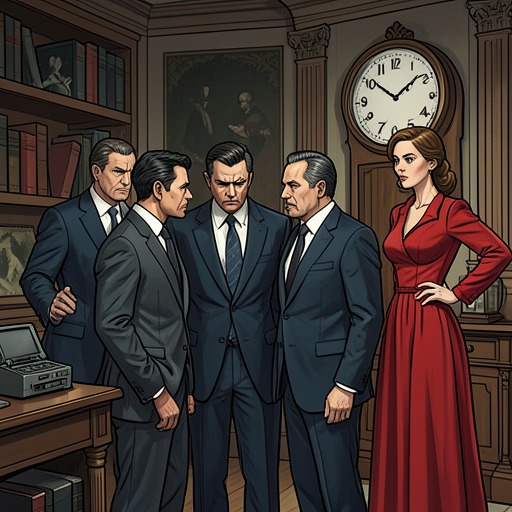
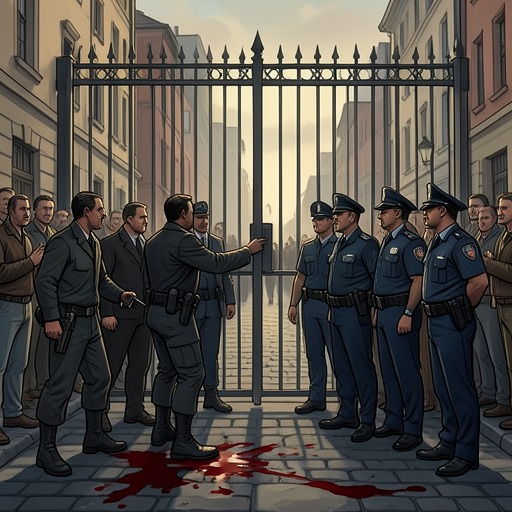
Man on FireOrganized crime’s power and public backlash form a widening contest between the Italian Mafia’s entrenched influence and a public increasingly angered by its arrogance and apparent immunity. The novel presents that backlash as both a pressure on institutions and a source of support for Creasy: it helps harden the law and gives his campaign popular legitimacy, but it does not erase the weaknesses of law enforcement or the danger of replacing public justice with private vengeance.
Entrenched power and limited remedies
The Italian Mafia’s reach is visible in the imbalance between what investigators can uncover and what the legal system can achieve. After three years studying the organization, Mario Satta has accumulated extensive knowledge of its internal workings. His investigations have reached senior figures: he spearheaded a case involving a major steel-plant scandal in Reggio di Calabria and saw Don Mommo imprisoned, though only for two years. He has also spent months building cases against the Milan Families led by Abrata and Fossella, gathering evidence of prostitution, coercion, and drugs through telephone taps, surveillance, and informants.
Those methods represent persistence rather than a decisive solution. Satta hopes eventually to obtain enough evidence to prosecute powerful bosses, potentially including Abrata and Fossella, but prison terms remain woefully inadequate. Witnesses are difficult to find and even harder to protect. The novel therefore distinguishes the growth of public opposition from the state’s ability to convert opposition into lasting control: a tougher law may improve the conditions for investigation without overcoming intimidation, weak penalties, or the organization’s entrenched power.
Outrage becomes political pressure
The change Satta observes is a groundswell of public opinion. People have grown tired of organized criminals behaving arrogantly and appearing immune from consequences. The rise in the Communist party’s fortunes has, unexpectedly, helped the government secure stricter laws. The connection is political rather than a claim that the new rules have solved the problem: the text emphasizes that much remains to be done, especially in sentencing and witness protection.
Public feeling also hardens in response to particular acts. Each especially flagrant outrage deepens hostility toward the Italian Mafia. That repeated pattern matters: backlash is not described as a single burst of indignation, but as an accumulating response in which criminal displays of power undermine the deference and fear on which that power depends. Yet the same recurrence underlines the limits of protest. Outrage can change the political climate and strengthen opposition, but the novel does not equate it with the organization’s defeat.
Creasy as a focus for retaliation and support
Creasy’s campaign makes the conflict more immediate. Satta had assumed that the killing of Fossella would satisfy Creasy’s revenge and drive him toward the border. Instead, Creasy continues toward Floriano Conti and Don Cantarella. Satta recognizes the potential strategic consequences: the alliance between Cantarella and Conti is a linchpin of the organization, and damage to it could bring chaos and weaken the Italian Mafia for years. He also recognizes the legal problem. His duty is to apprehend killers regardless of whom they target or why, even when the target is a criminal boss and the resulting disruption might benefit the police.
The distinction between public anger and lawful accountability is thus embodied in Satta’s divided position. He sees an opportunity to exploit the disorder Creasy creates, but he does not treat that opportunity as a justification for abandoning his responsibility as a policeman. Creasy’s violence may strike at the pride and structure of the Italian Mafia; it remains violence carried out beyond legal process. The prospect of useful consequences does not resolve that conflict.
Creasy’s cause also draws support from people who regard the punishment of the perpetrators as morally compelling. Paddy Collins argues that the men responsible for the rape and killing of an eleven-year-old girl should pay, and says that if Creasy needs help, he will get it from her. Wally Wightman questions why they should become involved, but Paddy rejects the demand for a further reason and refuses to leave Creasy alone. Their exchange gives the backlash a personal and practical form: anger at the crime becomes willingness to assist a man acting outside the law.
Popular acclaim and its risks
By the time Satta and Massimo Bellu discuss Creasy’s public profile, his face has become widely recognizable. Girls in Rome and the north wear T-shirts printed with his photograph and the words “GO CREASY!” Satta is astonished by the reaction and uneasy about it. Bellu explains the appeal as a response to the bosses’ power and arrogance and to the government’s failure to act: people make a hero of one man when institutions seem unable to provide an effective answer.
That acclaim reveals both the force and the danger of the backlash. It shows that the Italian Mafia no longer commands public acceptance simply through its apparent invulnerability; Creasy can become a popular symbol of resistance. But Satta doubts whether such a reaction is healthy, and the novel preserves the reason for his concern. Public admiration for a vigilante can express justified anger while also obscuring the difference between punishment and justice. The backlash weakens the aura of the bosses, pressures the state, and gathers support around Creasy, but it leaves unresolved whether those gains can endure without the very legal institutions whose failures helped create his following.