Pinta Balletto kidnapping plot
Man on FireThe Pinta Balletto kidnapping plot turns a family’s fear of abduction into a carefully concealed insurance fraud, then exposes the human cost behind the arrangement. Pinta Balletto was seized in a planned attack despite Creasy’s protective work; she died in captivity after the kidnappers failed to release her as expected. The truth eventually revealed to Rika Balletto was more damaging still: Ettore Balletto had taken out a two-billion-lire policy with Lloyd’s of London, with Dino Fossella to return half the ransom to him.
Fear, Risk, and Preparation
Before the abduction, Rika Balletto repeatedly argued that Pinta Balletto was in danger. She pointed to the Kidnapping of Pepino Macchetti, in which a child had been taken outside his school in Milan in broad daylight, and insisted that Pinta’s safety required a solution. Ettore Balletto countered that the family was not wealthy enough to attract kidnappers, even as his financial problems were becoming known in the city. The exchange establishes both the family’s concern and the financial vulnerability that would later give the kidnapping its concealed purpose.
Creasy approached his new protective duty as a military problem. He treated Pinta as an asset that an enemy might try to seize, considering the house, frequently visited locations, and the route between them as possible attack points. On a map of the roads between Milan and Como, he marked places where a vehicle would have to slow, particularly exposed bends away from buildings. He reasoned that the road was the likeliest site for an attempt and planned to vary the daily route randomly rather than allow a predictable routine to become an opportunity.
His inspection of Pinta’s school brought that planning down to specific physical details. At the entrance, he noted high walls topped with spikes, little cover in front of the heavy gates, and an old watchman who opened the gates after speaking through a small shutter. Within the grounds, the rambling, ivy-covered school stood among open space, a playing field and running track, and a copse set back from the surrounding wall. Creasy judged the school itself reasonably secure, but his attention to its approach and surroundings reflected the wider problem: protection depended not only on a guarded building, but on where Pinta could be intercepted before reaching it.
The Abduction and Pinta’s Death
The attack came when Pinta was returning to the car from her apartment. Creasy saw a black car come around the corner, mount the curb onto the grass, and carry four men. He recognized what was happening and moved for his gun, while Pinta stopped in surprise. When he shouted for her to run, the kidnappers’ car blocked her path. Pinta ducked under a reaching arm and circled behind it toward Creasy, but two armed men pursued her. Creasy hesitated to fire while she stood between him and the attackers; one man caught her, lifted her, and turned back toward the car. The other fired at Creasy, who shot him twice in the chest.
Pinta did not return that night. As Guido Arrellio later explained, the ransom had been paid two days earlier, and the plan was for her to be released that evening. Instead, a major sweep for a Red Brigade gang made the kidnappers nervous; they went to ground for several hours. By morning, the police found Pinta in the trunk of a stolen car. Her hands and mouth had been taped, and she had vomited, probably from petrol fumes. An autopsy determined that she had choked to death. The explanation that her death was unintentional does not undo the plot’s responsibility for placing a child in a sealed car and leaving her there while the abductors hid.
The Plot’s Criminal Organization
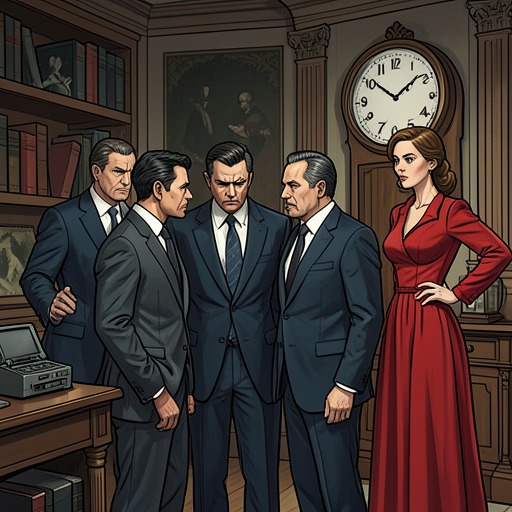
The kidnapping also became a subject of criticism within the criminal leadership. At a meeting, Maurizio Dicandia described the Balletto girl as having been abused before dying in the car and noted the prolonged public pressure that followed. Cesare Gravelli argued that the operation should have been done properly and that those responsible should have been severely punished. One participant was Dino Fossella’s nephew, yet Fossella had only confiscated the men’s share of the proceeds. Floriano Conti likewise called Giorgio Rabbia stupid and criticized Fossella’s decisions. Their discussion presents the kidnapping not as an isolated excess but as a failure of discipline that had damaged the organization’s standing.
Mario Satta’s investigation eventually connected the kidnapping to the wider chain of violence he was tracing. After reconsidering the roles of Giorgio Rabbia, Violente, Sandri, and Fossella, he recognized the Balletto kidnapping as the link: Rabbia and Sandri had worked together on it, and Fossella had organized it. The connection gave the police a route from the killings under investigation to the earlier crime, and led them to examine Creasy’s history and his association with Guido Arrellio.
The Insurance Fraud Revealed
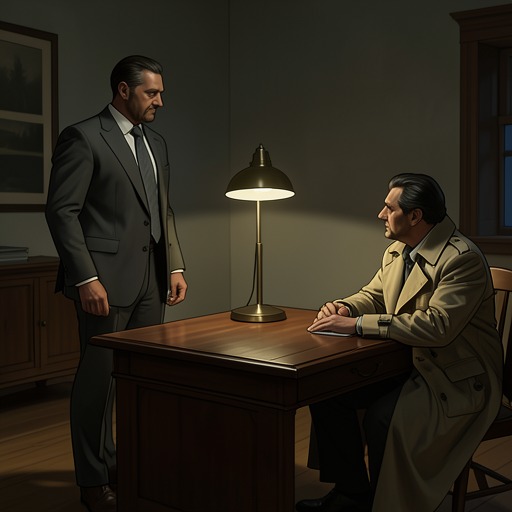
The full financial arrangement emerged when Creasy told Rika Balletto what he had learned from Fossella. Pinta’s kidnapping had been set up as an insurance job. Ettore Balletto had taken out a policy with Lloyd’s of London for two billion lire, and the deal was for Fossella to kick back half the ransom to him. Vico Mansutti acted as the go-between; his organized-crime connections earned him a commission. The revelation recast Ettore’s earlier dismissal of Rika’s fears: he had not merely underestimated the danger, but had secretly helped create it for financial gain.
Rika’s response made the family consequence immediate. As Creasy finished explaining the arrangement, her gaze remained fixed on him; only then did she turn toward her husband, and the hatred on her face conveyed the rupture without any need for argument. Ettore slumped in his chair and looked away. The plot’s exposure thus joins two kinds of consequence: Pinta’s death, caused by the kidnappers’ failure to release her, and the destruction of trust between her parents once the insurance scheme became undeniable.