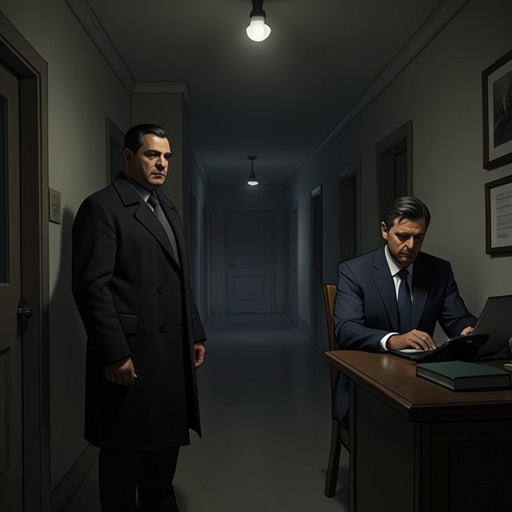
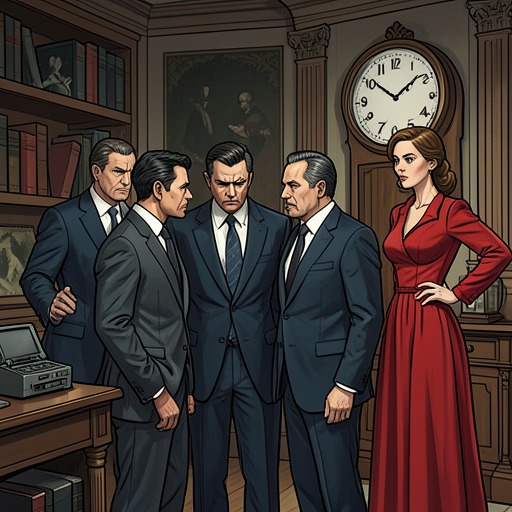
The Italian Mafia's organizational crisis
Man on FireThe Italian Mafia's organizational crisis is the widening breakdown of a criminal hierarchy after Creasy's revenge campaign strikes its senior figures. The deaths of Fossella and Conti do more than eliminate individual bosses: they unsettle the alliance that holds the organization together, create openings for police action, and leave Don Cantarella struggling to protect his authority. The crisis is not presented as the Mafia's immediate destruction, but as a contest over whether its disrupted mainland network can be controlled again.
Structure and Reach Before the Crisis
The organization operates through a hierarchy of bosses whose interests extend across cities. Creasy describes Fossella and Abrata as the two principal bosses in Milan. Fossella organized the kidnapping, and the proceeds were to pass upward through a chain that included Rabbia and Sandri, Conti in Rome, and finally Cantarella in Palermo, who received a share of everything. The arrangement shows a system that connects local operations to senior figures elsewhere; responsibility and profit travel through the same network.
That hierarchy rests on more than violence. Guido Arrellio describes the Mafia as powerful enough to defy police, influence courts, and bribe politicians from village councils to Cabinet ministers. In some southern areas and in Sicily, it can act as the law, deciding whom to punish or reward, and it can exert influence inside prisons. Its reach includes informers and contacts within police forces, as well as groups of strong-arm men in cities, towns, and villages. The breadth of that network makes the later crisis consequential: the organization has many local agents, but its regional command still depends on influential leaders and their connections.
Guido also stresses the weakness of the authorities' response. Police, the Carabinieri, courts, and prisons are often corrupt or infiltrated, and past efforts to confront the Mafia have not permanently contained it. The exception he identifies is the campaign under Mussolini, which used Fascist methods and harmed innocent people as well as Mafia members. Afterward, the organization returned stronger. This history frames the police campaign during the crisis as a chance to disrupt the Mafia, not a simple or lasting solution to its power.
Creasy's Attacks and the Opening for Police
The crisis sharpens when Creasy continues his campaign beyond Fossella. Mario Satta had assumed that killing Fossella would satisfy revenge and that Creasy would flee the country. Instead, Creasy's pursuit of Conti and Cantarella gives Satta reason to believe that the conflict may reach the organization's highest level. Satta recognizes the danger to the Mafia's prestige: one man is striking at its bosses, and the possible loss of Cantarella would be especially grave.
For Satta, the prospect is both an opportunity and a professional dilemma. He believes the alliance between Cantarella and Conti is the linchpin of the organization. If Creasy kills Conti, and especially if he reaches Cantarella, the resulting disorder could allow Satta to move against the remaining bosses and set the Mafia back by a decade or more. Yet Satta's duty is to apprehend killers regardless of their targets or motives. His conflict is not, as he sees it, a crisis of conscience but one of propriety: he may bend the law, but regards that latitude as belonging to law enforcers, not to Creasy. He reports the case to his general, secures full control of it, and keeps the press uninformed for the time being.
The police investigation also makes Creasy's support network part of the response. Satta and Bellu trace a connection to Guido, whom Satta identifies as Creasy's closest friend and a likely source of help. Satta orders surveillance of the Pensione Splendide's telephone and mail because he wants more than a factual account of Creasy's capabilities; he believes Guido can explain the man's character and way of thinking. Bellu is left to handle matters in Milan and then go to Rome to stay close to Conti, while Satta travels to Naples to pursue Guido. The investigation thus follows the same cross-city connections that make the Mafia's hierarchy possible.
Conti's Death and Cantarella's Insecurity
Conti's death exposes how much Cantarella's authority depends on trusted lieutenants. Cantarella has invoked the principle that power grows from the barrel of a gun, but a weapon requires a target. Conti had served as his right arm and as the physical instrument of diplomacy; his loss strikes at Cantarella's confidence as well as his capacity to act. His senior associates, Dicandia and Gravelli, recognize the fear he tries to conceal.
Their response is revealing. Dicandia and Gravelli depend on Cantarella for their own standing, wealth, and ambitions, so they listen to his orders to strengthen security at Villa Colacci. Two days earlier, they would have urged restraint. Conti's death, together with the dossier describing Creasy's capabilities, changes their calculation. The dossier makes the threat concrete, while the changed advice shows fear moving through the hierarchy: the boss's insecurity shapes the conduct of the men beneath him.
Cantarella's command nevertheless remains potent enough to mobilize a response. Gravelli says that Satta and Bellu stay close to Conti, making an attempt on them too dangerous; Dicandia warns that killing the policemen would bring still greater trouble. Cantarella resents Satta but cannot simply remove him. Instead, he studies an enlarged passport photograph of Creasy and declares that the problems will continue until Creasy is dead, offering unlimited reward to whoever kills him. The bounty is an assertion of authority, but also an admission that the organization has not found another way to end the threat.
Disorder on the Mainland and the Limits of Control
The crisis spreads beyond Cantarella's immediate circle. While Satta is in Palermo, his people intensify pressure elsewhere, including taking Abrata in for questioning. Gravelli reports that Abrata feels exposed and nervous. Dicandia sees Satta exploiting confusion in the north and in Rome, stirring uncertainty across the organization. The police are not merely waiting to arrest Creasy: Satta is using the disruption to press against Mafia figures and make the existing disorder harder to contain.
Satta later tells Guido that Creasy's killing of Conti was the key development. He had not expected Cantarella to react with such panic, but believes that even if Creasy never reaches Cantarella, the latter's power is already finished. The organization on the mainland is in flux, and Satta doubts Cantarella can reimpose control there. Cantarella retains power in Sicily, but Satta expects that hold to weaken day by day. His assessment distinguishes the Mafia's surviving local strength from its damaged ability to command across regions.
The resulting crisis is therefore a redistribution of vulnerability rather than a clean collapse. The organization still has powerful figures, armed followers, informers, and influence; Cantarella can still issue orders and place a price on Creasy. But the deaths of Fossella and Conti, the strain on the Cantarella-Conti alliance, Satta's expanding pressure, and the nervousness of Abrata all reveal the cost of losing key connections. Creasy's violence creates the opening, while Satta's institutional position turns that opening into a sustained threat to Mafia control.