The Mafia’s entrenched power in Italy
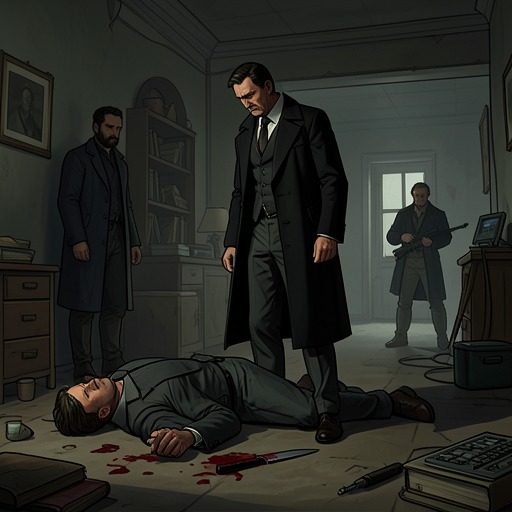
Man on FireThe Mafia’s entrenched power in Italy is not merely a matter of armed men or wealthy bosses: it is a network able to exploit ordinary routines, penetrate public institutions, and make its authority felt from Milan to Sicily. Pinta Balletto’s kidnapping and death give that power a personal cost, while the contrast between Creasy’s private campaign and the compromised machinery of law shows why confronting it is so difficult.
Reach and Structure
Guido Arrellio describes an organization more powerful than most people are willing to believe. In his account, the Mafia defies the police and can sometimes control them; it subverts courts and bribes politicians from village councillors to Cabinet ministers. In parts of southern Italy and Sicily, it acts as a law unto itself, punishing and rewarding people, and it exercises influence even inside prisons. This is not simply influence at the summit: its groups operate in cities and towns of substantial size, and farther south are present in every village. Guido’s image of an army of strong-arm men conveys a force with both local reach and broader coordination.
Creasy identifies a hierarchy connecting distinct territories and leaders. In Milan, Fossella and Abrata are the two main bosses; Fossella organized Pinta’s kidnapping, placing him beneath Giorgio Rabbia and Sandri in the chain of responsibility. Conti, based in Rome, receives a share, and Don Cantarella in Palermo takes a portion of everything. Creasy’s conclusion that Cantarella now has a share in the killing as well as the proceeds makes the system’s central logic explicit: responsibility and profit travel upward through the same network. A crime committed against one family therefore implicates more than the people who carry it out.
Institutions and Impunity
Guido’s account explains why the Mafia’s reach cannot be met simply by asking the state to enforce its own laws. Police, the Carabinieri, courts, and prisons are formally the authorities’ weapons, but Guido says those institutions are often corrupt or infiltrated. He acknowledges that brave prosecutors, judges, and police officers exist, yet regards the system as too weak to counter a network with informers and contacts within the forces meant to oppose it. The result is a striking imbalance: individual courage is real, but it operates inside institutions whose information and authority can be compromised.
Guido recalls that Mussolini achieved some success against the Mafia in the 1930s only through Fascist methods, which also harmed innocent people. After Mussolini, he says, the Mafia returned stronger than before. The example makes the problem more than a shortage of will or force. A state can impose extraordinary coercion, but the precedent described by Guido is morally costly; ordinary legal methods, meanwhile, are vulnerable to corruption and penetration. The novel thus presents the Mafia’s durability as both institutional and political, not as a simple contest between better-armed sides.
Kidnapping and Everyday Vulnerability
The threat becomes concrete in Rika Balletto’s fear for her daughter. She points to the Macchetti child, taken outside his school in Milan in broad daylight, and insists that Pinta may also be at risk. Ettore responds that the Balletto family is not rich and therefore unlikely to attract kidnappers, but his financial difficulties are already becoming known in the city’s financial circles. His reassurance rests on the assumption that kidnappers select targets by wealth; the danger that follows exposes how little that assumption can guarantee a family’s safety.
When Creasy takes the protection job, he initially treats the child as an asset and the threat as a military problem. He considers capture at the house, at another regular destination, or on the route between them. At Pinta’s school, he examines the spike-topped walls, heavy gates, watchman, grounds, and surrounding cover, judging the building reasonably secure. His scrutiny makes protection a study of routine and opportunity: the school’s defenses matter, but so do predictable journeys and exposed stretches of road.
The kidnapping demonstrates the limits of even alert protection. As Pinta walks toward Creasy’s car, a black car mounts the curb with four men inside. Creasy recognizes the attack and shouts for her to run. She dodges one man and moves around the car, but another catches her and lifts her away. Creasy hesitates to fire while she is between him and the attackers; when one man shoots at him, Creasy shoots him twice in the chest. The scene turns a planned security problem into an irreversible human one: vigilance can identify the danger, but it cannot ensure that the target escapes it.
Death, Investigation, and Counterforce
The ransom does not bring Pinta home. Guido tells Creasy that it was paid two days before her scheduled release, but she never appeared. Police found her in the trunk of a stolen car the next morning. A major sweep targeting a Red Brigade gang had made the kidnappers nervous; they went to ground for several hours. Pinta’s hands and mouth had been taped, and she had vomited, probably because of petrol fumes. An autopsy established that she choked to death. The account makes the catastrophe the consequence of captivity and delay, not a planned killing: the kidnappers’ fear of police activity prolonged the confinement until she died.
Creasy’s answer is shaped by his view that legal enforcement cannot match the Mafia’s methods. He argues that the police cannot use the terror that the Mafia itself wields, and that his campaign can gather information as it moves from one target to the next. Most decisively, his aim is not to collect evidence and bring suspects to court but to kill them. This is not a description of ordinary law enforcement; it is the logic of vengeance presented as an answer to impunity. It also carries a grim symmetry: Creasy intends to make the organization experience the terror it has imposed on others.
The Mafia’s reach is visible even in the investigation that follows. Police officers Satta and Bellu connect Rabbia and Sandri to the kidnapping and identify Fossella as its organizer. They investigate the bodyguard, at first skeptical because Creasy had been hired as a premium bodyguard and was an alcoholic. Calls to the hospital and the agency reveal his recovery, determination to regain fitness, and prior work as a mercenary. Satta’s rank, reputation, and contacts rapidly produce further information: immigration records show that Creasy left Reggio di Calabria by ferry for Malta after leaving the hospital, with no recorded return to Italy. Yet the circulation of information is not the state’s monopoly. A Milan Carabinieri records officer reads a confidential memo and then has dinner with a friend, substantially improving his financial position; that same evening, Conti receives detailed information about Creasy from Abrata, the undisputed boss of Milan. The sequence places official records, private corruption, and criminal intelligence in the same field of power.
Satta nevertheless pursues a way to act within the compromised order. He drives to Naples to question Guido, whom he regards as the key because he is Creasy’s closest friend; the Pensione Splendide’s telephone is bugged and its mail intercepted. Satta wants more than a dossier of facts: he needs to understand Creasy’s character and philosophy. This effort captures the state’s dilemma. Its investigators can use rank, contacts, and surveillance, but they are gathering intelligence in a world where the Mafia can also obtain confidential information and where lawful procedure conflicts with Creasy’s extralegal campaign. The organization’s power is therefore measured not only by the violence it can commission, but by its ability to shape what families fear, what officials know, and what justice can realistically attempt.