War's numbing effect on compassion
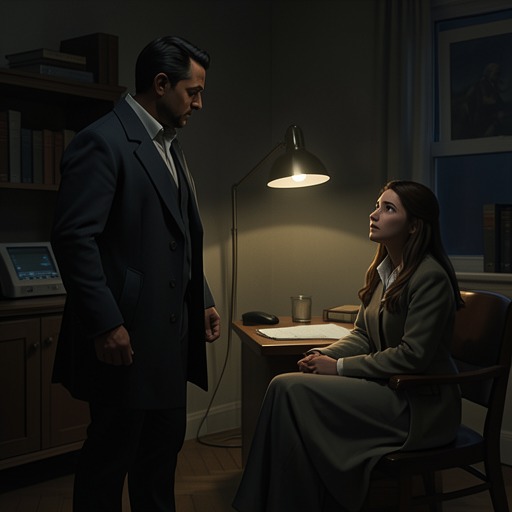
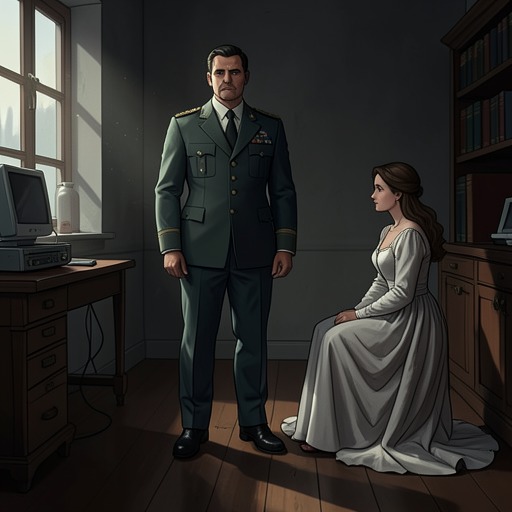
Man on FireWar's numbing effect on compassion is the protective habit Creasy develops to survive repeated exposure to children suffering in conflict. The book presents it not as an absence of perception but as a severing of perception from feeling: he sees the children, yet the message their eyes should carry is diverted. His growing closeness with Pinta brings that defense into question. Through her attention, his memories become speakable, and the suffering he had insulated himself from becomes something another person can witness with him.
A Defense Learned in War
Creasy approaches his new proximity to Pinta with little confidence. He has no experience with children as part of ordinary life; until then, they have chiefly been objects of pity. In the wars he has fought, he has watched children confused and separated from their parents, hungry, and caught in violence. His memories range from children with swollen bellies in the Congo to children in another war who looked like dolls, yet were exposed to bombing, mines, and gunfire. He had heard that South Vietnam held more than a million orphans, and sometimes felt he had seen them all.
The scale and recurrence of that suffering explain the form his defense takes. Creasy does not claim that the children are unseen. Instead, he describes having built a shell that lets him look without receiving the full emotional force of what he sees: the message from their eyes to his brain gets diverted. His blunt conclusion is that he had to do this or lose his mind, and that he had learned to do it early. The image of diversion makes compassion seem less destroyed than rerouted—still possible, but prevented from reaching him in its ordinary form.
The narrative identifies this as the most acute of war’s brutalizing effects. That emphasis distinguishes emotional numbness from a simple lack of kindness: it is a capacity worn down by exposure to suffering that cannot be answered or stopped. The defense has protected Creasy, but it also shapes his expectations of Pinta. She is not hungry, injured, or homeless, yet he still anticipates her as a problem because his past has left him without an easy way to be near a child.
Pinta Makes Contact
Pinta changes the conditions under which Creasy encounters a child. She is an only child, often bored, and treats his arrival as an important event in her life. Her interest extends beyond the practical fact that he is there to protect her: she wants to know him. Creasy initially talks about himself only sparingly, but gradually begins answering her questions. Their conversations give him a relationship to a child that is not organized around pity or immediate danger.
Pinta’s curiosity also gives Creasy a way into memories he has kept apart from ordinary conversation. She asks about his friendship with Guido, and notices that his face softens when he speaks of him. She decides she would like to know Guido too. For Creasy, speaking with her becomes a catharsis: he finds it easy to talk, perhaps because her mind has not been burdened by his experience, and feels better as he speaks even about war and its brutalizing effects. The change is not that the past has become harmless. Rather, he can now approach it in the presence of someone who listens.
That shift is made concrete when Pinta reaches for one of his hands and asks about its mottled scars. Earlier, he would have jerked away. This time he looks down, and the touch returns him to 1954 and the end of the Battle of Dien Bien Phu. After surrender, humiliation, and three weeks of forced marching to a prisoner-of-war camp, he remembers little food and many deaths. Guards shot men who fell and could not get up. Creasy survived and carried a wounded young officer on his back. The memory then moves to interrogation: a Vietnamese captain questioned him while repeatedly stubbing cigarettes against the backs of his strapped-down hands. Creasy’s scars are thus not abstract signs of a violent past; Pinta’s question brings their history into the conversation.
Memory Witnessed, Not Evaded
Creasy answers Pinta’s question obliquely, recalling a man who asked him questions, smoked constantly, and had no ashtray. The understatement preserves the difficulty of direct speech, but it does not stop the memory from being shared. Pinta understands at once and falls silent as tears fill her eyes. Her response supplies something absent from Creasy’s old defensive routine: another person receives the suffering he has described instead of leaving him alone with it.
His reply to her tears links the pain of his memories to the possibility that life contains more than pain. He reminds her that he had once said bad things happen in the world; she answers, smiling through tears, that good things happen too. The exchange does not erase what happened at the prison camp or turn suffering into a lesson easily resolved. Its force lies in the contrast: the remembered world of forced marches, executions, and torture is met by a child who can grieve for what she hears while still affirming that goodness exists.
After this moment, Pinta feels freer to ask personal questions, though Creasy still reveals only fragments of his youth. Apart from Guido, the eleven-year-old learns more about him than anyone on earth. That distinction shows how far the encounter has reached without suggesting that his defenses vanish. Pinta’s attention has made disclosure possible, and her ability to hear him has given the memories a human audience.
The Limits and Significance of the Change
The book connects this intimacy with a broader easing in Creasy’s condition. His need to blot out his mind with drink lessens; most nights he drinks less than half a bottle, and his mind sharpens again, although the accumulated effects of drinking still slow him. Pinta has also given him a practical focus: as she prepares for a sports meeting and waits for her ankle to heal, he makes starting blocks and works with her on her starts. These changes do not establish that one conversation cures the damage of war. They show instead that renewed attention to another person can coexist with the old injuries and help restore a purpose beyond suppressing memory.
The compassion at stake therefore appears both as vulnerability and as a capacity that can return. Creasy’s shell once allowed him to endure the sight of suffering children by diverting its meaning; with Pinta, he does not have to meet a child only as a victim or turn away from what his own scars recall. She asks, listens, and responds, while he speaks without withdrawing. The movement from diverted perception to shared recognition gives this theme its central significance: survival may require emotional numbness, but connection can make feeling possible again without pretending that the suffering which produced the numbness has been undone.