Impassioned Realism
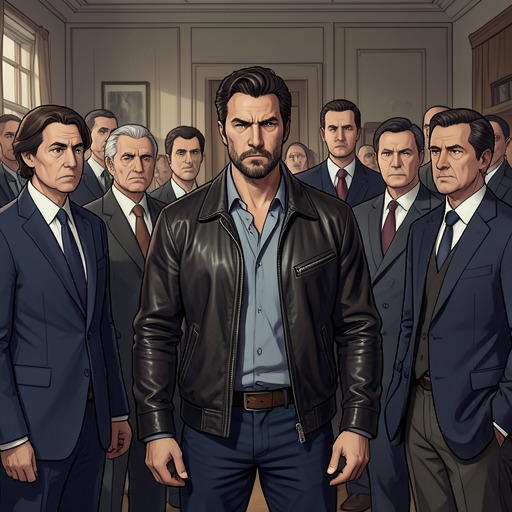
Martin EdenImpassioned Realism is Martin Eden’s artistic ideal: fiction should face life as it is without stripping away imagination, aspiration, or faith. It gives form to his effort to discipline his strength without diminishing it, and to resist both sentimental idealization and a narrow realism that treats people as brute matter. Its test comes when truth conflicts with commercial taste: Martin insists that even an unmarketable story must represent life as he sees it.
Artistic Discipline and Human Aspiration
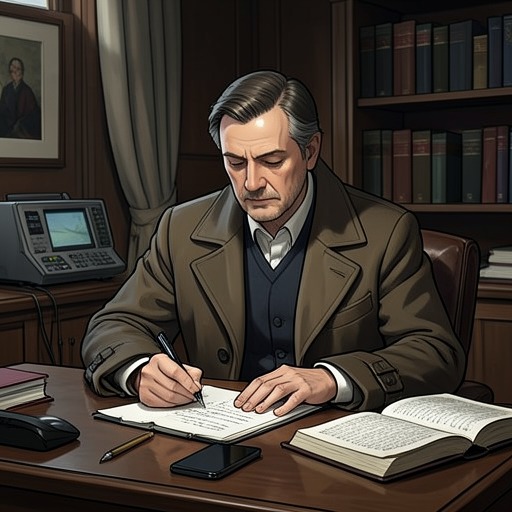
Martin’s early writing shows, in the narrator’s account, not the weakness of mediocrity but the ungainly force of excessive strength. He had learned to recognize that imbalance and was willing to sell his early efforts for whatever money they brought. His confidence lay instead in later work, for which he had sought the tools of artistry without sacrificing force. His aim was to increase his strength by avoiding its excess, not to soften it into mere polish.
The ideal that emerges is realism enlarged, not abandoned. Martin wanted writing grounded in reality but joined to the fancies and beauties of imagination. The resulting work would preserve life’s spirit-groping and soul-reaching rather than reducing people to surfaces or facts. The term impassioned realism names that double commitment: accuracy about what exists and attention to the hopes and inward striving that also belong to human life. Artistry matters to him, but technique alone cannot make a work valuable if it has been separated from human experience.
Between the God and Clod Schools
Martin understands the fiction he has encountered as divided between two incomplete approaches. One treats man as a god and ignores his earthly origin; the other treats man as a clod and ignores his dreams and possibilities. In his view, each errs through too great a singleness of vision. The first risks idealizing humanity by turning away from its material conditions; the second recognizes those conditions only by denying what exceeds them.
His proposed alternative is a compromise that approximates truth without simply endorsing either school. It neither flatters the God school nor accepts the Clod school’s brute savagery as a sufficient account of people. Martin believes his story Adventure, which Ruth Morse had disliked, came closest to this ideal of truth in fiction. He sets out his broader position in the essay God and Clod. The distinction is not simply between pleasant and unpleasant subjects: it concerns whether fiction can hold human origins and human possibility together, rather than allowing one to erase the other.
The Work That Editors Refuse
The gap between Martin’s ideal and the market is clearest in the contrast between his best work and what he can sell. He regards Adventure and other work he values highly as still going begging among editors. His early successes count in his own eyes chiefly for the money they earn, not as proof that his artistic aims have been recognized. That separation makes publication an unreliable measure of artistic worth within his own system of values.
Martin makes a further distinction between work that displays skill and work that achieves human significance. He had sold two horror stories, and he acknowledges their artistry; their power came from giving grotesque and impossible material the glamour of reality. But he regards this effect as a trick, however skillfully performed. In his judgment, great literature cannot rest in that field if its artistry is detached from humanness. The horror stories put a mask of humanity over the fantastic; the higher ambition of impassioned realism is to make human experience itself, including its aspiration and faith, the substance of the work.
Truth Tested in Conversation
The principle becomes immediate when Martin discusses a story with Ruth. She asks whether it will sell, and he admits that he fears it will not because it is too strong for magazines, while maintaining that it is true. Ruth presses the practical question of why he persists in writing work he knows may not sell, on the assumption that writing is meant to provide a living. Martin acknowledges the need to earn money, but says the story took hold of him and demanded to be written. Artistic obligation, in this instance, is not a rejection of practical necessity; it is the force that competes with it.
Their disagreement sharpens over Wiki-Wiki’s rough speech. Ruth worries that it will offend readers and treats its lack of good taste as a reason editors are justified in refusing the work. Martin’s answer is representational: the real Wiki-Wiki would have spoken that way. He bluntly insists that the story is life, real and true, and that he must write life as he sees it. The exchange exposes the cost of his ideal: fidelity may require language that polite taste would exclude, and a truthful detail may make a story less acceptable to the very magazines on which a writer hopes to live.
After the silence that follows, Martin changes the subject to having collected from the Transcontinental. He chuckles at the image of the bewhiskered trio he had last seen, deprived of four dollars and ninety cents and a ferry ticket. The shift returns the conversation to the practical business of payment, but it does not resolve the deeper disagreement. The episode leaves impassioned realism poised between two demands: writing must answer to material circumstances, yet it cannot make those circumstances the sole judge of what is true.