Maria Silva
Martin EdenMaria Silva is a working-class mother whose acts of care make her one of Martin Eden’s most important companions during his years of poverty. She recognizes what others overlook: his hunger, the cost of his work, and the material sacrifices behind his survival. Her kindness is never abstract. It takes the form of food, nursing, and labor—and Martin’s gratitude develops into a wish to improve her life in return.
Background and Circumstances
Maria’s memories connect her to places Martin has visited in his seafaring life. She lived in the Azores until she was eleven, then migrated with her family to the Hawaiian Islands. On Maui she reached adulthood and married; she also remembers Kahului, where she first met her husband, and Wailuku, where Martin had spent time. Their shared geography surprises her, briefly making the world seem small even as their circumstances remain very different.
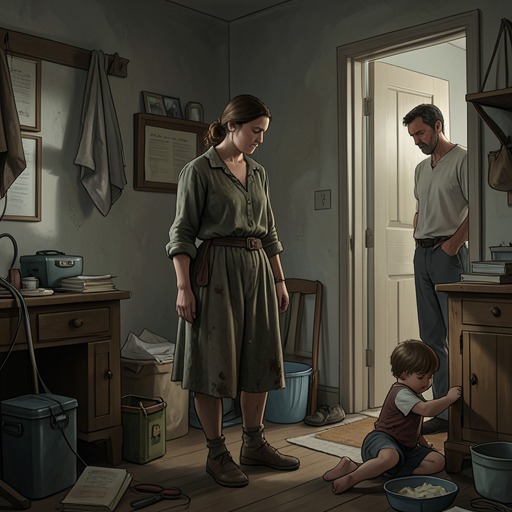
At home, Maria’s resources are scarce. One day she uses her last fifteen cents to buy a gallon of cheap wine. She and Martin drink it on empty stomachs, each raising a hope: Maria for payment from James Grant, a carpenter who owes her three dollars, and Martin for success in his work. The scene establishes her hardship without making it a barrier to generosity; she shares what little she has while carrying her own debts and hunger.
Care for Martin
Maria watches Martin’s physical condition as a record of his fortunes. His face grows lean, and she notices changes from day to day. When he returns without his overcoat on a cold day, she sees his cheeks fill slightly and the signs of hunger recede. She has also watched his wheel and watch go, and noticed his vigor return after each loss. Where Ruth Morse reads his changed appearance as a refinement, Maria understands it through the material pressures of hunger and money.
She recognizes the intensity of Martin’s work, including the hours he spends at night, and is surprised that he works harder as he has less to eat. When she thinks hunger is pressing hardest, she sends him a loaf of freshly baked bread, playfully disguising the kindness as a comment on his baking. At other times she sends a toddler with a large pitcher of hot soup, privately weighing her help against the needs of her own children. Martin understands that the food comes from a household that has little to spare, and receives it as genuine charity.
Their companionship deepens over wine and memories. Maria and Martin are different people, but the misery they do not openly discuss draws them together. As Martin anticipates success, he remembers her bread and soup and feels gratitude and a wish to help her. His sudden question about what she would like marks a shift from receiving her care to considering what he might do for her.
Nursing and Work
When Martin falls ill with La Grippe, Maria identifies his condition as influenza and advises him to rest and avoid eating for the moment. After she and her little girl leave him, he tries to get dressed but is overcome by weakness and has to return to bed. Maria comes in repeatedly to change the cold cloths on his forehead, while leaving him undisturbed by conversation. Her attentive quiet moves him to renew his promise that she will have a dairy ranch, though the promise is still only an expression of his hope and gratitude in this scene.
Later, Maria herself becomes sick with La Grippe. She is in pain while trying to finish a large ironing job, because the clothes must be delivered that night or there will be no food the next day for her seven children. Martin diagnoses her illness, gives her hot whiskey from the remnants of the bottles associated with Russ Brissenden, and tells her to go to bed. Maria resists because the household’s immediate need for income leaves little room for rest.
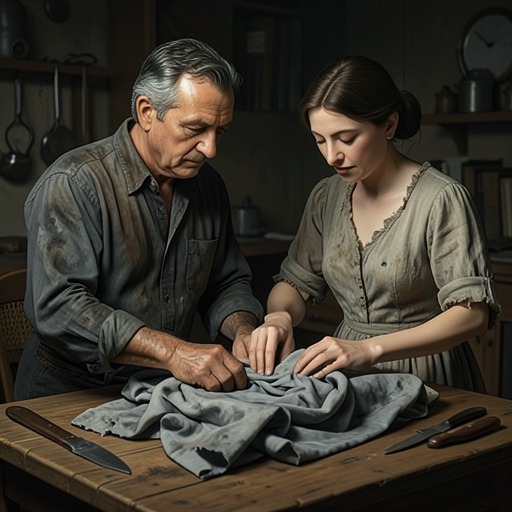
Martin responds by taking up the iron himself. The garment is a fancy shirt-waist belonging to Kate Flanagan, a demanding customer who has specified that it must be delivered that evening. Maria tries to stop him, but he guides her to a chair and completes the ironing in a fraction of the time it would have taken her, to a standard she can accept. The episode makes his gratitude practical: he does not merely admire Maria’s endurance but takes on the work that is keeping her from resting.
Narrative Significance
Maria’s relationship with Martin is reciprocal, though the two do not possess equal resources at every moment. She feeds and nurses him when he is vulnerable; when she becomes ill, he tends to her and performs the paid work on which her household depends. Her care also gives Martin a concrete measure of poverty. The bread and soup are not effortless gifts: Maria must consider whether they should instead feed her own children, and her ironing cannot simply be abandoned without consequences.
Through Maria, the novel sets material attention against appearances and aspirations. She reads Martin’s body in relation to food, possessions, and changing fortunes, while his ambition often directs him toward a future of literary success. Their shared memories of distant islands briefly connect their lives, but their most consequential bond is formed in the present, through food, illness, and work. Maria’s generosity helps sustain Martin, and his response shows the ethical weight he attaches to the care she has given him.