Martin Eden and Ruth break off their engagement
Martin EdenThe end of Martin Eden and Ruth Morse’s engagement turns a newspaper distortion into a private rupture and then a public rejection. A reporter’s account of Martin’s socialist speech helps convince the Morse family that their relationship cannot continue; Ruth’s letter delivers the family’s decision, while a later street encounter makes clear that she now claims the decision as her own. For Martin, the separation brings not only the loss of Ruth but also a widening social and economic isolation.
Causes and Background
A cub reporter had transformed Martin’s appearances before workmen in City Hall Park into a sensational portrait. The account described his revolutionary speeches and poor room, including its oil stove and single chair, while also publicizing family members’ denunciations of him. Bernard Higginbotham was represented as a respectable businessman who regarded Martin as a lazy good-for-nothing; Hermann von Schmidt called him the family’s black sheep and said he had stopped Martin from sponging off him. The report thus joined a distorted account of Martin’s politics to humiliating judgments about his character and family history.
Martin was genuinely angry at the story. Brissenden treated the affair as a joke, but Martin anticipated its consequences: Ruth would be difficult to reassure, and he expected her father to use the controversy to end the engagement. The afternoon mail brought Ruth’s letter. Martin read it standing at the open door, and, without noticing what he was doing, reached for the tobacco and brown paper he had once used to roll cigarettes. The involuntary gesture registers the shock of the moment without changing the fact that he had already left that habit behind.
The Letter and Martin’s Appeal
Ruth’s letter was not angry or passionate. Its governing emotion was hurt disappointment. She had believed Martin had outgrown his youthful wildness and that her love would help him live seriously and decently. Instead, her parents had taken a firm stand and commanded that the engagement be broken. Ruth conceded their argument that the relationship was unlikely to make either of them happy, and described it as a mistake discovered before it was too late. Her bitter regret was that Martin had not settled into a position and tried to make something of himself. She also said that she did not blame him: in her view, his nature and early training had shaped the life he led. She asked him not to seek her out, because a meeting would distress her and her mother.
Martin read the letter a second time before replying. He explained that the remarks attributed to him at the socialist meeting were the opposite of what he had actually said. But his response was not only a defense against the report: he pleaded for the relationship and asked Ruth to answer one question, whether she loved him. Her letter had made the separation seem settled by parental judgment and mutual incompatibility; Martin’s reply tried to bring the decision back to the personal bond between them. No answer came the next day or the day after.
Silence and Its Consequences
In the silence that followed, Martin’s manuscripts accumulated beneath the table. He left Overdue untouched, and for the first time his usually sound sleep gave way to insomnia and long, restless nights. He went to the Morse home three times, but the servant at the door turned him away. Brissenden was ill in his hotel and too weak to go out. Martin visited him often, yet withheld his own troubles rather than add to his friend’s burden.
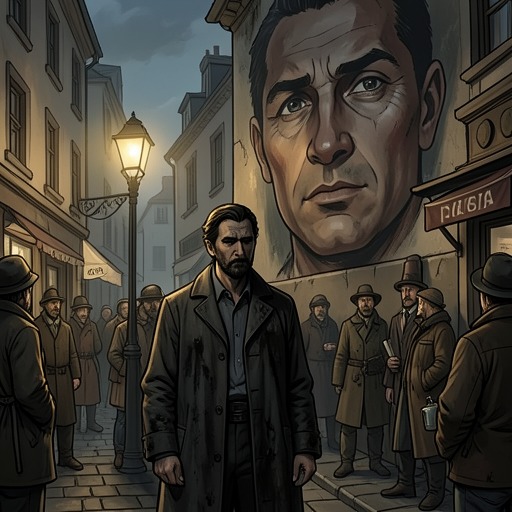
The newspaper affair also damaged Martin’s standing in the neighborhood. The Portuguese grocer refused him further credit. An American greengrocer, calling him a traitor, cancelled Martin’s account and forbade him to try to pay it. Neighbors echoed the hostility, and children who had once been impressed by the grand carriage that visited Martin now called him a tramp and a bum from a safe distance. Maria Silva was frightened and uncertain, but remained loyal; the Silva family defended Martin when others turned against him. The breakup therefore unfolded amid a broader punishment: the report made his political identity a local accusation, while the loss of credit and goodwill tightened the material pressures already surrounding him.
The Street Encounter
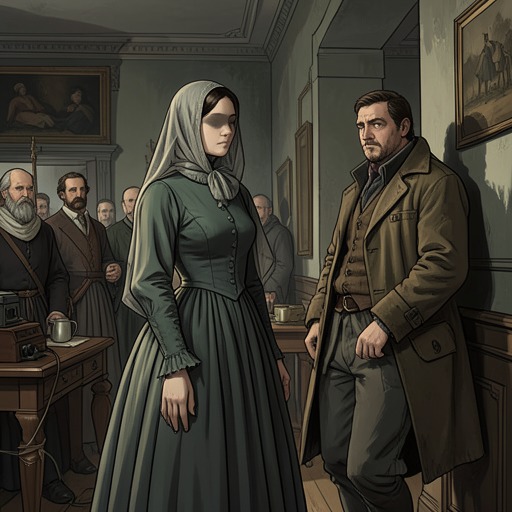
Several weeks later, Martin encountered Ruth on the street. She was with her brother, Norman Morse, and the two tried to ignore Martin. Norman attempted to wave him away, warning that he would call an officer if Martin interfered with his sister. Martin answered that Norman could call one if he wished, and insisted that he was going to speak with Ruth. The confrontation moved the separation from private correspondence into a direct encounter, with Norman trying to control access and Martin refusing to let the conversation be prevented.
Martin asked Ruth about the question in his letter. She shook her head. He then asked whether the decision was entirely her own. Ruth answered in a low, firm, deliberate voice that it was. She said that Martin had disgraced her, that she was ashamed to meet her friends because they were all talking about her, and that he had made her very unhappy. She ended by telling him that she never wished to see him again. Her answer resolves the uncertainty left by the unanswered letter: whatever part her parents’ command played in the original separation, Ruth now explicitly presents the refusal as her own choice. When Martin argued that gossip and a newspaper’s misreporting could not outweigh love, Ruth blushed, a visible response that does not undo the firmness of her stated decision.
Significance of the Break
The separation is driven by the collision between Martin’s public reputation and Ruth’s need to live within her family’s and friends’ judgment. The inaccurate report does not merely misstate a speech; it supplies the occasion for Ruth’s parents to oppose the engagement and for Martin’s neighbors to treat him as an enemy. Ruth’s letter describes the breakup as an error in their choice of partners, while Martin insists that love should survive the surrounding scandal. Their street encounter gives the conflict its decisive turn: Ruth acknowledges that the refusal is hers, and Martin cannot recover the relationship by correcting the reporter’s account or appealing to their past intimacy.
The timing deepens the reversal. Martin had asked for a simple answer about whether Ruth loved him, but received silence, repeated rejection at her home, and finally an unequivocal refusal in public. Meanwhile, his work has stalled, his manuscripts have returned, and ordinary sources of credit have closed to him. The broken engagement is thus both an intimate loss and one element in the wider isolation that follows the newspaper controversy; it leaves Martin without the reassurance he sought just as his social and professional supports are failing.