Martin Eden’s Socialist Meeting and Newspaper Misrepresentation
Martin EdenMartin Eden’s Socialist Meeting and Newspaper Misrepresentation joins an intellectual confrontation to a public reversal: Martin speaks against socialism before an audience of working-class socialists, but a reporter turns his argument into a sensational socialist manifesto. The resulting story does more than confuse his politics. It makes a false public identity consequential in Martin’s everyday life, costing him credit, neighbors’ goodwill, and access to family.
The Meeting and Martin’s Argument
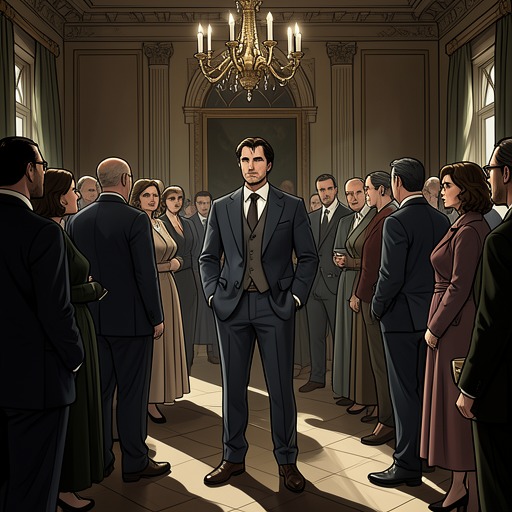
On Sunday night, a small hall in Oakland is packed with socialists, chiefly working-class men and women. The meeting’s speaker wins Martin’s admiration even as he provokes his opposition. Martin sees the speaker not only as an individual but as a representative of the poor and weak, whom he interprets through a biological theory of competition: in his view, Nature selects the exceptional and rejects those deemed unfit. That interpretation makes the meeting a clash between rival accounts of social change. The speaker and audience seek ways to reduce the penalties of living; Martin regards such efforts as resistance to a law of development that cannot be annulled.
At Brissenden’s urging, Martin takes the platform. He begins haltingly, arranging ideas that had gathered while he listened. Speakers ordinarily receive five minutes, but when that time expires, Martin’s argument is unfinished. The audience has become interested enough to call for an extension, and the chairman allows him to continue. Martin attacks socialist doctrine and identifies his hearers with the slaves whose morality and tactics he condemns. Drawing on Spencer and Malthus, he argues that the strong and their descendants tend to survive while the weak and their descendants tend to perish; for him, this continuing struggle is the mechanism of development. He challenges the socialists to explain how their proposed society could sustain development if it prevented the weak from being crushed.
Debate and Immediate Response
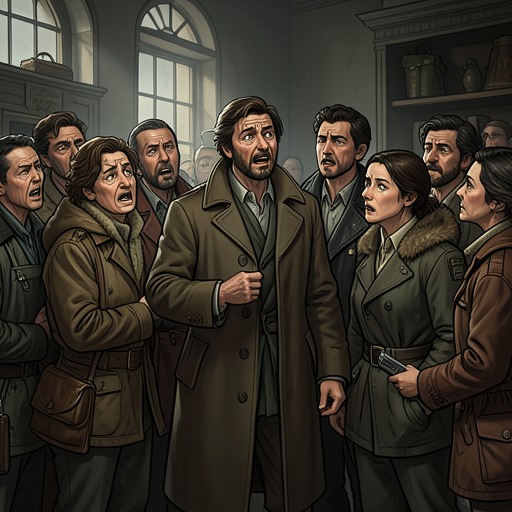
Martin’s speech does not close the meeting. He sits down amid an uproar, with many men clamoring to answer him. One after another, the speakers respond with enthusiasm and excited gestures. The debate is disorderly at times, and the chairman has to call for order, but the disorder is intellectual rather than merely physical: most of the speakers address Martin’s claims directly. Their arguments unsettle him by showing applications of biological laws that he had not considered. The encounter therefore complicates the appearance of a one-sided performance. Martin holds the floor long enough to win the audience’s attention, but the gathering also gives him new ideas and challenges the assumptions behind his own position.
The Reporter’s Reversal
A cub reporter is in the audience on a slow news day, looking for a sensation. Unable to follow the discussion, he treats a word such as revolution as sufficient material from which to reconstruct a speech. Because Martin has made the largest stir, the reporter assigns the meeting’s most dramatic socialist rhetoric to him. The story reverses Martin’s actual stance, transforming his reactionary individualism into a radical socialist declaration. It adds lurid descriptions of the speakers and crowd, presenting them as a spectacle of agitation rather than accurately conveying the arguments exchanged.
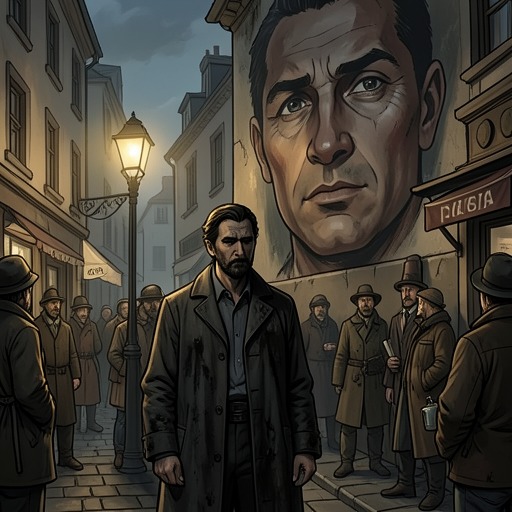
The next morning, Martin finds himself on the front page and is astonished to learn that the paper has made him a notorious leader of the Oakland socialists. A later column compounds the invention: it attributes statements to him, represents him as the sworn enemy of society, and describes supposed physical signs of degeneration. The reporter also claims that Martin speaks nightly to workmen in City Hall Park, draws large audiences, and makes revolutionary speeches. He supplies a dramatic portrait of Martin’s poor room, with its oil-stove and single chair, and casts his companion as a tramp who appears to have emerged from years of confinement. These details make the account seem concrete while leaving its central misrepresentation intact.
The reporter extends his fabrication into Martin’s family history. He obtains a photograph of Higginbotham’s Cash Store and presents Bernard Higginbotham as a respectable businessman opposed to Martin’s politics. He also attributes to Bernard a denunciation of Martin as lazy and unwilling to work. Hermann von Schmidt, Marian’s husband, is likewise interviewed and portrayed as repudiating Martin, whom he calls a family disgrace and a man who had tried to live at his expense. The article thus turns a distorted account of one speech into a wider story about Martin’s character and relatives’ supposed judgments of him.
Consequences and Significance
Martin initially feels anger at the fabrication, then laughs and tosses the paper aside. That reaction does not prevent the story from taking effect. The Portuguese grocer refuses him further credit. An American greengrocer, calling him a traitor, cancels Martin’s account and refuses to let him pay it. Neighborhood feeling turns against him, and children call him a hobo and a bum from a distance. The report’s false political identity becomes a material liability: people respond not to the argument he actually made but to the public figure the newspaper has invented.
Maria Silva remains loyal, and the Silva family defends Martin when others attack his reputation. Their defense brings further difficulty: neighborhood children fight on his behalf, leaving black eyes and bloody noses and adding to Maria’s troubles. The backlash also reaches Martin’s relatives. He learns that Bernard is furious about the family’s public disgrace and has forbidden Martin from the house. The event therefore exposes the unequal power of speech and publicity in Martin’s life. At the meeting, listeners engage his reasoning and answer it; in print, a reporter who has not understood the debate can replace that exchange with a false identity, and the neighborhood acts on the version it reads.