Martin Eden’s suicide aboard the Mariposa
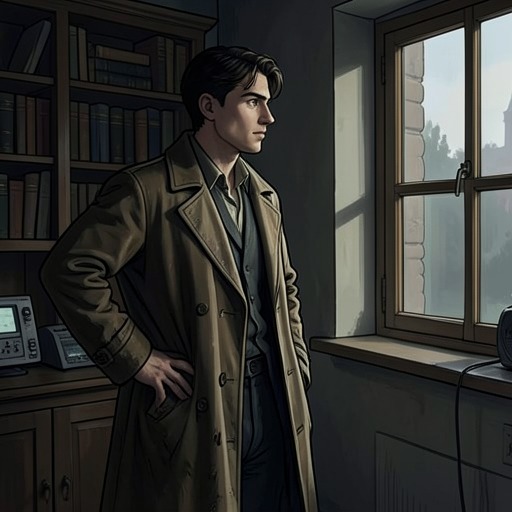
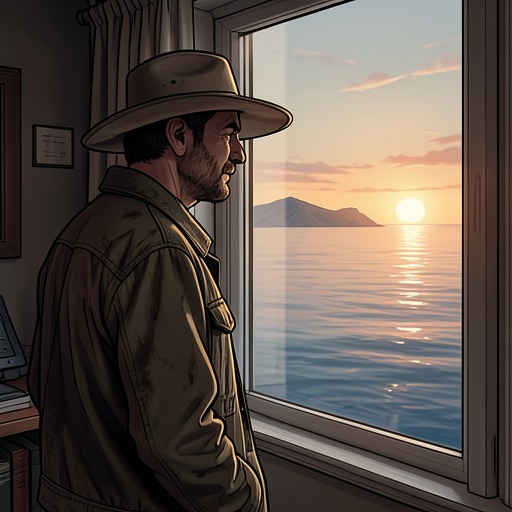
Martin EdenMartin Eden’s suicide aboard the Mariposa is the novel’s final reversal: a man who has spent his life willing himself toward achievement must now use that will to overcome the body’s reflex to live. Alone at sea, he interprets Swinburne’s poetry as permission to leave an existence that has become intolerable. The ensuing struggle is not a sudden plunge but a sequence of deliberate actions interrupted by involuntary survival, ending only when he descends too far to return.
The Passage into the Valley of the Shadow
The Mariposa is bound for Tahiti, but Martin cannot imagine the practical tasks awaiting him there without dread. He would have to go ashore, order trade goods, and arrange passage on a schooner to the Marquesas. The prospect of all those demands makes his future feel not like a new adventure but another burden. He recognizes the danger of his condition, yet the danger lies precisely in his lack of fear: he believes that fear might turn him back toward life, while his indifference allows him to drift farther into what he calls the Valley of the Shadow.
The familiar comforts of his former existence no longer work. The northeast trade wind, once a companion of his old days and nights, irritates him; he has his chair moved to escape it. When the ship enters the doldrums, he cannot sleep, and wakefulness leaves him exposed to what the narrative calls the white glare of life. Humid air and unrefreshing rain-squalls intensify his misery. He alternates between walking the deck and sitting until he has to move again, tries a magazine and then volumes of poetry from the ship’s library, and finds that none can hold his attention for long.
An encounter in the petty officers’ mess briefly offers intellectual company but no durable engagement. An intelligent off-duty quartermaster gives Martin socialist leaflets and pamphlets and expounds slave morality. Martin considers the argument against the Nietzschean philosophy he has carried with him, then wonders whether Nietzsche’s doubt about truth might be right. His thought quickly wears out; he returns to his chair and dozes. The episode shows that neither political argument nor his established ideas can restore his interest. Even thought, once central to his self-making, has become something he cannot sustain.
Swinburne’s Poem and the Decision
Late after dinner, Martin remains on deck, but the attempt to escape his distress only postpones it: below, he still cannot sleep. He turns on the electric light and tries to read in bed. A volume of Swinburne unexpectedly catches his attention. He finishes a stanza, tries to go on, and returns to it; then he lays the book face downward on his breast and thinks. The moment is presented as a recognition: he believes the poem has shown him the way toward the rest he wants.
The open porthole becomes part of that reasoning. Martin checks that it is large enough and, for the first time in weeks, feels happy. He reads the stanza aloud, then looks again at the opening. The line about dead men never rising stirs gratitude, because he takes death’s finality to be a mercy: when life has become an aching weariness, death seems to promise lasting sleep. His decision is therefore not narrated as an impulsive reaction to a single mishap. The scene shows him interpreting a poem, joining its language to his own condition, and turning that interpretation into a practical plan.
He gets up and puts his head through the porthole to look at the milky water below. Because the Mariposa is deeply loaded, he calculates that if he hangs by his hands his feet will reach the sea, and that he can slip in noiselessly. Spray wets his face; he tastes salt and finds the taste good. He briefly considers writing a swan-song, then dismisses the thought because he is impatient to be gone. Turning off the light so it will not betray him, he goes out feet first. His shoulders catch, so he pulls himself back and tries with one arm at his side; the ship’s roll helps him through. Once his feet touch the water, he lets go.
The Body’s Resistance
The Mariposa’s side passes like a dark wall, its lit portholes breaking the darkness. Martin is soon astern, swimming on the foam-flecked surface. A fish strikes his white body and takes a piece, its sting reminding him why he is there. Yet in the work of swimming he has momentarily forgotten his purpose. The ship’s lights grow dim in the distance, and he swims confidently, as though he meant to reach land far away. The physical action contradicts his chosen intention: his body behaves as if it has a destination.
Martin recognizes this as the automatic instinct to live. He stops swimming, but when the water rises above his mouth his hands strike out and lift him. He regards this reflex with scorn and insists inwardly that his will can destroy the life it has sustained. He turns upright, looks at the quiet stars, empties his lungs, and drives his shoulders and chest above the water to gain force for a descent. Then he lets himself sink and deliberately breathes in water, likening the act to taking an anaesthetic. Strangling, he is involuntarily propelled back to the surface, where the stars again come into view.
The return to air does not change his intention. He fills his lungs, turns over, and swims downward with all his strength and will. His eyes remain open; he watches the fish’s phosphorescent trails and hopes they will not strike him and break the tension of his resolve. Their failure to do so becomes, paradoxically, a final kindness of life. He continues downward until his limbs tire and the pressure hurts his eardrums. He compels himself deeper even as his endurance falters. At last his will snaps, air bursts from his lungs, and bubbles rise past his cheeks and eyes. The pain and strangulation bring a final distinction into his fading thought: this is not death itself, but life’s last agony.
Darkness and Narrative Closure
His hands and feet beat weakly, but he believes he has gone too deep for them to bring him back. The narrative then shifts from physical effort to a fading sequence of perceptions: colors and radiances, a bright light within his brain, a rumble, and the sensation of falling down an immense stairway. At the bottom is darkness. Martin knows that he has fallen into it, and at the instant of that recognition, ceases to know.
The ending makes the conflict between intention and instinct its final action. Martin does not simply enter the sea and disappear: swimming carries him away from his purpose, and the body twice forces him back toward the surface. He answers those reflexes with renewed, increasingly strenuous effort, so that the final descent completes a contest the scene has staged between the will to die and the involuntary will to live. The closing movement from sensation to darkness also ends the novel’s account of a consciousness that has spent its life seeking understanding. His last recognition is immediately extinguished; the sea supplies the rest he had found promised in the poem, while the narrative closes at the precise point where knowing becomes impossible.