Martin fails the high-school entrance examinations
Martin EdenMartin’s failure in the high-school entrance examinations exposes the gap between his intense self-education and the systematic schooling Ruth believes he needs. He passes only grammar; the result disappoints Ruth more than it disheartens him, and her response turns the examination into a dispute over what education is for and how Martin should pursue it.
Preparation and Result
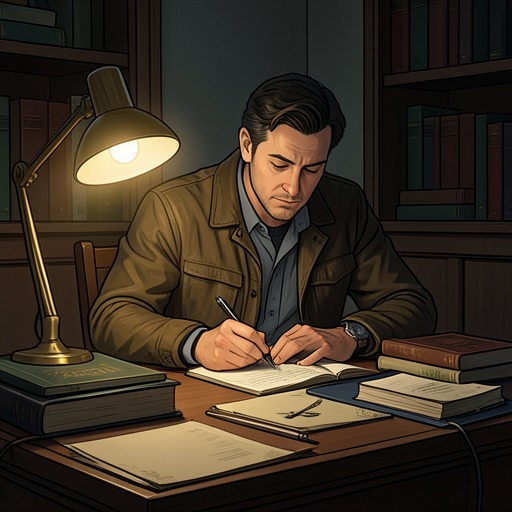
Martin had meant to spend Sunday studying for the examination, but a pearl-diving article drew him back to writing. He devoted the day to recreating the beauty and romance of the subject, and the next morning looked at the unfinished piece before taking the car to the high school in Oakland. The contrast is central to the episode: the work that claims his attention is imaginative and self-directed, while the examination tests knowledge organized by a formal curriculum.
Days later, when Martin applied for his results, he learned that he had failed every subject except grammar. His success in that one branch made the extent of the failure more pointed: he could handle language well, but had not acquired the broad grounding the examination required.
The Examiner’s Verdict
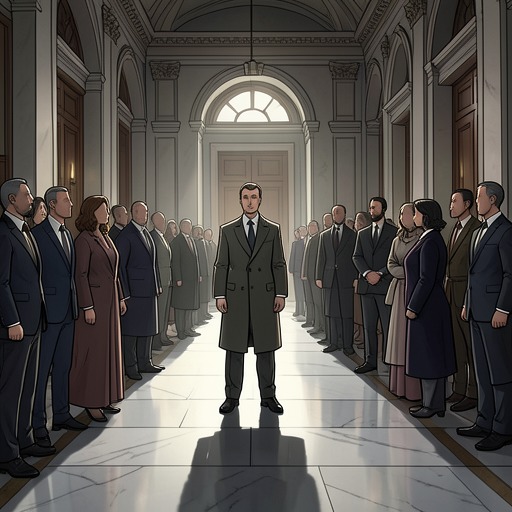
Professor Hilton told Martin that his grammar was excellent but that he knew virtually nothing in the other branches. He singled out United States history as especially poor and advised him to return to grammar school for at least two years. The recommendation treated the result as evidence of basic deficiencies to be repaired through prolonged formal study, not as a temporary setback that could be overcome by a brief course.
Martin answered humbly and wished the person at the desk in the library had been in the professor’s place. The thought sets the authority of the school examiner against the knowledge Martin associates with independent reading. Hilton’s conclusion is blunt and institutional; Martin’s preference points toward a different kind of teacher and a different route to learning.
Ruth’s Diagnosis and Advice
Martin was not deeply affected by failing, but Ruth’s shocked expression surprised him. Her disappointment made him sorry he had failed, chiefly for her sake. She argued that he knew more than students entering high school yet could not pass because his education was fragmentary and sketchy. For her, the result confirmed the need for the discipline and thorough grounding that skilled teachers could provide.
Ruth endorsed Hilton’s recommendation in a modified form: Martin should attend night school for a year and a half, which she thought might make up the additional six months he needed. That schedule, she reasoned, would leave his days available for writing or, if he could not support himself by writing, for other work. Her proposal tried to accommodate both his literary ambition and the practical need for an education and a living.
Martin’s Refusal
Martin’s first thought was that work by day and school at night would leave him no time to see Ruth, but he kept that objection to himself. Instead, he called night school childish and questioned whether it would pay. He believed he could complete the work faster than teachers could teach it, and said he could not afford the time.
The exchange leaves the failure unresolved rather than converting it into a commitment to formal study. Ruth reads the result as a warning that Martin’s scattered learning needs structure; Martin sees structured schooling as an inefficient use of time he cannot spare. His answer also reveals a personal cost beneath the argument: the schedule threatens time with Ruth, even as her disappointment gives him a reason to wish he had passed.