Poverty
Martin EdenPoverty in Martin Eden is not merely a lack of money but a force that governs what Martin can eat, wear, and do, while exposing the distance between his experience and Ruth’s assumptions about hardship. Maria Silva recognizes its daily costs and responds with practical aid; Ruth, by contrast, initially treats it as a temporary spur that might redirect Martin toward a respectable livelihood. Their different readings of the same condition shape Martin’s work, his access to Ruth, and the fragile solidarity he finds in Maria’s home.
Unequal Knowledge
Maria knows poverty from experience, whereas Ruth understands it largely as an abstract, unpleasant condition. Ruth associates Martin’s circumstances with the early lives of Abraham Lincoln and Mr. Butler, men whose later success makes deprivation seem like a preliminary stage on the way upward. She assumes hardship can motivate anyone who is not already defeated by life. When she learns that Martin has pawned his watch and overcoat, she does not take this as evidence of immediate need. Instead, she hopes that the setback will eventually persuade him to give up writing.
That interpretation makes poverty seem useful to Ruth: it might correct Martin’s chosen course by pushing him toward paid work. But the logic depends on distance from the material facts. Maria does not see deprivation as a lesson or a promising test of character. She observes its effects on Martin and knows that the loss of an item can mean a change in what he is able to eat. Poverty is therefore also a contest over who gets to define Martin’s circumstances: Ruth reads them through stories of eventual success, while Maria reads them through the daily evidence of scarcity.
Visible Signs and Misreadings
The changes in Martin’s face make that difference of knowledge visible. His cheeks grow hollow, and his eyes take on an unusual brightness. Ruth admires the brightness because it suggests the poet and scholar she wishes Martin to become. She regards his thinning appearance as a refinement, as though hardship were removing something that had made him too robust. She does not recognize hunger in his face.
Maria reads the same signs as a record of changing fortunes. She notices Martin leave the house with his overcoat and return without it, even on a cold, raw day. After the sale, his cheeks fill slightly and the fire of hunger leaves his eyes. She has also watched his bicycle and watch go, and notices his vigor return after each loss. Her attention is practical and repeated: she follows the small changes in his possessions and appearance as indicators of what he can afford. Where Ruth turns visible deprivation into an image of artistic development, Maria connects it to food and the immediate circumstances of survival.
Aid and Shared Hardship
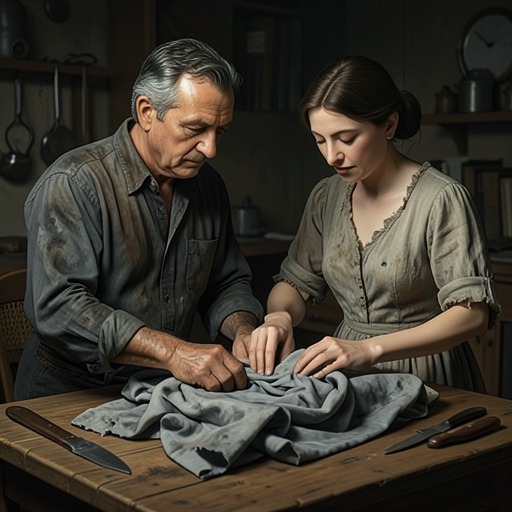
Maria’s response is quiet, concrete, and costly. She watches Martin work late into the night and is surprised that he works harder when he has less food. When she thinks hunger is pressing hardest, she sends him a loaf of freshly baked bread, disguising the help as a casual joke about his baking. At other times she sends one of her children with a large pitcher of hot soup. She weighs the kindness against the needs of her own children, making clear that aid comes from a household with little to spare. Martin understands the lives of poor people well enough to recognize the gift for what it is.
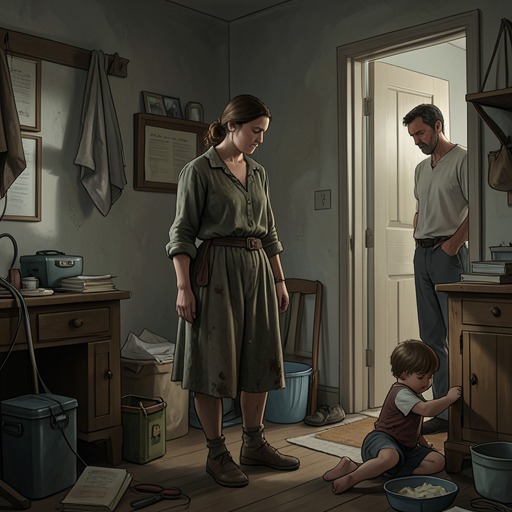
On one day, after feeding her children with what remains in the house, Maria spends her last fifteen cents on a gallon of cheap wine. Martin comes into the kitchen for water, and she invites him to sit and drink. They toast one another’s health and hope for better fortunes. Maria hopes that James Grant, a journeyman carpenter who owes her three dollars for washing, will pay his bill. Their conversation does not erase their different histories, but their shared hardship brings them together. Poverty here produces both isolation and a modest form of companionship: each knows the strain of scarcity, and Maria’s hospitality is meaningful precisely because she has so little to give.
Clothing, Access, and the Threat of Surrender
The loss of Martin’s last good suit makes poverty a barrier to his relationship with Ruth. In desperation, he takes it to the pawnshop. He has no other presentable suit, and although he can go to the butcher and baker, or occasionally visit his sister, he cannot imagine entering the Morse home dressed so poorly. Poverty thus restricts not only his comfort but also his ability to appear in a social world that matters to him. The suit is a practical possession and a condition of access: without it, Martin is cut off from Ruth’s home.
As his resources dwindle, he begins to think that his attempt to live by writing has failed. Taking a regular job would satisfy the grocer, his sister, Ruth, and Maria, to whom he owes a month’s rent. He is also two months behind on payments for his typewriter, and the agency is demanding payment or the machine’s return. He takes the Railway Mail civil service examinations and, to his surprise, places first, though he does not know when he will be called to begin work. The possibility of employment appears when he is close to surrendering his literary ambition.
Ruth’s Visit and the Meaning of Hardship
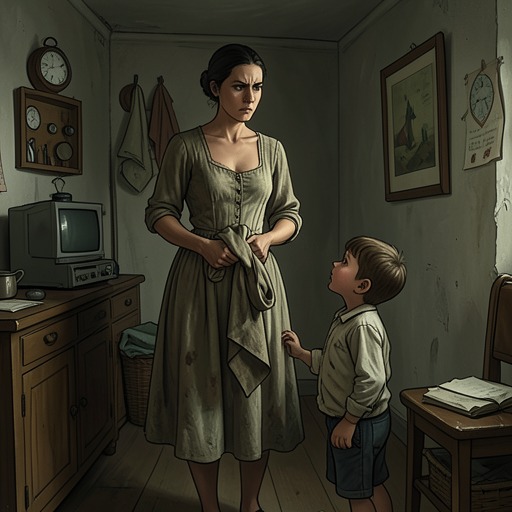
When Martin tells Ruth about two story acceptances, he describes both his despair at one response from the Transcontinental Monthly and his delight at the acceptance from the White Mouse. She understands the literal news but does not share his emotional investment in publication; marriage and Martin’s choice of a stable position matter more to her. The room itself draws her attention. Its poverty is no longer a distant idea attached to successful men’s beginnings or a romantic image of lovers enduring hardship. She encounters Martin’s unshaven appearance and the conditions of the Silva household, and sees the surroundings as marking him.
The moment sharpens the conflict between their interpretations. Martin takes the acceptances as evidence that his chosen work may yet be possible. Ruth sees them as prolonging a course that had nearly been interrupted by need and a possible job. Her response shows how poverty can be recognized without being understood: she sees its surroundings and its effects, but not the hunger and labor Maria has learned to read. In the novel, deprivation is at once a material crisis, a social boundary, and a test of whose account of Martin’s future will prevail.