Russ Brissenden
Martin EdenRuss Brissenden enters Martin Eden’s life as a stranger at a Morse family dinner and quickly becomes much more than an acquaintance: he is a fellow poet, an intellectual equal, and a friend whose counsel and generosity sharpen the conflicts between artistic ambition, commercial success, and class. Martin’s impressions of him change dramatically, from dismissive suspicion to awe, as Brissenden’s conversation and poetry reveal a brilliance that seems to exceed what books alone can teach.
Introduction and First Impressions
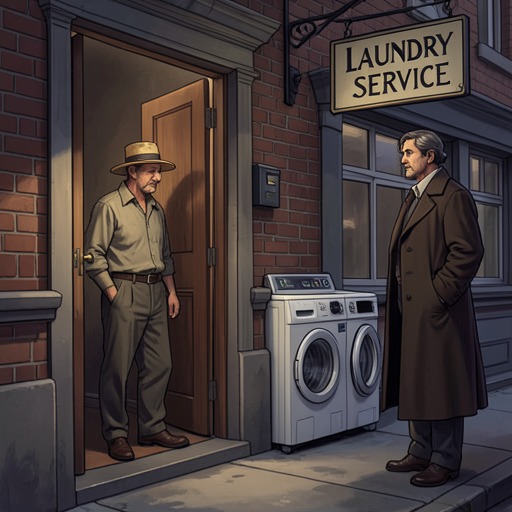
At the Morse home, Martin initially pays little attention to Brissenden. He does not know how the visitor came to be there or whose friend he is, and does not ask Ruth about him. Brissenden strikes him as anaemic and feather-brained; later, his wandering from room to room, inspecting pictures and picking up books and magazines, makes Martin judge him a boor. Although a stranger among the company, Brissenden eventually settles apart in a large Morris chair and reads from a thin volume he has taken from his pocket, abstractedly running his fingers through his hair. Martin notices him only once more that evening, when Brissenden appears to be successfully teasing several young women.
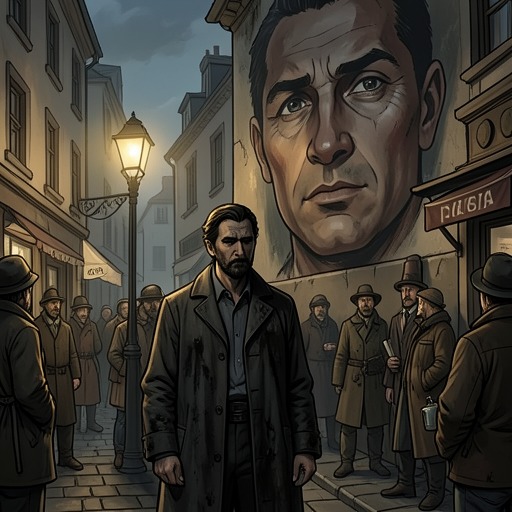
The first impression does not last. When Martin leaves, he catches up with Brissenden, and the encounter leads to an invitation that Martin accepts with surprising readiness. He has hack-work waiting at home, along with books he means to study, and he does not especially like the man. Yet Martin recognizes that what draws him is not simply Brissenden or the prospect of a drink: it is the atmosphere of a public bar and the company of men whose voices seem optimistic and confident. At the Grotto, they settle into capacious leather chairs and drink Scotch and soda. The setting supplies a social warmth Martin has missed, but Brissenden’s conversation soon becomes the more important attraction.
Conversation and Recognition
The two men talk at length, taking turns ordering drinks. Martin is surprised both by Brissenden’s capacity for liquor and by the range and force of his thought. He comes to regard him as the second truly intellectual man he has met, while distinguishing him from Professor Caldwell: Brissenden has the fire, flashing perception, and uncontrolled energy of genius that Martin believes Caldwell lacks. Their exchange gives Martin not just information but an experience of language as a living art.
Brissenden’s speech seems to move among sharply different registers. His phrases can cut and sting, soften into mellow beauty, or sound with the force of a bugle. Martin hears in them both the precision of scientific thought and something beyond it: a poetic apprehension of truths that ordinary language cannot fully state. In the novel’s presentation, Brissenden’s importance is therefore inseparable from how he speaks. Martin experiences his words as communicating meanings that seem almost incommunicable, and forgets his earlier dislike. The man who had appeared frivolous now represents the fullest realization of what Martin has hoped books might lead him to encounter: a living intelligence he can admire.
Poetry and Advice about the Magazines
Brissenden recognizes Martin as a poet, and Martin discovers that Brissenden is one too. He reads Martin’s work, including the Love-cycle and The Peri and the Pearl, and returns the next day wanting more. Martin, in turn, is astonished that Brissenden’s own poetry has not been offered for publication and volunteers to help market it. Brissenden rejects the offer. He urges Martin to love beauty for its own sake, leave the magazines alone, and return to ships and the sea rather than spend his life trying to make beauty serve the needs of the magazine trade.
His counsel turns Martin’s ambition into a point of disagreement between them. Brissenden regards fame as potentially poisonous and commercial success as a poor measure of artistic achievement. He points instead to the success already contained in Martin’s poems, praising the Stevenson sonnet, the Love-cycle, and the sea poems. His position is not that Martin lacks talent: he is emphatic about Martin’s poetic gifts. Rather, he objects to the cost of pursuing recognition through a marketplace he considers hostile to beauty. The advice exposes a divide between Brissenden’s commitment to art apart from public reward and Martin’s continuing effort to make writing both a vocation and a livelihood.
Ephemera and Artistic Friendship
Brissenden later hands Martin a manuscript titled Ephemera. He explains that Martin had supplied the originating idea: a human being as the latest of the ephemera, a creature of temperature occupying a small space on a thermometer. The thought had lodged in Brissenden’s mind until he had to write it out. The poem runs to six or seven hundred lines, and Martin reads it with an intensity that changes his initial curiosity into astonishment.
Martin finds its construction so complete that form seems to contain every last atom of its substance. The poem ranges across humanity and the soul’s search for meaning, setting the fragile human voice against the immensities of space: distant suns, spectra, stars in conflict, and the destruction of systems. Amid this cosmic scale, the voice of humanity remains faint and persistent, like a small cry against the tumult. Martin is overcome by the work and struggles to describe its effect, dwelling on the contrast between human desire and the vast forces surrounding it. His response confirms the intimacy of their artistic exchange: he is not merely handling a manuscript but recognizing in Brissenden a poet whose imaginative reach exceeds his own expectations.
Money, Generosity, and Consequences
When Brissenden leaves Martin late one night, he abruptly turns back at the first step of the car and presses a small, tightly crumpled wad of paper into Martin’s hand. He says he has been at the races and had the right information. Martin does not discover until he is home that the wad contains a hundred-dollar bill. He accepts the money, confident that he will be able to repay a friend who has always had plenty.
The gift immediately becomes practical help for several people. Martin pays his bills, gives Maria three months’ rent in advance, redeems everything at the pawnshop, and buys a wedding present for Marian as well as Christmas presents for Ruth and Gertrude. With what remains, he takes Maria and the Silva family into Oakland. He has been late in fulfilling his promise to them, but now even the youngest Silva receives shoes, and the family carries toys, dolls, horns, candy, and nuts. The procession culminates in a confectioner’s shop, where Martin and Maria lead the children in search of the biggest candy cane.
There, the consequences of Brissenden’s gift intersect with Martin’s relationship to the Morse family. Mrs. Morse is shocked, and Ruth is hurt by the public sight of her lover beside Maria and at the head of the Portuguese children. What troubles Ruth most is not simply the appearance of the scene but what she reads in it: Martin seems not to care about the social appearances she values, and his working-class origin appears to her impossible to leave behind. Brissenden’s money thus enables an act of concrete generosity while bringing the class division between Martin’s worlds into view. His friendship offers Martin recognition and material assistance, but it cannot reconcile the competing social values that shape Martin’s life.