
The Hidden Chamber Investigation
MasqueradeThis flow follows the discovery of the underground killing site and its transformation of a local crime into a serial-murder investigation.
increasing Bearing strength in each event
 decreasing
Bearing strength in each eventdecreasingThe Open Trapdoor
The Open Trapdoor
Beneath the Barn
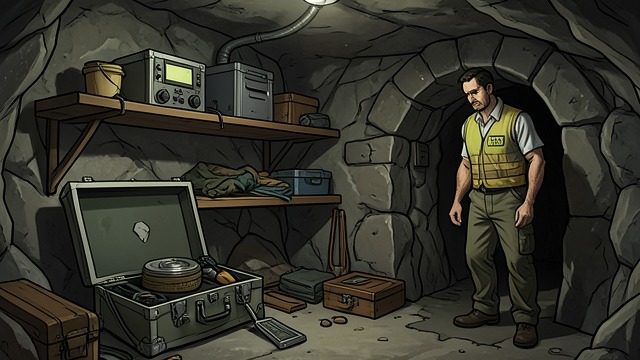
Dan Stevens enters the old root cellar beneath the barn and finds a safe and a concealed tunnel. A movable shelf disguises the passage from casual view.
The architecture turns an apparently ordinary farm building into a hidden route. The empty safe may explain why the robbers entered the cellar, but not what the tunnel contains.
A Darker Passage
The tunnel leads away from the cellar toward a chamber prepared for captivity and torture. Dan Stevens follows despite warnings from the medical examiner.
The discovery redirects attention from the robbery’s immediate deaths to a concealed system of violence that has operated for years.
The Tiled Room
The Tiled Room
Evidence of Captivity
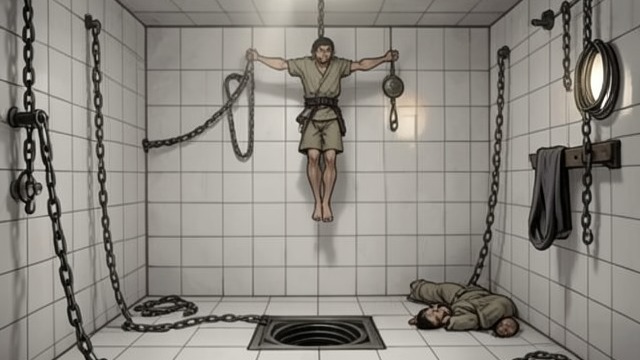
Dan Stevens emerges into a white-tiled chamber fitted with chains, restraints, and a floor drain. The room’s design suggests repeated use rather than a single improvised crime.
A dead missing student hangs from the ceiling. Her body makes the chamber’s function undeniable and gives the investigation a named victim to connect with prior alerts.
A System of Violence
Tools laid out on a table and hooks placed around the room indicate deliberate preparation. The chamber is organized to control victims and manage evidence.
The room changes the meaning of the farm: its concealed spaces were not merely hiding places but instruments of a continuing criminal life.
Numbered Barrels

Numbered Barrels
The Dead in Storage
Investigators find numbered drums, most apparently holding human remains. One contains a recently deceased woman, while another holds a body so old it resembles a mummy.
The numbering suggests a history of accumulation. The chamber contains victims from different periods, not merely the missing student whose body first drew attention.
The Scale Expands
The drums turn suspicion into evidence of repeated killings. The investigators cannot immediately determine how many victims lie within the hidden collection.
The physical record deepens the case and makes the farm’s secret history impossible to dismiss as one concealed episode.
A Second Exit
A Second Exit
The Hidden Shaft
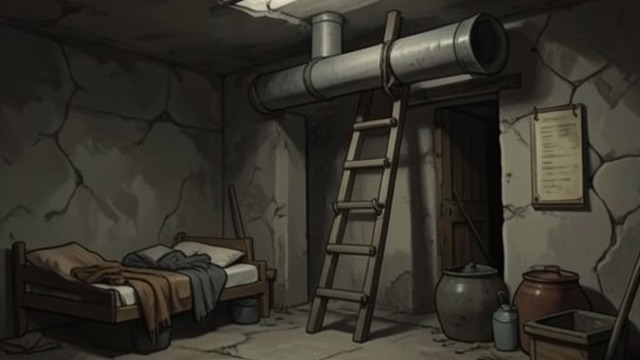
Dan Stevens discovers a concealed opening above a cot, leading into an angled concrete pipe. Handholds and a ladder connect the chamber to a distant point outside.
The passage gives the underground complex an escape route independent of the barn. Its construction shows how carefully the hidden operation was designed.
A Crime Beneath Daily Life
The outlet is disguised as an abandoned outhouse, blending into overgrowth behind the property. Investigators realize that the network could have remained unnoticed for years.
The discovery enlarges the question from who committed the crimes to how long an entire hidden system escaped detection.
Federal Intervention
Federal Intervention
Local Limits
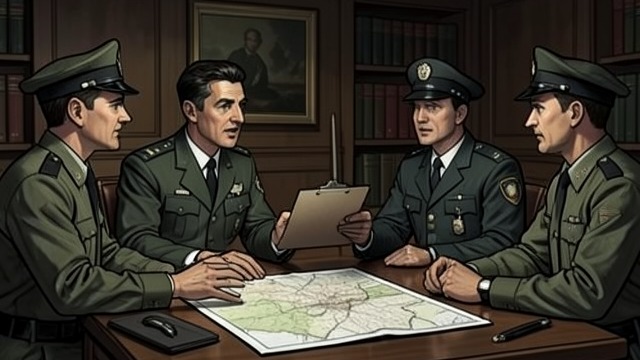
Dan Stevens admits that his department cannot process the scale of the scene alone. The chambers, bodies, and years of possible evidence require specialized capacity.
His call to federal authorities marks a change in both jurisdiction and pace. The investigation now needs experts capable of connecting unidentified victims across places and time.
A Wider Search
The Federal Bureau of Investigation joins the inquiry and begins interviewing Claire Rothman and people who knew the household. Forensics will test the chamber’s traces against other crimes.
The hidden room has converted a local emergency into a national case, with the possibility of an unknown accomplice still unresolved.
During the first crime-scene examination
A few minutes into the tunnel search
During the same chamber examination
At the end of the underground inspection
Before dawn after the chamber is found
