
Masks and Disguise
MasqueradeThis flow traces how concealment shapes the identities, misunderstandings, and revelations that drive the story.
increasing Bearing strength in each event
 decreasing
Bearing strength in each eventdecreasingThe Ordinary Sculptor
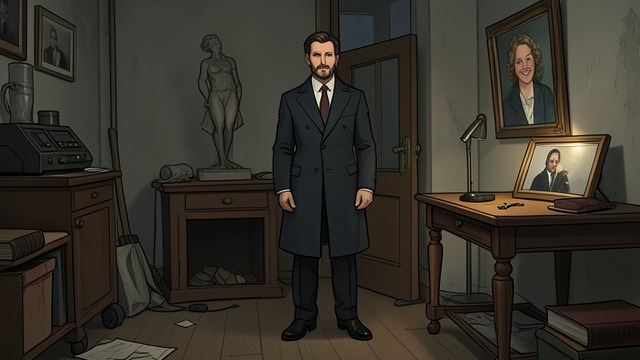
The Ordinary Sculptor
A Public Identity
Robert Michael Rothman appears to be a mild-mannered sculptor whose work is respected internationally. His limited public photographs and quiet domestic life make the image difficult to challenge.
The artistic identity is real, but incomplete. It conceals a criminal history that has been built into the physical layout of his home.
A Secret Beneath It
The underground chamber exposes the gap between public reputation and private action. Robert Michael Rothman’s respectable surface has not been a disguise imposed by others; it is part of how he has remained unexamined.
The story asks how easily a community can confuse visible refinement with moral safety.
The False Victim
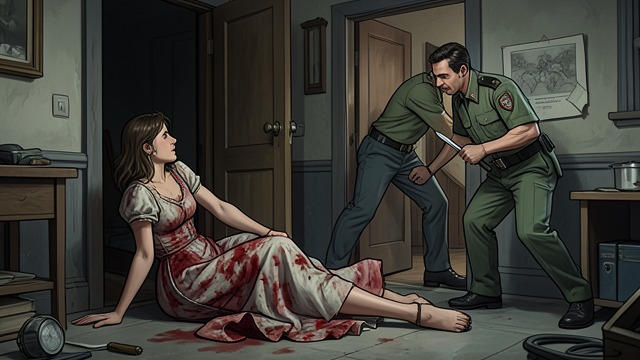
The False Victim
A Staged Appearance
Victoria Belle sends Kaye Swan toward the FBI Safe House in the appearance of an escaped, injured captive. The scene is designed to make an agent respond with help rather than suspicion.
The disguise works because Kaye Swan’s distress is genuine. Victoria Belle turns a real victim’s fear into cover for a planned attack.
Trust Exploited
An agent opens the door and is stabbed before he can understand the ruse. The visual appearance of rescue becomes the opening for violence.
The episode shows that appearances can be manipulated without making suffering unreal. Kaye Swan is both victim and unwilling part of the disguise.
A Reporter’s Costume
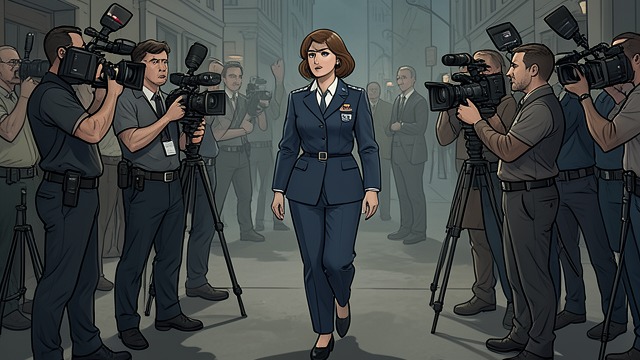
A Reporter’s Costume
Borrowed Credentials
Victoria Belle kills Sally-Anne Wilkes and takes her clothing and press identity. She then uses the stolen appearance to move among news crews following the case.
The disguise offers access to people and places that might otherwise question her. It turns a public information event into cover for a fugitive’s ally.
The Camera’s Misreading
The reporter’s cameraman initially mistakes Victoria Belle for the colleague he expects. Her performance buys time before he recognizes that something is wrong.
The episode makes identity a practical instrument. A familiar role can conceal danger until the person beneath the costume chooses to reveal it.
A Motel Made to Look Occupied
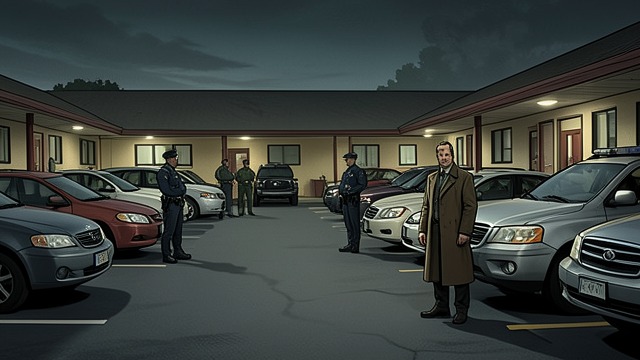
A Motel Made to Look Occupied
An Invented Scene
The Federal Bureau of Investigation fills Pines Way Motel with vehicles and agents to make it appear that Claire Rothman is staying there. A lookalike reinforces the illusion.
The decoy is a disguise created by authorities rather than criminals. It aims to control the fugitive’s picture of events and draw him into a trap.
Deception Defeated
Victoria Belle watches the staged movement and discovers that Claire Rothman is elsewhere. Her surveillance defeats the false appearance before the trap can work.
The episode complicates any simple division between deception and truth: concealment can protect a witness, but it can also be read and exploited by an observant adversary.
The Hidden Basement
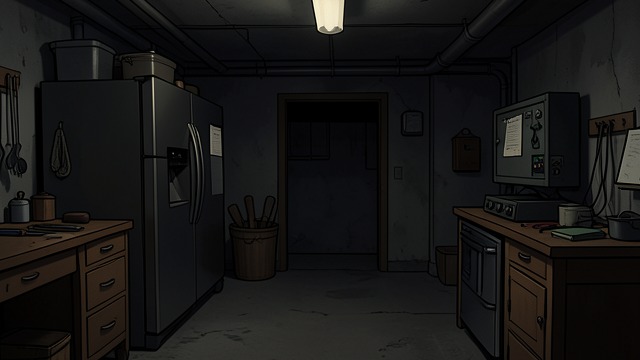
The Hidden Basement
A Domestic Concealment
Jessica White finds a basement hidden beneath a refrigerator in her husband’s workshop. The room is empty, yet its concealment makes it difficult to regard as ordinary.
The discovery echoes the hidden spaces at Rothman Farm without proving that the rooms share a purpose. Jessica White must confront the difference between resemblance and evidence.
A Marriage Reframed
The chamber changes how Jessica White sees her husband because it reveals an undisclosed part of his life. Her uncertainty becomes a new form of scrutiny.
The final disguise is not a costume or alias but an architectural secret inside a marriage.
Before the discovery at the farm
During Victoria Belle’s approach to the safe house
During the first day of the manhunt
During the FBI’s protection plan
The morning after the events in Indiana
