
Love, Blind Faith, and Self-Deception
MasqueradeThis flow traces how love can sustain loyalty and hope while also obscuring warning signs and delaying confrontation.
increasing Bearing strength in each event
 decreasing
Bearing strength in each eventdecreasingLove After an Attack

Love After an Attack
A Threat Reinterpreted
Robert Michael Rothman abducts and threatens Claire Rothman, then releases her. She stays with him and later describes their relationship as becoming love.
Her memory shows how an act of violence can be folded into a story of attachment. The story does not present that choice as proof that the danger was unreal.
The Cost of Meaning
Claire Rothman has spent decades trying to understand why she stayed. Her later confession makes clear that even she cannot offer a simple explanation.
Love gives the relationship emotional force, but it can also make danger harder to name. That contradiction shapes her eventual reckoning.
Warnings Set Aside

Warnings Set Aside
Friends Pull Away
Claire Rothman recalls that friends gradually withdrew as they found Robert Michael Rothman disturbing. Her closest friend said that his attention toward women made her uncomfortable.
Claire heard the warnings but trusted her own experience of affection. Her confidence in the marriage made other people’s fear feel less persuasive.
Belief as Shelter
The pattern of concern did not disappear; Claire learned to live around it without treating it as proof of a crime. That choice helped preserve the relationship she wanted.
The story treats self-deception as emotionally comprehensible but costly. What protects love from doubt can also protect a dangerous person from scrutiny.
The Promise to Return

The Promise to Return
Attachment Survives Flight
Robert Michael Rothman leaves Claire Rothman with a promise that he will return. Claire believes him, even though she now knows that he is a serial killer.
Her belief reveals how strongly the marriage continues to shape her expectations. The promise offers emotional continuity but also threatens renewed contact.
Hope and Refusal
Claire Rothman says she does not want to see her husband, yet still expects him to come. The contradiction is not resolved by simply telling her what she should feel.
The relationship’s emotional power persists after its moral foundation collapses. The story uses the promise to show how love and fear can occupy the same hope.
A Lesson in Blame
A Lesson in Blame
Regret About Silence
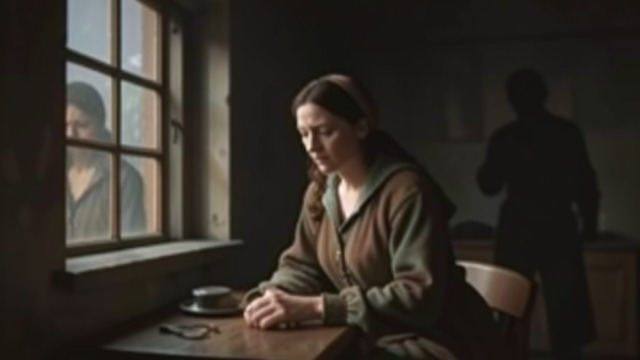
Claire Rothman wonders whether she should have gone to the police after Robert Michael Rothman first attacked her. She imagines that intervention might have prevented later victims.
Her regret is understandable, but it risks turning a criminal’s choices into her burden. Jessica White tells her that she is not responsible for his actions.
Compassion Without Excuse
Jessica White does not call Claire foolish for loving Robert Michael Rothman. She recognizes a person who hoped that love could coexist with change.
The exchange preserves moral clarity while offering compassion. Understanding why someone stayed is not the same as endorsing the danger or blaming the victim.
Trust After the Discovery

Trust After the Discovery
A Hidden Space
Jessica White finds the basement concealed in her husband’s workshop. She has no proof of what the room was built for, but its secrecy strikes directly at her trust.
The discovery recalls Claire Rothman’s belief that she understood her husband. Jessica White must confront how affection can make an unanswered question feel easier to avoid.
A Different Choice
Rather than dismiss the room, Jessica White examines it and acknowledges her fear. The novel ends with her crying rather than restoring immediate reassurance.
Her response suggests that love need not require blindness. Whether the marriage can survive the new uncertainty remains open.
On the day Claire first meets Robert
During the Rothmans’ married years
At the end of the invasion night
During Claire’s later conversation with Jessica
The morning after the return home
