
Predator and Prey
MasqueradeThis flow traces how the characters use the language of predator and prey to explain violence, vulnerability, and resistance.
increasing Bearing strength in each event
 decreasing
Bearing strength in each eventdecreasingRobert’s Worldview
Robert’s Worldview
A Divided World
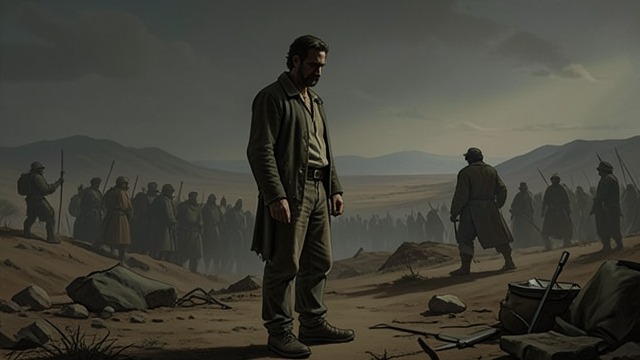
Robert Michael Rothman imagines humanity as predators and prey, with himself among the few willing to act on desire. The framework lets him regard victims as part of a natural cycle.
That account turns moral choices into supposed biological facts. It hides the human decisions involved in selecting, restraining, and harming another person.
The Victim’s Perspective
The story places his abstract claims beside Kaye Swan’s pain and fear. Her experience makes visible what the language of possession tries to erase.
The contrast challenges the idea that a perpetrator’s worldview can define the meaning of violence for everyone involved.
Belle Recognizes Her Kind

Belle Recognizes Her Kind
A Perceived Kinship
Victoria Belle believes she can detect other predators and identifies Jessica White’s husband from a distance. The recognition fascinates her and becomes a reason to seek more contact.
Her perception does not create moral solidarity with victims. Instead, it gives her a private language for affinity with people she sees as similar to herself.
Recognition Without Agreement
Jessica White’s husband rejects Victoria Belle’s claim that he is like her. His insistence that he will not become Robert Michael Rothman’s kind creates an unresolved conflict about identity and choice.
The scene suggests that recognizing an impulse does not settle what a person will do with it.
Kaye Swan as a Target
Kaye Swan as a Target
Possession as Language
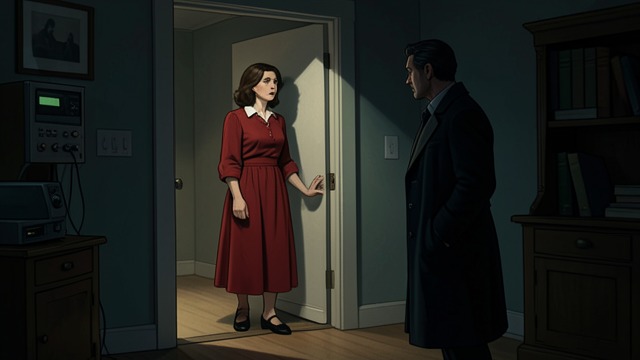
Robert Michael Rothman thinks of Kaye Swan as a captive he can control. His language of possession makes her seem like an object within his private world rather than a person with her own claims.
Kaye Swan’s resistance and fear expose the violence hidden in that framing. Her body and choices remain hers, even when her captor tries to dictate both.
Survival as Resistance
Kaye Swan answers questions strategically and complies when necessary to stay alive. Her cooperation does not make her willing or erase her resistance.
The story gives her a form of agency within severe constraint: she observes, survives, and later gives information to the authorities.
Power Reversed at the House
Power Reversed at the House
A Captive Acts
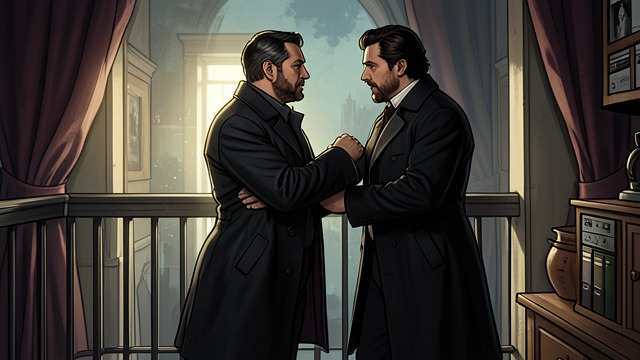
Jessica White’s husband is handcuffed and held by Robert Michael Rothman, who believes he can control the hostage. The captive waits for the moment when his captor’s attention shifts.
He charges and sends them both over the railing. The fall breaks Robert Michael Rothman’s wrist and reverses their relative power.
Control Is Temporary
Jessica White’s husband restrains Robert Michael Rothman and creates a signal for the search team. The captor becomes the one tied down and awaiting others’ arrival.
This reversal undermines any claim that power belongs naturally to a predator. It can be challenged by timing, action, and the vulnerability of the person who assumed control.
The River’s Indifference

The River’s Indifference
A Desperate Escape
Victoria Belle jumps into the rapids rather than surrender to the deputies. The current carries her out of sight while the searchers see blood in the water.
In the landscape, neither her self-image nor the authorities’ certainty can control what happens next. The river becomes an impersonal force rather than a participant in anyone’s moral story.
Uncertain Survival
No body is recovered, so Victoria Belle’s fate remains unresolved. The search can describe what was seen, but cannot establish whether she died or escaped.
The ending refuses a clean division between predator captured and predator defeated. Uncertainty itself becomes part of the story’s account of vulnerability and power.
During his first day as a fugitive
During her surveillance of the FBI operation
During her captivity
Near dusk at the lakeside home
At dusk after the pursuit reaches the gorge
