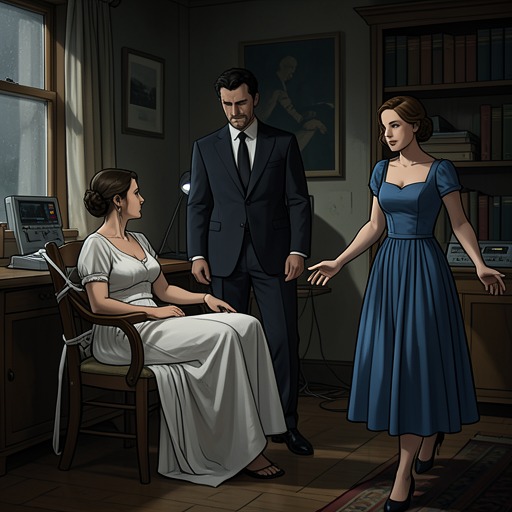
Colleen Sherman’s two-year captivity
Match PointColleen Sherman’s two-year captivity was a sustained act of coercion disguised as privilege: Oskar Latu confined her after she rejected his marriage proposal, then made her secretly train his daughter, Pua Latu. Fine clothes, jewels, gourmet food, and an expensive suite could not compensate for the freedom taken from her. When Colleen finally named Oskar as her captor before a crowd, her testimony transformed a hidden imprisonment into a public accusation.
Origins and Abduction
Colleen’s captivity followed the collapse of her affair with Oskar. She had tried to break off the relationship, but he would not accept her refusal. She then planned a sailing trip with Corey Baxter, intending to confess the affair and explain that guilt had become unbearable. Colleen hoped Corey might end their relationship; if he did not, she believed she would have to do so herself, though she did not want to hurt him again.
The trip became an ambush. Colleen had not checked the boat’s storage compartment, where a man was hiding. He emerged and struck Corey in the head with such force that Colleen thought he was dead. Before she could reach him, another boat pulled alongside and its occupants abducted her. Oskar had arranged a private plane to smuggle her out of the country, and she was taken to the place where he held her. The carefully planned removal separated her from Corey and placed her beyond the ordinary reach of the life she had intended to resume.
Oskar’s interest in Colleen was bound up with his plans for Pua. He had wanted the world’s best player to coach his daughter and had invited both Colleen and Willa Ashford to the island; only Colleen came. After pursuing Colleen and beginning an intense affair with her, Oskar asked her to marry him so she could become Pua’s mother as well as her coach. When Colleen instead ended the affair and planned to return to Corey, Oskar refused to let that choice stand. Her confinement thus served his personal desire and his ambition for Pua, while making Colleen’s own wishes irrelevant to both.
A Captive Made to Coach
For two years, Colleen coached Pua without Pua knowing who was guiding her. Colleen watched her practice and told the fake coach Oskar had hired what the girl needed to do to improve. That intermediary passed Colleen’s instructions along as if they were the coach’s own. Under Colleen’s expert guidance, Pua flourished, while the person responsible for that progress remained concealed in captivity.
Oskar enforced the arrangement with threats against Willa and Corey. The threats also revealed that Corey had survived the blow aboard the boat: Colleen learned he was alive because Oskar threatened to hurt him if she did not continue helping Pua. The knowledge offered relief only in a constrained form. Colleen could not contact Corey or choose freely to help him; instead, Oskar turned his safety into leverage over her conduct. Her expertise remained active, but its use was controlled by her captor.
The arrangement also tied Colleen’s continued imprisonment to Pua’s athletic prospects. Oskar believed Colleen could remain Pua’s coach even if she would not be his wife. He considered what to do with Colleen once Pua had achieved her goal, but believed he could not release her: she could have him arrested for holding her captive. Pua’s shoulder injury had hampered her for much of the season, and Oskar regarded the tournament as her last chance to secure an Olympic place. His investment in her success therefore prolonged the system that kept Colleen imprisoned.
Luxury Without Freedom
Oskar surrounded Colleen with costly comforts. Her suite had high-quality linens, furniture, and electronics; classically trained chefs prepared her meals, and a woman he hired bought her fashionable clothes in her size and fine jewelry. Colleen also had a computer and spent her time writing a novel. But the computer had no internet access, and the existence of attractive possessions did not give her a means to leave, communicate freely, or determine her own future.
That contrast is central to the meaning of the two years. Oskar treated material provision as though it could soften, or even excuse, confinement. Colleen’s experience exposes the difference between being indulged and being free: expensive gifts could decorate captivity, but they could not make it voluntary. Oskar’s hope that Colleen might change her mind and marry him did not alter the coercive reality of her circumstances. The comforts made the suite luxurious; the absence of choice made it a prison.
Disclosure and Consequences
Colleen’s captivity became publicly known when Oskar was restrained before a crowd. As people watched, she identified herself by name and stated that Oskar had held her hostage for two years. Oskar called her accusation a lie, but Colleen went further: she said he had tried to have her and her partner, Willa Ashford, killed that night, and that they would both be dead without the intervention of COBRA Securities personnel. The testimony connected the years of hidden confinement to the immediate violence surrounding the attempted killings.
Her disclosure also corrected the story others had believed. Willa had thought Colleen dead, and Oskar had even sent Willa sympathy flowers on that assumption. Colleen’s return made the supposed loss impossible to sustain and placed the truth of Oskar’s actions before witnesses. The two years had been marked by secrecy—Pua did not know who coached her, Corey’s survival was concealed from Colleen until it became a threat, and Oskar expected to keep his hostage from reporting him. Speaking openly broke that concealment. Colleen’s account restored her authority to name what had happened: not an extravagant life offered in hope of marriage, but an abduction, forced labor, threats, and the denial of freedom.