Luca Russo
Match PointLuca Russo is a COBRA Securities operative whose fieldwork helps turn Colt Fontaine’s protection detail into an active investigation. He brings security equipment and backup to the Mission Beach rental house, follows leads connected to threats against Willa Ashford, and responds to intrusions alongside Anja Johansen. His work links the practical business of protecting the house to the effort to understand who is trying to keep Willa from competing.
Identity and Assignment
Luca is part of Colt’s COBRA Securities team. Before the others arrive, Colt is serving as the advance operative and expects Luca and Anja to assist if he needs backup. The short interval before the Serenidad tournament makes that support consequential: Willa and Tabby have only six days to prepare as a team, and the press attention around Willa’s return adds to the need to keep training private and secure.
When Luca and Anja reach the rental house, Colt feels relief. An attempt on Vic Bello the previous night has made clear that the danger is not merely hypothetical. The team’s assignment is therefore more than routine protection: they must guard the people staying at the house while trying to discover why someone is working to stop Willa from competing. Luca’s arrival also brings the supplies Colt requested to reinforce security.
Securing the Rental House
The house presents practical vulnerabilities. Colt finds that its existing system has only a few cameras, and that the keypad codes may have been shared among previous renters. He plans to cover the entrances and perimeter, while the team arranges temporary cameras and door sensors rather than immediately replacing every lock. Luca is among the coworkers expected to bring the additional cameras for the outside perimeter, where coverage of every possible point of entry is a priority.
The team’s precautions extend to monitoring activity inside. Colt discovers four cameras with listening devices already installed in the house’s security setup. None has been activated; after checking that the devices are in the basement and facing the volleyball court rather than in bedrooms or hallways, he activates them and sends the feed to his phone. The distinction matters: the added systems are intended to make visitors and approaches more visible, but the rental’s existing equipment also means the team must establish what is already in place before relying on it.
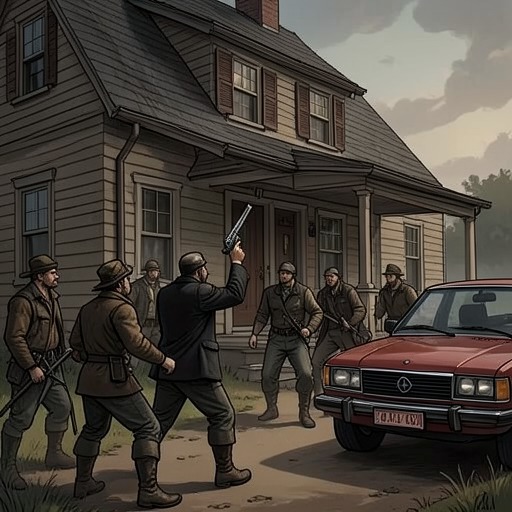
Luca’s role becomes visible during a later alert at the property. Colt meets Anja on the stairs and Luca on the bottom floor after both receive the warning. A person is climbing over the fence around the private volleyball court. Colt directs Anja to approach from one side and tells Luca to switch on the outdoor lights at his signal. When the intruder drops into the sand, Luca floods the court with light, exposing the person to the team’s armed response. The coordinated interception shows the security plan operating through communication and assigned positions, rather than through surveillance alone.
Investigating the Threats
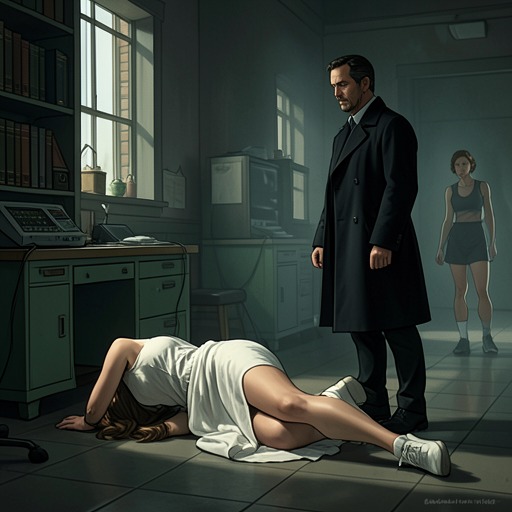
Colt sends Luca to visit Hazel Reyno, whose name has appeared in a threatening message left on Willa’s phone. Hazel’s phone is off, so her location cannot be traced; Luca nevertheless makes the trip to her home in Valley Center, about forty-five minutes north of San Diego. The address leads him to a run-down trailer park and a dilapidated manufactured home. When he enters, he recognizes the smell of death and finds the seventy-two-year-old Hazel dead on the orange shag carpet. He checks the rest of the trailer to make sure there are no other victims.
The visit turns a threatening name into a death that may be connected to the danger surrounding Willa. Luca later reports what he found to Colt; the detective he has spoken with promises to keep him informed, but the investigation has not yet supplied a resolution. Luca and Colt both regard Hazel’s death as likely related to the threats. The connection remains a suspicion, not a conclusion established by Luca’s visit, and the uncertainty gives the threatening message a more serious context.
Luca also investigates Denise Salazar after she is injured. At Denise’s apartment building, he takes the stairs to the fourth floor and finds her on crutches, with a white plaster cast covering her lower left leg. He identifies himself as working for COBRA Securities and shows his identification. Later, he tells the others that he found a nail hole and suspected Tabby had arranged for Denise to fall, literally, so that she could partner with Willa. Colt agrees that the broken cameras are damning, but the evidence presented leaves room for suspicion rather than establishing Luca’s theory as a proven fact. The apparent contradiction between Tabby’s interest in joining Willa and the threatening messages directed at Willa remains unresolved at this point.
Teamwork and Narrative Role
Luca’s scenes repeatedly place him at the boundary between observation and intervention. At Hazel’s trailer he follows a lead, recognizes the danger in what he finds, and clears the home for additional victims. At Denise’s building he gathers details that inform the team’s theory about her injury. At the rental house he responds to an alert as part of a coordinated effort with Colt and Anja. The work is methodical, but the circumstances keep raising the stakes: a lead ends in a death, an injury may have been deliberately caused, and an intruder reaches the private court by crossing its fence.
His part in the protection detail also depends on restraint. When an intruder at the court is identified as Mike, Colt decides there is no reason to call the police because Mike appears harmless, though foolish. Luca steps forward to escort him to his vehicle in the public lot down the beach. The response closes that particular breach without treating every suspicious act as equivalent to a lethal threat.
Luca’s contribution is chiefly practical and collaborative rather than personal: the available scenes show him carrying out assignments, reporting findings, and responding to danger with the team. After Anja is shot, Colt remains connected to the rental house’s security system, though he has disabled the alarms while crime-scene personnel move through the property. A later critical alert reaches his phone, but the system is down and the immediate evidence does not establish Luca’s involvement in that later development. Across the protection detail, Luca’s significance lies in the layered response he helps provide: watching access points, checking leads, communicating suspicions, and acting when an alert becomes an intrusion.