
The Old Vor Idea of the Good Soldier
MemoryMiles questions a culture that treats military service as the highest measure of worth and learns to value other forms of work and belonging.
increasing Bearing strength in each event
 decreasing
Bearing strength in each eventdecreasingElena Questions the Creed

Soldiering Is Not Everything
A completed ambition
Elena explains that she has proved herself a capable soldier and now wants to discover other forms of life, including motherhood and civilian work. Her decision challenges the belief that a successful soldier must remain one forever.
Miles feels the loss
He had helped make her military future possible and feels her departure as a personal rejection. He must distinguish his pride in her from his wish to keep her beside him.
The Empty Military House

Status Without Service
The uniform removed
Miles stores his Barrayaran and Dendarii uniforms away after returning home. The absence of those clothes reflects a more difficult uncertainty about who he is without active duty.
A social role remains
He is still a lord and heir, but has little practice living as one. The contrast exposes the gap between formal status and the identity he built through military work.
Delia’s Measure of Maturity

Beyond Military Youth
A different expectation
Delia distinguishes between men who only want sex and men prepared to marry and build a life. Her remarks tease Ivan and prompt Miles to consider how little he has imagined ordinary domestic futures.
A challenge to the hero’s model
The conversation suggests that maturity may involve commitments outside combat, rank, and promotion. Miles can understand the idea intellectually before he is ready to practice it himself.
A Captaincy Without a Campaign
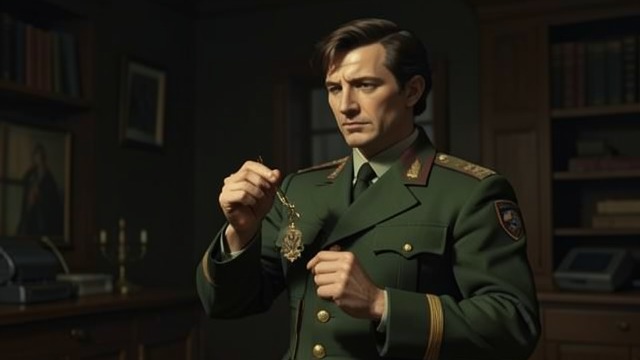
A Rank Finally Granted
An indirect promotion
Miles receives captaincy upon retirement, not through the military career path he once imagined. The title answers an old desire but does not return him to field command.
Merit beyond uniform
His new authority comes from judgment, investigation, and experience across institutions. The change complicates the assumption that military rank is the only honorable recognition available.
A Bureaucrat-Paladin

Service Reimagined
Quinn’s skepticism
Quinn has difficulty seeing the Auditor’s office as a fitting role for the soldier she knows. Miles explains that it is a flexible duty for problems that routine systems cannot handle.
A new kind of action
He accepts political work as a genuine form of service, not a lesser consolation. The role lets him use his experience without pretending that he must always be in command of armed troops.
During the resignation conversation aboard the fleet
During Miles’s first week after discharge
During the garden gathering after Miles’s return
At the meeting with the Imperial Auditors
During Quinn and Miles’s final conversation
