Actaeon
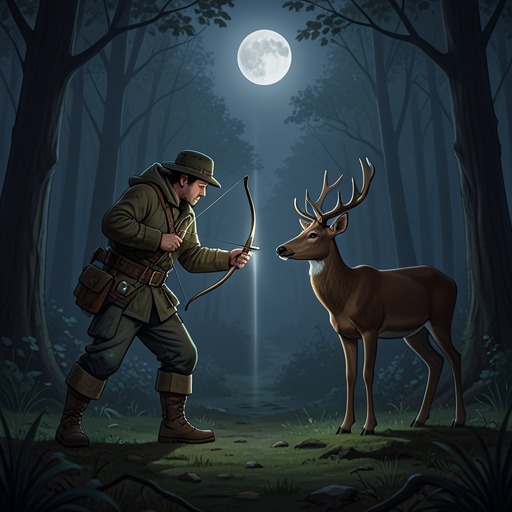
Metamorphoses (Ovid Edition)Actaeon is a hunter whose fate is governed less by deliberate wrongdoing than by an accidental encounter with Diana. His decisive significance lies in the speed and completeness of his collapse: the man who enters the forest is transformed into the animal pursued and torn apart by his own hunting pack. His story joins forbidden sight, divine power, bodily metamorphosis, and the reversal of the hunt into a compact tragedy of punishment.
Identity and Introduction
Actaeon is introduced as the first of his race to bring grief upon his grandfather, though the immediate circumstances of that grief are bound to the strange alteration of his own appearance. The narrative places him within a world where identity can be borrowed, stripped away, or rewritten by divine force. His human status offers no protection once Diana's authority is engaged; rank, lineage, and skill as a hunter all become powerless before the goddess's judgment.
The episode is framed by the larger principle that no mortal, however distinguished, can be called blessed before death. Actaeon's story provides the sharpest demonstration of that warning. His fall is not a gradual decline but a sudden reversal in which apparent success in the forest becomes the setting of ruin. The same wilderness that supports the chase conceals the sacred space in which he will lose the power to speak, command, and even be recognized as himself.
The Forbidden Encounter
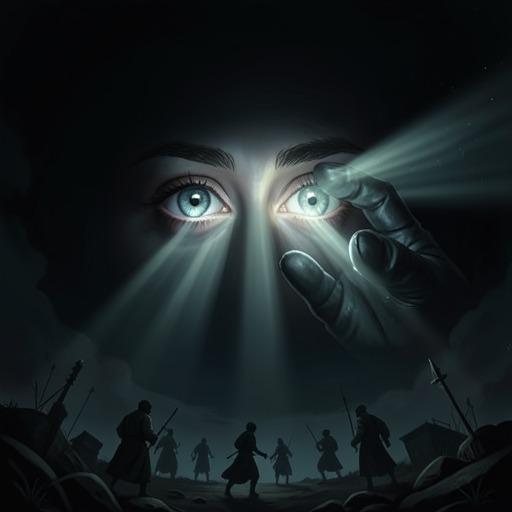
Actaeon is led by hard fate to a cool grotto in the woods, where Diana stands undressed with her attendants. The scene is defined by accidental discovery rather than a declared attempt to violate the goddess. He wanders into a private place and sees what mortal sight should not see. That instant converts an ordinary hunt into a confrontation between human curiosity or mischance and divine inviolability.
The narrative gives Actaeon a moment of inner conflict. Shame restrains him, while fear presses upon him, and the two emotions assail his aching heart in turn. He therefore recognizes the danger of what he has seen, but recognition cannot undo the sight. The episode's tragedy depends on that narrow interval between perception and consequence: he understands that he has crossed into forbidden knowledge only when the power to escape its effects has already been removed.
Diana's punishment attacks the conditions of human agency. Once altered, Actaeon cannot explain that the encounter was unintended, defend himself before his companions, or issue an intelligible command. The transformation is thus more than a change of outward form. It destroys the social and linguistic identity by which a hunter might ordinarily control his dogs and direct the chase.
Metamorphosis and the Reversed Hunt
After the encounter, Actaeon sees his opening hounds behind him and hears their cries. The sound that would normally announce the progress of a successful pursuit becomes an omen of his own death. His hunting pack does not merely accompany him; it becomes the mechanism through which the punishment reaches its completion.
The reversal is absolute. Actaeon, formerly the human director of the chase, now appears as quarry. The hounds respond to the transformed body before them rather than to the absent human identity within it. Their pursuit exposes the cruel logic of metamorphosis: the outward form controls the actions of others, while the inward self remains trapped and unable to make itself known.
The episode also turns Actaeon's principal skill against him. Hunting has given him the animals, knowledge, and authority that would normally secure his mastery over the forest. Once he becomes a stag, those same resources become instruments of destruction. The pack's arrival makes the transformation irreversible in practical terms, because the animals that once obeyed him now define him as prey.
Relationships, Conflict, and Ending
Actaeon's central conflict is with Diana, whose divine status makes the encounter radically unequal. He does not meet an ordinary rival who can be persuaded or defeated. He confronts a goddess whose response converts a moment of exposure into a sentence carried out through nature itself. The attendants and the forest establish the protected world into which he has intruded, while the hounds provide the mortal-scale violence of the punishment.
His relationship with the hounds is especially tragic because it contains a complete reversal of allegiance and recognition. They are his pack, associated with his identity as hunter, yet after the metamorphosis they no longer recognize their master. Their cries approach him as pursuers, and their obedience to the logic of the hunt overwhelms any bond formed under his human name.
Actaeon's ending is therefore both physical and symbolic. He is hunted by his own dogs, and the man who once possessed the chase is destroyed by the chase's unthinking momentum. The story leaves no recovery through explanation or restored appearance. His transformation ends in the extinction of the human figure that entered the grotto, while the animal body supplies the only identity visible to the world around him.
Narrative Role and Significance
Actaeon embodies a metamorphosis plot driven by prohibition, accidental transgression, punishment, pursuit, and death. Unlike transformations that preserve a character through a new form, his change removes the possibility of survival as the same person. The forest becomes a threshold between human order and divine secrecy; crossing it exposes the fragility of the boundaries on which his identity depends.
His story also gives the book's recurring contrast between mortal uncertainty and divine power a concentrated form. Actaeon is not protected by greatness, lineage, or expertise, and his knowledge of danger arrives too late to help him. The episode makes the maxim that no mortal can be considered fortunate before death concrete: a hunter may enter the woods in command of his world and leave it unable even to name himself.
The final irony is that Actaeon's punishment is enacted through the very signs of his former distinction. His hounds, his forest, and his mastery of the chase do not disappear; they remain in place, but their meanings are inverted. Through that reversal, his metamorphosis becomes a study in the instability of form: once the body has changed, the world answers the body rather than the person, and the old self is left without a voice strong enough to survive its new appearance.