Asclepius
Metamorphoses (Ovid Edition)Asclepius, also called Aesculapius, is presented as a physician of exceptional promise whose story links violent birth, prophetic recognition, civic healing, and divine transmission. His significance lies less in a sustained personal adventure than in the way his medical power becomes a remedy for collective disaster: after Rome is afflicted, the search for relief leads beyond the city to the god whose foreign presence can restore health.
Birth and Prophetic Recognition
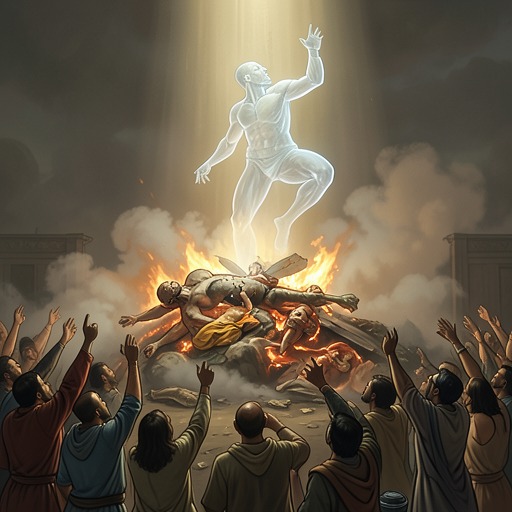
Asclepius enters the mythic world through death and extraction. After his mother’s death, the god responsible for the child opens her womb and brings the unborn infant out, preserving him despite the fatal circumstances of his birth. The act turns a scene of destruction into one of rescue: the mother’s body is associated with the death that produced the crisis, while the child is separated from it and given a future beyond her fate.
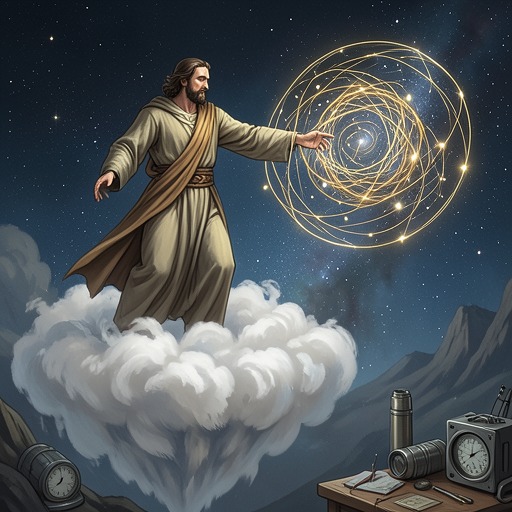
His destiny is recognized immediately. When the prophetic maiden sees the sacred infant, divine inspiration seizes her, and she addresses him as the future physician of the world. Her prophecy establishes healing not as a later occupation but as the defining force of his identity. The infant is already imagined through his future office, and the narrative gives his medicine a scope that reaches beyond individual suffering toward the world as a whole.
The Physician of the World
The language surrounding Asclepius makes healing a form of power. He is not merely a skilled practitioner among other mortals; he is hailed as a mighty physician whose coming years will be marked by medical authority. His story therefore belongs to the poem’s wider pattern in which exceptional human capacities press against the boundary between mortality and divinity.
That boundary is especially important because Asclepius is associated with the reversal of bodily disaster. His birth follows a death, and his promised vocation answers the injuries and losses that recur throughout the poem. Set beside transformations such as Daphne’s conversion into a laurel and Io’s change into a heifer, his narrative shifts the emphasis from altered form to restored function: the body is not simply changed, but rescued, treated, and returned to health.
Call to Rome
In the later Roman narrative, Rome suffers a crisis so severe that the city mourns and urgently seeks assistance. A priestess warns the Romans that the help they implore must be sought from another and nearer shore, directing their appeal away from their immediate surroundings toward a foreign power. The instruction creates a geographical and religious movement: Roman restoration depends upon bringing an outside healing force into the city.
The response identifies Asclepius as that needed power. His foreign origin does not disqualify him; it is precisely what makes the appeal necessary. Rome cannot cure itself through its existing resources, so the remedy must arrive from elsewhere. The episode converts medical rescue into a form of cultural incorporation, in which a deity from another city becomes essential to Roman welfare.
Healing and Divine Incorporation
The arrival of Asclepius brings a decisive reversal. The city had been drooping under illness and grief, but afterward joy is restored and health returns. His intervention is therefore measured collectively rather than through a single patient: the transformed condition of Rome itself proves the efficacy of his power.
Yet the Roman account preserves a tension between foreignness and belonging. Asclepius remains a foreign power even while becoming indispensable to Rome. His presence demonstrates that Roman religious identity can be strengthened through adoption, absorbing an external god into the city’s sacred order. The healer’s movement from elsewhere to Rome is thus both a rescue mission and an act of divine integration.
Narrative Role and Significance
Asclepius serves as a bridge between the poem’s mythic transformations and its later celebration of Rome. His birth transforms maternal death into the survival of a sacred child; prophecy transforms infancy into a promise of universal healing; and his arrival in Rome transforms foreign divinity into civic salvation. Across these stages, the narrative repeatedly turns catastrophe into continuity.
His episode also prepares the poem’s larger movement toward apotheosis. The healing god stands within a sequence that includes the divine elevation of Julius Caesar and the exaltation of Roman power. Asclepius does not simply cure an illness: he embodies the claim that sacred forces can cross political boundaries, enter the Roman world, and renew it. His lasting image is therefore that of medicine as a vehicle of transformation, carrying life out of death and health from the foreign world into Rome.