Cadmus and Harmonia
Metamorphoses (Ovid Edition)Cadmus and Harmonia is the final metamorphosis of an aging royal couple whose long history of suffering ends in a shared serpentine existence. The event is at once punishment, release, and transformation: Cadmus, exhausted by calamity and haunted by the origin of his grief, asks Heaven to complete his ruin by changing him into the serpent associated with his earlier misfortune. The wish is granted immediately, and Harmonia is drawn into the same fate. Their royal and human identities give way to linked animal bodies, while the surrounding witnesses recoil in terror.## Causes and Background The transformation follows a period of accumulated mourning. Cadmus and Harmonia are described as old, burdened by years and sorrow, and unable to escape the consequences of their past. Their present grief sends them backward into remembrance: they recount earlier disasters and trace those disasters to their dark beginning. The event therefore does not arise from a single fresh offense but from the pressure of a whole life marked by loss, divine hostility, and the painful persistence of memory. Cadmus’s recollection centers on the serpent whose history is tied to the founding violence of his house. He identifies that serpent as sacred and remembers the dragon teeth that he himself sowed in the earth, from which armed forces sprang up only to destroy one another. The memory joins creation and destruction in a single image: Cadmus founded a human order through a monstrous act, and the same history now returns in the form of bodily metamorphosis. His request that Heaven finish its wrath by changing him into a serpent is thus both a lament and an attempt to give visible form to the curse he believes has followed him.
Cadmus’s Transformation
Cadmus’s wish takes effect while he is still speaking. His skin becomes marked with sea-green spots; his body bends down against the ground; and golden scales soon cover him. The change proceeds through a series of unmistakable bodily substitutions. Human speech fails as the forked tongue can no longer express pain and can only complain through hissing. The transformation does not merely disguise Cadmus or place him in an animal shape: it removes the physical means by which he can continue to speak as a man. The metamorphosis also converts his remembered past into his present form. The serpent is not an arbitrary new body but the return of the sacred creature associated with the dragon teeth and with the violence at the beginning of Cadmus’s story. His transformation therefore functions as a material recognition. Cadmus comes to inhabit the image that has haunted his account of his own history, and his identity is rewritten through the emblem of the catastrophe he cannot leave behind.
Harmonia’s Shared Fate
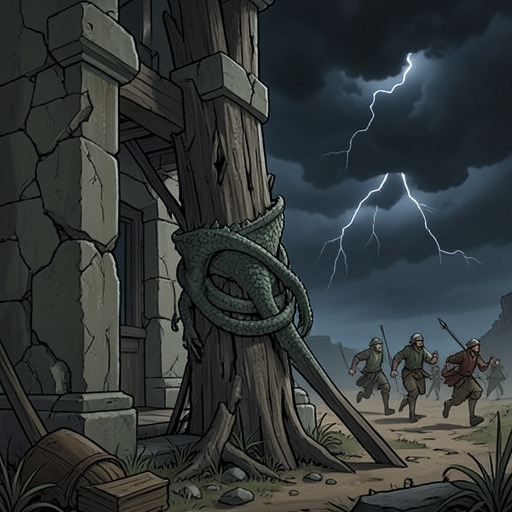
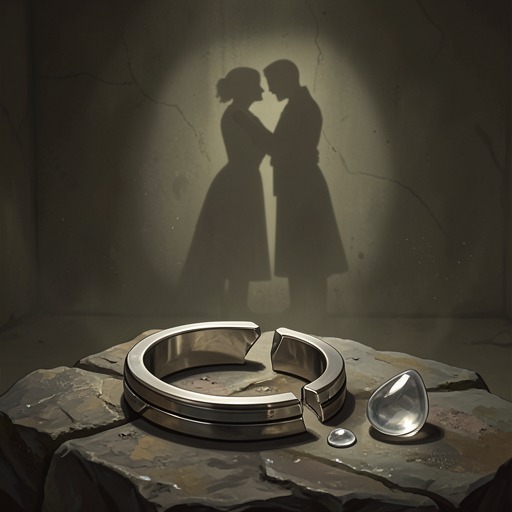
Harmonia witnesses the change and urgently begs Cadmus to remain, pleading with him not to glide away in a monstrous shape. Her appeal preserves the emotional bond between the two figures even as the metamorphosis destroys the human form through which that bond was expressed. She addresses him as her husband, recognizes his suffering, and resists the separation implied by his new body. Her protest does not stop the supernatural force. The transformation is renewed, and the wife is changed as the husband was. The spectators see both of them become serpents, their bodies winding together in intertwined coils. The result is not two unrelated punishments but a paired metamorphosis: Cadmus’s solitary wish expands into a common destiny, and Harmonia’s marriage survives as physical conjunction after their human status has vanished. The event thus converts marital companionship into an image of mutual enclosure, with the two serpents folded into one another rather than divided by death.
Consequences and Narrative Significance
The witnesses are horrified by what they see, and some nearly faint from fear. Their response establishes the transformation as a rupture in the visible order of the world: the couple’s change is not accepted as an ordinary passage but experienced as a spectacle of terror. Yet the event also contains an unexpected consolation. The serpent bodies are monstrous from the human viewpoint, but they keep Cadmus and Harmonia together and carry their shared history forward instead of ending it in separate deaths. The episode condenses a recurrent logic of metamorphosis. Earlier stories turn desire, violence, grief, or divine conflict into new bodies; here, the body becomes the final record of a lifetime’s sorrow. Cadmus’s recollection, his spoken wish, and the immediate fulfillment of that wish create a tight sequence of memory, recognition, and reversal: the man who fears Heaven’s wrath asks for the very shape associated with his ancestral disaster, and the feared punishment becomes the form in which he and Harmonia remain joined. The ending refuses a return to ordinary human life. Their story closes not with restoration but with a permanent alteration that transforms suffering into a strange, enduring companionship.