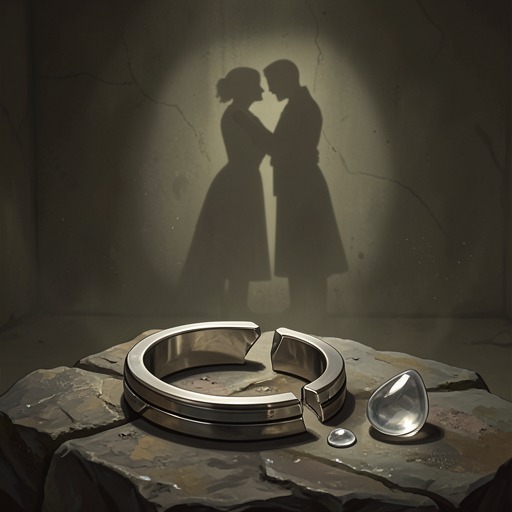
Cephalus
Metamorphoses (Ovid Edition)Cephalus is the central husband in the story of Cephalus and Procris, a figure whose identity is defined by the collision between devoted love, suspicion, and fatal consequence. His story is presented among the book’s succession of transformations and tragic legends, linking intimate marital conflict to the larger pattern in which desire, error, and grief produce irreversible change.
Identity and Marriage
Cephalus is identified as Procris’s husband, and Procris is described as a woman distinguished both by beauty and by her illustrious kinship. Their relationship is therefore not a casual attachment but a marriage marked by strong affection and social consequence. The surviving evidence gives Cephalus a voice shaped by mourning: he calls the object connected with Procris a fatal gift and declares that he wishes he had never possessed it, because it destroyed his tender wife.
That language makes the marriage the emotional center of his characterization. Cephalus does not treat Procris’s death as an incidental misfortune. He presents it as the consequence of something once received and valued, turning a marital possession or token into an instrument of ruin. His grief is inseparable from regret, because what brought power or advantage has become inseparable from the death of the person he loved.
The Fatal Gift and the Hunt
Cephalus’s plot trajectory is tied to the woods and to the chase. On the morning after the earlier events of the story, he returns to the forest, weary from hunting, and calls upon the air for relief. His appeal to the breeze places him in a moment of physical exhaustion and emotional vulnerability: the open woodland becomes both his refuge and the setting in which the catastrophe associated with Procris unfolds.
The fatal gift gives the story its distinctive mechanism of tragedy. Cephalus explicitly connects it with Procris’s destruction, so that the object is not merely a prop but the material form of a chain of consequences. The story’s emotional force lies in the contrast between the gift’s intended value and its disastrous result: an inheritance of power, protection, or distinction is converted into a means of killing the beloved wife.
Suspicion, Misrecognition, and Loss
The evidence indicates that Cephalus’s conduct becomes bound to an injustice that Procris herself must witness before the truth can be established. The movement from suspicion to direct witnessing is crucial. The wrong is not corrected by calm explanation or mutual trust; instead, Procris is forced to become a witness to the deed, and the marriage reaches its crisis through revelation that arrives only after damage has been done.
Cephalus’s return to the woods the next morning follows this pattern of repetition and exposure. The place of the hunt, associated with his ordinary activity, becomes the scene where intimate suspicion is transformed into physical danger. His invocation of Aura, the air, intensifies the irony of the setting: the very element he addresses as a source of comfort is part of the atmosphere surrounding a tragedy that he cannot undo.
Procris’s death changes Cephalus from an active participant in the hunting world into a mourner burdened by responsibility. His lament does not offer a triumphant resolution or a recovery of what was lost. Instead, it fixes his character in the aftermath of recognition, when the meaning of the fatal gift and the cost of the earlier injustice are finally clear.
Grief and Narrative Significance
Cephalus’s defining transformation is emotional rather than bodily. Unlike the many figures in the surrounding myths who become plants, animals, stones, or other forms, he remains recognizably human while grief alters the meaning of his past. The husband who once possessed a valuable gift now sees it as fatal; the hunter who enters the woods now carries the memory of the wife destroyed through the story’s chain of suspicion and misrecognition.
His story exemplifies the collection’s recurring logic of metamorphosis even without requiring a literal bodily change. Love becomes suspicion, a gift becomes a weapon, the familiar landscape becomes a site of danger, and marital life becomes permanent mourning. Cephalus therefore serves as a human counterpart to the book’s more visible transformations: his altered state is the irreversible knowledge that follows loss, and his lament preserves Procris’s death as the final consequence of a love damaged by error.