Hyacinthus
Metamorphoses (Ovid Edition)Hyacinthus is the beautiful young man whose sudden death turns personal loss into botanical remembrance. In the account of his metamorphosis, Apollo had intended him for a place among the gods, but Fate prevents that elevation; instead, the youth’s blood becomes a full-blown flower, allowing his name and the circumstances of his death to endure in the natural world.
Identity and Intended Destiny
Hyacinthus appears as a mortal youth marked for extraordinary favor. Apollo had designed a place for him among the gods, a destiny that would have lifted him beyond ordinary human limits. The promise is therefore not merely personal affection or admiration: Hyacinthus is presented as someone whose beauty and significance seem to invite divine incorporation. His mortal status remains decisive, however, because Fate intervenes before Apollo’s intention can be fulfilled.
The contrast between Apollo’s design and Fate’s refusal establishes Hyacinthus’s role in the story. He is close enough to the divine sphere to be imagined among the gods, yet vulnerable to the accidents and limits of mortal life. His transformation later preserves part of the lost destiny, but in altered form: he does not become a god, and the place prepared for him in heaven is replaced by a lasting place in the flowering earth.
The Discourse Game and the Fatal Accident
The decisive scene begins with a discus throw. The discus reaches an astonishing distance, and its flight testifies equally to skill and strength. Hyacinthus then runs eagerly to retrieve it from the sand. That eagerness places him directly in the path of the object and makes the accident inseparable from the athletic contest itself: the same display of strength that gives the game its excitement produces the instrument of catastrophe.
The discus meets stony ground and rebounds toward the youth. Hyacinthus is therefore not killed by a deliberate attack but by a sudden reversal within an apparently ordered game. The event changes the value of the scene from admiration and youthful activity to irreversible loss in an instant. His action is simple—he goes to snatch the discus from the ground—but its consequence is fatal, making the metamorphosis an image of how quickly mortal expectation can be overturned.
Blood Changed into a Flower
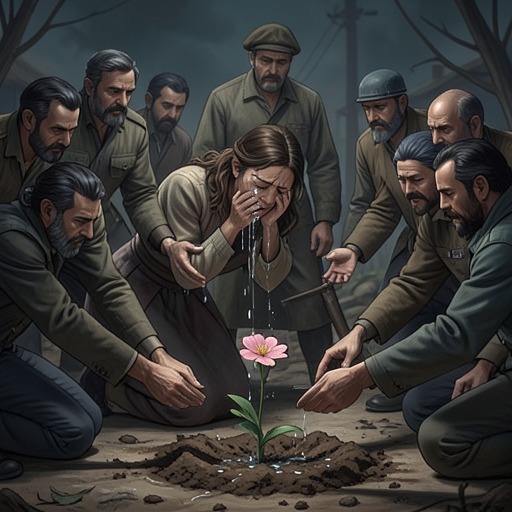
After Hyacinthus is struck, the blood staining the green field ceases to be blood. Apollo reveals the change as it occurs: the stain becomes a flower in full bloom. The transformation does not erase the violence of the death; it converts its visible mark into a durable natural sign. The verdant field that received the blood becomes the ground from which remembrance rises.
The flower is thus both a body transformed and a memorial shaped by grief. Hyacinthus’s identity survives through the plant’s name and form, while Apollo’s mourning is given a material object that can recur in the world. The metamorphosis also answers the failed divine elevation with a different kind of permanence. Hyacinthus does not enter the company of the gods, but his blood enters the cycle of nature, where the lost youth remains present through recurring bloom.
Narrative Role and Significance
Hyacinthus’s story is a concentrated example of metamorphosis as consolation without full restoration. Apollo’s intention cannot overcome Fate, and the youth cannot be returned to human life or installed among the gods. Yet the transformation prevents the death from becoming mere disappearance. The flower carries the name of the person whose future has been cut short and binds divine grief to an enduring feature of the landscape.
The episode also makes accident, destiny, and remembrance inseparable. Hyacinthus’s death comes from an ordinary athletic gesture enlarged by its consequence; Apollo’s unrealized plan shows what might have been; and the flower supplies what Fate still permits. His final significance lies in that tension. A mortal who was meant for the gods becomes neither wholly lost nor fully divine, but a living emblem of altered existence: the person is gone, while the name and the grief remain in bloom.