Orpheus's lyre
Metamorphoses (Ovid Edition)Orpheus's lyre is the decisive instrument of Orpheus's power: it gives audible form to grief, persuades the rulers of the underworld, and continues to sound after the singer's death. The instrument therefore occupies a double position. In life it is an active means of appeal; after violence has separated it from its owner, it becomes a relic that carries his song beyond the limits of his body.
Identity and Function
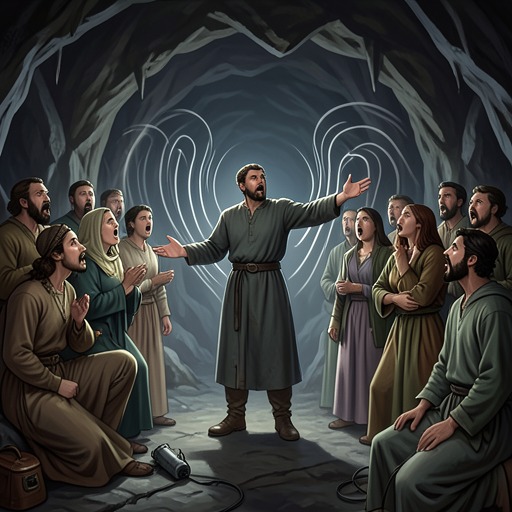
Orpheus's lyre is presented as inseparable from the singer's voice and musical practice. When Orpheus reaches the realm ruled by Persephone and the king of the dead, he does not rely on force or authority. He tunes his strings to his voice and sings before the powers beneath the earth. The lyre is thus the material partner of his rhetoric: its music supports an appeal directed toward the rulers of Hell, where ordinary human petitions would have little force.
The instrument's function is not merely ornamental. It makes grief communicable to an audience that is normally beyond the reach of living emotion. As Orpheus sings, the bloodless shades stop to listen; the lyre's accompaniment transforms a private loss into a public act of persuasion. Its sound creates a temporary passage between incompatible conditions, allowing the living singer to address the dead and ask that Eurydice be restored.
Music in the Underworld
Orpheus's lyre governs the central attempt to reverse Eurydice's death. Orpheus declares that he will not return without her and demands that the rulers either restore both of them to life or retain both in death. The lyre gives this demand its emotional and formal power, sustaining the song while the shades attend and the underworld audience is held by its pathos.
The scene also establishes the instrument's limits. Music can win attention and move the inhabitants of Hell, but it cannot abolish the conditions imposed on the return. Orpheus's art opens the possibility of recovery without guaranteeing it. The lyre mediates between life and death, yet the boundary remains stronger than the song's immediate enchantment; the attempt to reclaim Eurydice ultimately fails when Orpheus looks back before their escape is complete.
Destruction and Survival
After Orpheus is killed, his mangled limbs are scattered, while his head and lyre receive a different fate. They are carried together along the streams of the Hebrus. This separation is crucial: the lyre survives the destruction of the musician, but it does not survive as a silent household object. As it rolls through the river beside Orpheus's head, it soothes the waters with a mournful song.
The instrument's continued music makes the aftermath of death uncanny and ritualized. The tongue is lifeless, the body is dismembered, and yet the lyre remains capable of generating what the narrative calls soft, deadly notes. Music has become both funeral lament and evidence of persistence. The lyre preserves Orpheus's artistic identity when his physical form can no longer do so, converting a weaponized death into a scene of continuing remembrance.
Material Relic and Narrative Significance
Orpheus's lyre is repeatedly associated with acts of mourning and the preservation of identity. In the underworld, it accompanies the singer's plea for Eurydice; in the river, it accompanies his severed head. Its recurrence binds attempted resurrection to irreversible loss. The same object that once sought to restore the dead later travels with the dead man's remains, unable to restore him but able to keep his song in motion.
The lyre therefore mediates a deeper opposition between bodily mortality and artistic survival. Death scatters the limbs, but the instrument gathers the story into a form that can travel: through the underworld audience, across the waters of the Hebrus, and into the continuing memory of the narrative. Its significance lies not in defeating death outright, but in showing how song can outlast the body while still bearing the full weight of bodily destruction.