Thebes
Metamorphoses (Ovid Edition)Thebes is the city that Cadmus establishes on the land promised to him, giving birth to a new Boeotian empire. In Ovid’s narrative, it is more than a civic foundation: it becomes a charged spatial node where political order, sacred prohibition, prophecy, metamorphosis, and catastrophe repeatedly meet.
Foundation and Political Order
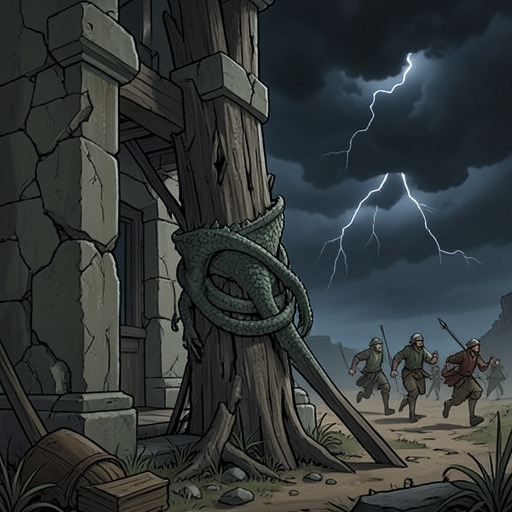
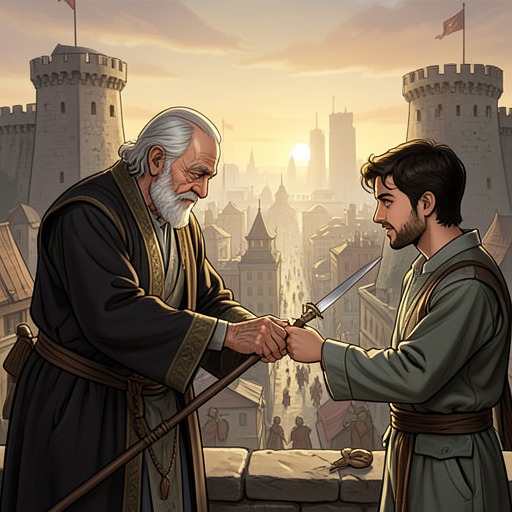
The city begins when Cadmus reaches the promised earth and makes a peaceful treaty with the surviving people there, taking them as friends and partners. His settlement converts uncertain ground into an organized polity: he founds Thebes and gives his new Boeotian empire its beginning. The city therefore embodies a movement from wandering and danger toward rule, alliance, and territorial permanence, while remaining inseparable from the extraordinary violence and divine forces that shape Cadmus’s story.
Thebes is also presented as the place where Cadmus reigns. Its foundation does not merely create buildings; it creates a political identity centered on a king, a people, and a newly established realm. Yet the stability suggested by this civic order is repeatedly tested by the city’s intimate connection with gods, prophets, forbidden spaces, and bodily change.
Sacred Spaces and Boundaries
The Theban world contains sharply marked spaces of access and exclusion. A secluded valley clad in pine and cypress, cooled by gentle winds and darkened by shade, serves as Diana’s private haunt. Its privacy is not incidental: the grove establishes a boundary between ordinary human movement and divine territory. The setting’s beauty and shelter conceal a severe sacred limit, so that entry into the space carries consequences beyond ordinary law.
Another sacred threshold appears before a lofty adamantine gate closing a tower of brass, where the Furies sit in monstrous forms. This architecture gives supernatural punishment a physical location. Gates, towers, groves, and enclosed structures make moral and divine boundaries visible, turning space into an instrument of power: some places shelter divinity, while others confine or threaten those who approach them.
Transformation, Knowledge, and Catastrophe
Thebes is repeatedly associated with stories in which human identity cannot remain fixed. The city’s narrative environment includes prophecy, metamorphosis, and the crossing of limits between mortal and divine conditions. In one episode, Tiresias gains fame throughout Greece as a prophet after a grievous event, showing how Theban tragedy is converted into public knowledge and religious authority. The city’s suffering thus produces not only loss but also a tradition of interpretation.
The city’s transformations extend beyond individual bodies to the built environment itself. Daedalus of Athens constructs a wondrous enclosed design whose rooms encircle one another, creating the labyrinth that hides a two-formed creature. This architectural space makes concealment the organizing principle of the city’s wider mythic world: the monster is hidden from sight, and the maze turns identity, direction, and authority into problems of spatial control.
The contrast between humble dwelling and monumental architecture intensifies this theme. A small shed, scarcely large enough for two people, appears to grow in height and bulk until a stately temple rises into the sky; the forked branches of the cottage become columns, and its pavement becomes polished marble. In such transformations, Theban-associated space is never secure in its apparent form. Domestic shelter can become sacred monument, just as human beings can become plants, gods, animals, or other forms.
Historical and Poetic Significance
Thebes occupies a central place in the poem’s larger method because it joins the founding of a city to the instability of everything within it. Cadmus’s act promises durable political order, but the surrounding stories continually expose the fragility of bodies, households, sacred boundaries, and dynasties. The city is therefore both foundation and warning: civilization can be built, yet no built order escapes the forces of passion, divine power, violence, or change.
This significance accords with the poem’s opening declaration that it sings of bodies changed into various forms and with its closing assurance that the completed work will withstand tempest, fire, war, and wasting age. Thebes belongs to that same continuum of alteration. Its stones, temples, gates, groves, rulers, prophets, and hidden creatures give spatial shape to the poem’s governing vision that forms may change while the stories that preserve them endure.