Bacchus
Metamorphoses (Ovid Edition)Bacchus is presented as a god whose story begins in catastrophe and develops through transformation, worship, and retribution. Born from the destruction of Semele, he survives because Jupiter preserves him from the tomb; later, his power becomes visible in the violent death of Pentheus and in the wider mythology of divine change. He therefore embodies both preservation and excess: a child rescued from fire who becomes a force capable of overturning human resistance to the divine.
Birth and Divine Preservation
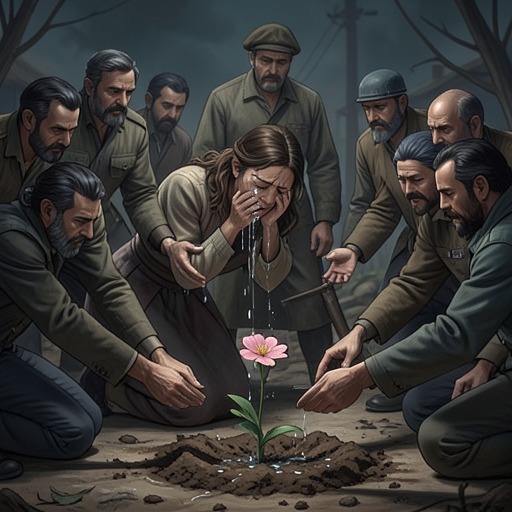
Bacchus enters the narrative through the fate of Semele, who had been preferred to Europa in Jupiter’s embrace and was carrying an immortal child. Semele’s desire for the full manifestation of her divine lover leads to her destruction: she is consumed amid the glories she sought and dies in the terrible embrace of Jupiter’s revealed majesty. The child, however, is not allowed to perish with her. Jupiter takes him, still smoking, from the blasted womb and preserves his offspring from the tomb.
This birth joins Bacchus to a recurring logic of metamorphosis. His survival depends upon a violent transition from mortal pregnancy and maternal death into divine rescue. The image does not make him merely a beneficiary of immortality; it makes his body the site where destruction is interrupted and divine continuity is manufactured. Bacchus is born from a ruin that the god’s intervention converts into succession.
Power and the Death of Pentheus
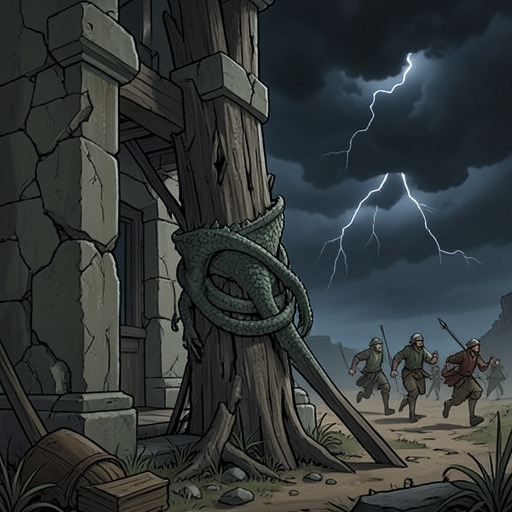
Bacchus’s authority becomes dramatically apparent in the story of Pentheus. Pentheus grows more furious rather than more cautious and resolves to send his messengers no more. His refusal to acknowledge or accommodate the god places him against a power that cannot be contained by ordinary civic commands. The episode turns hostility into exposure: Pentheus’s resistance does not restore order but brings him into the sphere of Bacchic retribution.
The death of Pentheus is therefore more than an isolated punishment. It marks the collapse of a human attempt to regulate divine ecstasy from outside. Bacchus’s power operates through the reversal of expected control, so that the ruler who believes himself capable of commanding others becomes vulnerable to the force he rejects. The story makes bodily danger the consequence of denying a god whose worship is defined by the loosening of fixed boundaries.
Transformative and Ecstatic Associations
Bacchus belongs to a network of stories in which identity is repeatedly unsettled. The surrounding mythology includes Daphne’s transformation into a laurel, Io’s transformation into a heifer, the story of Calisto, Salmacis and Hermaphroditus, and Venus and Adonis. These narratives do not all belong directly to Bacchus, but they establish the larger imaginative field in which his divinity is understood: bodies, desires, species, and social positions can change under pressures that exceed mortal intention.
Within that field, Bacchus is especially associated with the collapse of rigid distinctions. His story moves between life and death, human and divine, order and frenzy, and private desire and public cult. The preservation of his body after Semele’s death gives transformation a saving form, while Pentheus’s destruction gives it a punitive form. The same mythic universe can therefore present change as rescue, metamorphosis, or annihilation, depending on whether the character accepts or resists the power at work.
Relations with Jupiter and Semele
Bacchus’s relation to Jupiter is founded on both intimacy and authority. Jupiter is the lover whose appearance destroys Semele, but he is also the father who prevents the child’s death. The paternal act does not erase the violence that produced the crisis; instead, it converts that violence into divine inheritance. Bacchus’s existence consequently bears the mark of Jupiter’s power twice over, first as the cause of Semele’s fatal revelation and then as the agent of the child’s preservation.
His relation to Semele is equally decisive because her death and his survival are inseparable. She is not simply a discarded mortal lover in the background of his birth. Her body is the material from which the god is saved, and her destruction supplies the tragic cost of his arrival. Bacchus’s divine status thus rests on a history in which maternal loss becomes the condition of immortal continuation.
Narrative Role and Significance
Bacchus functions as a figure of divine excess whose presence tests the limits of human confidence. In the Pentheus episode, rejection of the god produces catastrophe; in the birth narrative, divine intervention turns catastrophe into continuation. These paired functions give Bacchus a distinctive place in the poem’s broader architecture of change. He is at once the child rescued from a mortal ending and the god whose power makes resistance itself dangerous.
His mythology also intensifies the poem’s interest in unstable forms. Other figures become plants, animals, stones, or altered bodies, but Bacchus remains a divine principle associated with the force that makes such boundaries permeable. The stories connected with him suggest that order is never entirely secure: beneath civic authority and fixed identity lies a power capable of transformation, punishment, and renewal. Bacchus’s significance lies in that doubleness, joining the preservation of divine life to the destruction of those who insist that mortal order can exclude the gods.