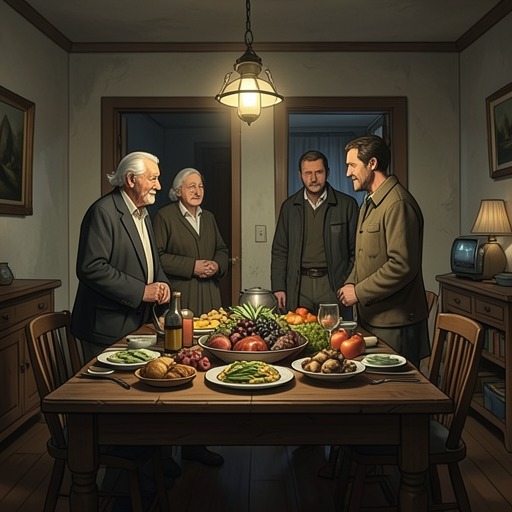
Baucis
Metamorphoses (Ovid Edition)Baucis is an elderly woman whose identity is inseparable from Philemon, her husband and lifelong companion. Living in a poor, thatched cottage, the couple has little material wealth but possesses a durable happiness grounded in long marriage and mutual devotion. Her significance lies not in public power or heroic action, but in the moral force of an ordinary life made exemplary by fidelity.
Identity and Background
Baucis and Philemon have lived together for many years in a humble dwelling whose roof is bound from reeds and straw. Their poverty is explicit, yet it does not define the emotional quality of their household: they are described as old in love and as a happy pair. Baucis therefore represents domestic constancy rather than social status, with the cottage functioning as the material image of a life sustained by affection despite scant possessions.
Marriage and Shared Life
The couple’s marriage is presented as a joint condition rather than as two separate biographies. Their long companionship has made love itself the measure of their age, so that growing old is not a story of decline but evidence of continuity. Baucis’s character emerges through this shared existence with Philemon: the household is small, poor, and private, but its happiness is complete within its own limits.
Divine Encounter and Consequence
The surrounding episode contrasts the couple’s humble piety with the impiety of their neighbors. After the gods reveal themselves, Philemon acknowledges the god and learns that the neighborhood will perish for its lack of reverence, while he and Baucis alone are exempted. Their preservation thus confirms that Baucis belongs to a household distinguished by devotion rather than wealth, rank, or outward grandeur.
Change and Ending
Baucis’s final fate is defined by the couple’s request that their lives remain joined. The gods grant their suit: Baucis and Philemon are allowed to complete their appointed span together, and when their hour arrives they pass from life at the same time. The arrangement prevents the surviving partner from having to carry the other’s body to the grave, transforming death from a final separation into the completion of their marriage.
Narrative Significance
Baucis embodies the value of shared mortality. Her story does not culminate in an individual metamorphosis pursued for escape or glory; instead, divine favor preserves the unity of an elderly couple until death itself. Against the many violent ruptures, forbidden desires, and tragic losses elsewhere in the poem, Baucis and Philemon offer a quieter pattern in which love is proven by duration, poverty is overcome by companionship, and the boundary between life and death is softened by a common ending.